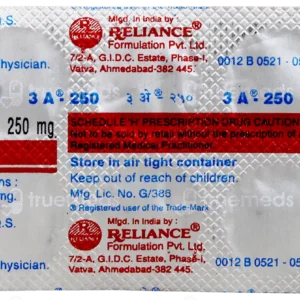
Agrocef 250 MG Tablet 10
₹253.50
Quick fact
Agrocef is an antibiotic tablet containing cefuroxime, used for certain bacterial infections, including infections of the lungs, ears, throat, sinuses, urinary tract and skin.
Uses
What is Agrocef 250 MG Tablet 10 & Important Details
Agrocef contains cefuroxime, an antibiotic used for bacterial infections.
- It is a tablet supplied in a pack of 10 tablets.
- Uses include bacterial infections of the lungs, ear, throat, nasal sinus, urinary tract, skin and soft tissues, and bones and joints.
How does Agrocef 250 MG Tablet 10 work (mechanism of action)?
Agrocef works against bacteria by interfering with the protective structure that surrounds them.
- It prevents bacteria from forming their protective cell wall.
- This kills bacteria and helps the body clear the infection.
Specialized or Off-Label Uses of Agrocef 250 MG Tablet 10
No off-label uses are established in the available information.
Conditions That Agrocef 250 MG Tablet 10 Will Not Treat
Agrocef treats certain bacterial infections; it does not work against viral infections.
- It will not treat flu or the common cold.
Benefits
What are the benefits of taking Agrocef 250 MG Tablet 10
Agrocef is used to treat certain bacterial infections in different parts of the body.
- It may help clear bacterial infections by killing the bacteria.
- Depending on the infection site, treatment may reduce fever, pain, swelling and discomfort.
Side Effects
What are the most common side effects of Agrocef 250 MG Tablet 10?
Common side effects reported with Agrocef include stomach and bowel symptoms and skin rash. They may improve as the body adjusts, but seek medical advice if they persist or worry you.
- Vomiting, nausea or diarrhea.
- Rash.
Contact your doctor if side effects persist or cause concern.
What are the serious side effects of Agrocef 250 MG Tablet 10?
Some symptoms need prompt medical attention while taking Agrocef. Do not ignore severe or unusual symptoms.
- Severe stomach pain, or watery or bloody diarrhea.
- Jaundice, dark urine or pale stools.
- A seizure or convulsion.
- Little or no urination, or swelling in the feet or ankles.
Seek medical advice promptly if any of these occur. Severe stomach pain or watery or bloody diarrhea may need attention even if it develops months after the last dose.
Severe Allergic Reactions of Agrocef 250 MG Tablet 10?
A serious allergic reaction can require emergency help. Stop taking Agrocef and seek immediate medical help if allergy symptoms appear.
- Rash or itching.
- Swelling of the face or mouth.
- Difficulty breathing.
These symptoms may signal a serious reaction. Get emergency medical care immediately.
What side effects may I notice from receiving this medication?
Side effects you may notice include:
- Nausea, vomiting, diarrhea or stomach pain.
- Dizziness, headache, an unusual taste, or a skin rash or itching.
Contact your doctor if a side effect persists or worries you.
Agrocef 250 MG Tablet 10 Dosage Guidelines
Overview
For adults, the stated typical dose is 250mg to 500mg taken twice a day for 7 to 10 days. The doctor decides the final dose and duration; the maximum daily dose is not specified in the available information.
Adults
Adults: 250mg to 500mg twice a day for 7 to 10 days. The doctor decides the final dose.
Children
Children’s dosing is based on weight and infection; do not give this medicine unless prescribed. A doctor must decide the dose.
Older adults
Older adults: use the usual dose based on the infection and kidney function, choosing the lowest effective dose. The doctor decides.
- The dose depends on the infection being treated and its severity.
- Kidney problems may mean the dose needs adjustment or closer checks.
Dosage Adjustments for Kidney, Liver, or Other Health Problems
Dose changes depend on kidney function and the person’s health. The doctor should select the appropriate dose.
- Normal kidney function: No adjustment is usually needed; follow the prescribed dose.
- Reduced kidney function: The doctor may lower the dose or check you more often.
- Severe kidney impairment: The exact adjustment is not established in the available information; ask the doctor to set the dose.
- Dialysis: A dialysis-specific adjustment is not established in the available information. Ask the treating doctor.
- Liver disease: Tell the doctor about liver problems before taking Agrocef; a specific adjustment is not established here.
- Other important conditions: Tell the doctor about antibiotic allergies and any kidney or liver problems.
Do not change your dose yourself. Ask the doctor or pharmacist if you are unsure.
How Often and How Long to Take Agrocef 250 MG Tablet 10?
The stated adult course is typically taken twice a day for 7 to 10 days.
- Take it at evenly spaced intervals as prescribed.
- Taking it at the same time each day may help you remember.
How should I take Agrocef 250 MG Tablet 10?
Taking Agrocef 250 MG Tablet 10 With or Without Food
Information differs on whether Agrocef should be taken with food: one direction says with or without food, while another says food may increase absorption.
How to Take Specific Forms (Tablets, Chewables, Liquid Suspension)
Tablets: Swallow the tablet whole. Do not chew, crush or break it. It may be taken with or without food according to one product direction; ask your doctor or pharmacist because directions differ.
Overdose/Missed Dose
What should I do if I accidentally use too much Agrocef 250 MG Tablet 10?
Too much cefuroxime can cause brain irritation and lead to convulsions or seizures, especially in people with kidney disease. If overdose is suspected, seek medical advice immediately.
What should I do if I miss a dose of Agrocef 250 MG Tablet 10?
Take a missed dose when you remember. If it is almost time for the next dose, skip the missed one. Do not take an extra or double dose.
Interactions
Does Agrocef 250 MG Tablet 10 interact with foods or drinks?
The available directions differ about taking the tablet with food. One says it may be taken with or without food; another says food may increase absorption.
Does Agrocef 250 MG Tablet 10 interact with other medicines (drug interactions)
Tell your doctor about all medicines you take. Some medicines may affect Agrocef or be affected by it.
- Antacids or H2 blockers that reduce stomach acid may make cefuroxime tablets less effective.
- Probenecid can increase cefuroxime levels in the blood by slowing its removal through the kidneys.
- Antibiotics may slightly decrease the effectiveness of birth control pills.
Agrocef 250 MG Tablet 10 and Blood Thinners
A specific interaction with blood thinners is not established in the available information.
Agrocef 250 MG Tablet 10 and Birth Control (if applicable)
Antibiotics may slightly decrease the effectiveness of birth control pills. Discuss contraception with your doctor while taking Agrocef.
Interactions with Supplements, Vitamins, and Herbal Products
Interactions with supplements, vitamins or herbal products are not established in the available information.
Warnings & Precautions
Who should not use Agrocef 250 MG Tablet 10?
The available information does not specify who must never take Agrocef. A history of antibiotic allergy and kidney or liver problems are important concerns to discuss with a doctor.
- Tell your doctor if you have had an allergic reaction to penicillin or cephalosporin antibiotics.
- Tell your doctor if you have kidney or liver problems.
What should I know about Agrocef 250 MG Tablet 10 before using it?
Before starting Agrocef, tell your doctor about allergies, health conditions and other medicines you take.
- Mention any previous reaction to penicillin or cephalosporin antibiotics.
- Tell your doctor if you have kidney or liver problems.
Precautions for Pre-existing Conditions (Heart, Kidney, Liver)
Kidney disease: Tell your doctor. The dose may need to be lowered or you may need more frequent checks.
Liver disease: Tell your doctor before taking Agrocef; a specific liver-related dose adjustment is not established here.
Heart disease: A specific precaution for heart disease is not established in the available information.
Alcohol: Can You Drink Alcohol While Taking Agrocef 250 MG Tablet 10?
An interaction between Agrocef and alcohol is not established in the available information.
Pregnancy and Breastfeeding
Pregnancy: Consult your doctor before using Agrocef if you are pregnant.
Breastfeeding: Consult your doctor before using Agrocef while breastfeeding.
Children: A doctor should decide whether a child should take it and set the dose.
Older adults: The dose should be decided by a doctor, taking kidney function into account.
Safe Usage & Best Practices
Why You Must Complete the Full Prescription
Complete the full course, even if you feel better. Stopping early may allow the infection to return and become harder to treat.
Consequences of Skipping Doses or Sharing Medication
Use Agrocef only as prescribed, and do not share your medicine with anyone else.
- Complete the prescribed course, even if you feel better.
- If you miss a dose, follow the missed-dose instructions and do not double the next dose.
Can Agrocef 250 MG Tablet 10 cause diarrhea?
Yes. Diarrhea is a common side effect of Agrocef.
- Other common side effects include nausea and vomiting.
What should you do if you feel better before finishing the medication?
Keep taking Agrocef for the full prescribed course even if you feel better.
- Follow the dose and duration advised by your doctor.
- Ask your doctor if you are concerned about side effects or the treatment.
Storage Details
Store Agrocef tablets at room temperature, away from moisture and heat.
- Keep the bottle tightly closed.
Frequently asked questions
-
1. What is Agrocef used for?
Ans: It is an antibiotic used for certain bacterial infections, including infections of the lungs, ear, throat, sinuses, urinary tract, skin, bones and joints.
-
2. Can I stop taking it when I feel better?
Ans: No. Complete the full prescribed course, even if you feel better.
-
3. Can Agrocef treat a cold or flu?
Ans: No. It does not work for viral infections such as flu or the common cold.
-
4. Can I take Agrocef with food?
Ans: Directions differ: one says with or without food, while another says food may increase absorption. Ask your doctor or pharmacist.
-
5. What should I do if I miss a dose?
Ans: Take it when you remember unless it is almost time for the next dose; then skip it. Do not take a double dose.