
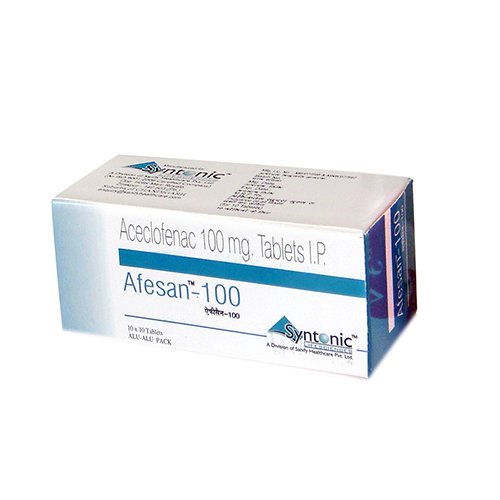
Afesan 100 MG Tablet 10
₹28.13
Quick fact
Afesan is an aceclofenac tablet used for short-term relief of pain and inflammation, including pain associated with arthritis, muscle aches, toothache, menstrual cramps, and minor injuries.
Uses
What is Afesan 100 MG Tablet 10 & Important Details
Afesan is a pain-relieving tablet containing aceclofenac. Use it only in the dose and for the duration advised by a doctor.
- The listed pack contains 10 tablets.
- It is described as helping relieve pain and inflammation in conditions including arthritis, back pain, dental pain, and menstrual pain.
How does Afesan 100 MG Tablet 10 work (mechanism of action)?
Afesan is described as an NSAID that blocks the release of certain chemical messengers involved in pain and inflammation.
- It blocks the release of certain chemical messengers.
- This helps reduce pain and inflammation.
Specialized or Off-Label Uses of Afesan 100 MG Tablet 10
The available information does not identify any specialized or off-label uses for Afesan.
Conditions That Afesan 100 MG Tablet 10 Will Not Treat
The available information does not establish which conditions Afesan will not treat. Ask a doctor whether it is suitable for your symptoms.
Benefits
What are the benefits of taking Afesan 100 MG Tablet 10
Afesan is used for short-term relief of pain and inflammation. The page describes its use in several painful conditions.
- It may relieve pain and inflammation associated with osteoarthritis and rheumatoid arthritis.
- It may help with muscle pain, toothache, menstrual cramps, and minor injuries.
Side Effects
What are the most common side effects of Afesan 100 MG Tablet 10?
Commonly listed side effects include stomach and digestive symptoms.
- Vomiting, stomach pain, nausea, and indigestion.
- Flatulence, constipation, and abdominal pain.
Dizziness, drowsiness, or visual disturbances may also occur. Speak with your doctor if side effects persist or worsen.
What are the serious side effects of Afesan 100 MG Tablet 10?
Long-term or excessive use may increase the risk of serious problems, including stomach bleeding and kidney problems.
- Seek medical advice if you have black or tarry stools, vomit blood, or develop severe stomach pain.
- Long-term treatment may require monitoring of kidney function, liver function, and blood component levels.
Get medical advice promptly if any of these warning signs occur.
Severe Allergic Reactions of Afesan 100 MG Tablet 10?
An allergic reaction may occur while taking Afesan.
- Watch for rash or swelling, or other signs of an allergic reaction.
Seek medical advice if these symptoms occur. For a severe or rapidly worsening reaction, seek emergency care.
What side effects may I notice from receiving this medication?
Afesan may cause digestive symptoms or affect alertness and vision.
- Stomach pain, nausea, vomiting, or indigestion.
- Dizziness, drowsiness, or visual disturbances.
Tell your doctor if side effects persist or worsen.
Afesan 100 MG Tablet 10 Dosage Guidelines
Overview
The usual adult dose of aceclofenac tablets is 100 mg twice daily, with a maximum of 200 mg in a day. The doctor decides the final dose; the product page advises taking it with food.
Adults
AFEsan-100 is typically taken once or twice daily with food; the amount and maximum daily dose are not established here. The doctor may change it.
Children
Use in children is generally not recommended unless a doctor advises it. A doctor must decide.
Older adults
Older adults generally use the lowest effective dose, with caution. The doctor decides.
- The dose and duration advised by your doctor.
- Health conditions and how you respond to treatment; ask your doctor or pharmacist if you are unsure.
Dosage Adjustments for Kidney, Liver, or Other Health Problems
Dose changes may be needed depending on kidney or liver health and other conditions. Ask your doctor for individual advice.
- Normal kidney function: The usual adult dose is 100 mg twice daily; the doctor decides whether it is appropriate.
- Reduced kidney function: Use cautiously and ask a doctor to assess the dose.
- Severe kidney impairment: Aceclofenac is generally avoided; consult a doctor before use.
- Dialysis: A specific dose for dialysis is not established in the available information. Ask your doctor.
- Liver disease: A lower starting dose and medical monitoring may be needed; a doctor should decide whether it is suitable.
- Other important conditions: Tell your doctor about heart disease, stroke, high blood pressure, or other kidney or liver problems before use.
Do not change your dose yourself. Long-term use may require monitoring of kidney function, liver function, and blood component levels.
How Often and How Long to Take Afesan 100 MG Tablet 10?
The product information says adults typically take it once or twice daily with food; follow the schedule your doctor prescribes.
- Use it for the shortest duration necessary.
- Avoid prolonged use unless your doctor advises it.
How should I take Afesan 100 MG Tablet 10?
Taking Afesan 100 MG Tablet 10 With or Without Food
Take Afesan with or after food. Taking it with food or milk may help reduce stomach upset; avoid taking it on an empty stomach.
How to Take Specific Forms (Tablets, Chewables, Liquid Suspension)
Tablets: Swallow the tablet whole. Do not chew, crush, or break it.
Overdose/Missed Dose
What should I do if I accidentally use too much Afesan 100 MG Tablet 10?
The available information does not state what to do after taking too much Afesan. Contact a doctor or pharmacist promptly for advice; seek urgent medical help if you feel unwell.
What should I do if I miss a dose of Afesan 100 MG Tablet 10?
Specific instructions for a missed dose are not established in the available information. Ask your doctor or pharmacist what to do, and do not take extra tablets without their advice.
Interactions
Does Afesan 100 MG Tablet 10 interact with foods or drinks?
Take Afesan with or after food, or with milk, to reduce stomach upset. Avoid alcohol while taking it because it may increase stomach irritation, ulcers, and drowsiness.
Does Afesan 100 MG Tablet 10 interact with other medicines (drug interactions)
Tell your doctor or pharmacist about all medicines you take. The available information specifically advises caution with other NSAIDs.
- Avoid combining Afesan with other NSAIDs unless a healthcare provider advises it.
Afesan 100 MG Tablet 10 and Blood Thinners
A specific interaction with blood thinners is not established in the available information. Ask your doctor or pharmacist about your medicines.
Afesan 100 MG Tablet 10 and Birth Control (if applicable)
A specific interaction with birth control is not established in the available information. Ask a healthcare professional if you have concerns.
Interactions with Supplements, Vitamins, and Herbal Products
Specific interactions with supplements, vitamins, or herbal products are not established in the available information. Tell your doctor or pharmacist what you use.
Warnings & Precautions
Who should not use Afesan 100 MG Tablet 10?
Afesan is not recommended during pregnancy or while breastfeeding. Discuss your health history with a doctor before taking it.
- Tell your doctor before use if you have a history of heart disease, stroke, high blood pressure, kidney disease, or liver problems.
What should I know about Afesan 100 MG Tablet 10 before using it?
Use Afesan exactly as prescribed and avoid prolonged use unless your doctor advises it.
- Tell your doctor about heart disease, stroke, high blood pressure, kidney disease, or liver problems.
- Avoid driving or operating machinery until you know how it affects you, as dizziness, drowsiness, or blurred vision may occur.
Precautions for Pre-existing Conditions (Heart, Kidney, Liver)
Kidney disease: Tell your doctor before use. Long-term treatment may require kidney monitoring.
Liver disease: Tell your doctor before use. Long-term treatment may require liver monitoring.
Heart disease: Tell your doctor before use if you have heart disease, a history of stroke, or high blood pressure.
Alcohol: Can You Drink Alcohol While Taking Afesan 100 MG Tablet 10?
Avoid alcohol while taking Afesan.
- Alcohol may increase the risk of stomach irritation, ulcers, and drowsiness.
Pregnancy and Breastfeeding
Pregnancy: Afesan is not recommended during pregnancy.
Breastfeeding: Afesan is not recommended while breastfeeding.
Children: Use only if a doctor advises it.
Older adults: Ask a doctor to decide whether Afesan is suitable and what dose to use.
Safe Usage & Best Practices
Why You Must Complete the Full Prescription
Follow the dose and duration prescribed by your doctor. Do not extend treatment unless your doctor advises it.
Consequences of Skipping Doses or Sharing Medication
Instructions for skipped doses are not established in the available information. Use Afesan only as prescribed.
- Do not share your medicine; ask a healthcare professional if you are unsure what to do.
Can Afesan 100 MG Tablet 10 cause stomach pain?
Yes. Stomach pain is listed as a common side effect of Afesan.
- Other listed common effects include nausea, vomiting, and indigestion.
What should you do if you feel better before finishing the medication?
If you feel better, follow the treatment duration prescribed by your doctor rather than continuing longer on your own.
- Use Afesan for the shortest duration necessary.
- Ask your doctor if pain persists despite treatment.
Storage Details
Specific storage conditions for Afesan are not established in the available information. Ask a pharmacist for advice.
Frequently asked questions
-
1. What is Afesan used for?
Ans: It is used for short-term relief of pain and inflammation, including pain associated with arthritis, muscle pain, toothache, menstrual cramps, and minor injuries.
-
2. How should I take Afesan?
Ans: Take it in the dose and for the duration advised by your doctor, with or after food.
-
3. Can Afesan cause stomach pain?
Ans: Yes. Stomach pain is listed as a common side effect.
-
4. Can I drink alcohol while taking Afesan?
Ans: Avoid alcohol; it may increase stomach irritation, ulcers, and drowsiness.
-
5. Can I take Afesan during pregnancy or breastfeeding?
Ans: It is not recommended during pregnancy or while breastfeeding. Ask a doctor about suitable options.

