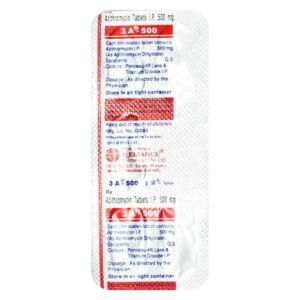
Afdiz 500 MG Tablet 3
₹26.95
Quick fact
Afdiz is an azithromycin antibiotic tablet used for certain bacterial infections, including respiratory, skin, ear and sexually transmitted infections. Take it only as prescribed.
Uses
What is Afdiz 500 MG Tablet 3 & Important Details
Afdiz is an antibiotic tablet. It is used for some bacterial infections; the infection and the prescribed course determine whether it is suitable.
- The pack contains 3 tablets.
- The active ingredient is azithromycin; each tablet contains 500 mg.
- Uses include bacterial infections of the respiratory system, skin, ears and sexually transmitted infections.
How does Afdiz 500 MG Tablet 3 work (mechanism of action)?
Afdiz works against bacteria by interfering with the proteins they need to grow and survive.
- It inhibits bacterial protein synthesis.
- This prevents production of proteins needed for bacterial growth and survival.
Specialized or Off-Label Uses of Afdiz 500 MG Tablet 3
The available information does not establish any specialized or off-label uses for Afdiz.
Conditions That Afdiz 500 MG Tablet 3 Will Not Treat
Afdiz is an antibiotic, so it is not effective against viral infections such as flu or the common cold. It is not a general fever medicine.
Benefits
What are the benefits of taking Afdiz 500 MG Tablet 3
Afdiz is used for certain bacterial infections affecting different parts of the body. Stopping bacterial growth can help the body clear the infection.
- Supported uses include respiratory infections, including pneumonia and bronchitis.
- It is also used for certain skin, ear and sexually transmitted infections.
Side Effects
What are the most common side effects of Afdiz 500 MG Tablet 3?
Common side effects reported with Afdiz include digestive symptoms and headache. The effects may worry you or persist; contact your doctor in that case.
- Diarrhoea, vomiting, nausea and stomach pain.
- Headache.
Do not start another medicine for these symptoms without checking with your doctor or pharmacist.
What are the serious side effects of Afdiz 500 MG Tablet 3?
Severe diarrhoea can need urgent medical attention, particularly if it is watery or bloody.
- Severe watery diarrhoea.
- Bloody diarrhoea.
Get emergency medical help if you experience either symptom. Ask a doctor before taking anti-diarrhoeal medicine.
Severe Allergic Reactions of Afdiz 500 MG Tablet 3?
Afdiz may cause an allergic reaction. Seek medical attention if you notice symptoms such as:
- Rash or itching.
- Swelling or shortness of breath.
Get emergency medical help for a severe reaction, including swelling or difficulty breathing.
What side effects may I notice from receiving this medication?
Side effects reported with Afdiz include:
- Headache, dizziness or stomach pain.
- Diarrhoea, nausea or vomiting.
Contact your doctor if a side effect is severe, persists or worries you.
Afdiz 500 MG Tablet 3 Dosage Guidelines
Overview
The listed adult dose is 500 mg by mouth once daily for 3 days. The doctor decides the final dose and course for the infection being treated.
Adults
The listed adult dose is 500 mg orally, once daily, for 3 days. The doctor may change it.
Children
For ages 2 – 12 years, the listed dose is 10 mg/kg orally once daily for 3 days; for ages 13 – 18 years, 500 mg orally once daily for 3 days. A doctor must decide.
Older adults
The listed geriatric dose is 500 mg orally once daily for 3 days. Use the lowest effective dose as advised. The doctor decides.
- The prescribed infection and your medical circumstances can affect the dose; follow your doctor’s instructions.
Dosage Adjustments for Kidney, Liver, or Other Health Problems
Dose changes depend on the person’s health and the infection. Follow the prescriber’s instructions.
- Normal kidney function: No specific adjustment is established in the available information.
- Reduced kidney function: A specific dose adjustment is not established here. Tell the doctor about kidney problems before use.
- Severe kidney impairment: A specific adjustment is not established in the available information; seek the doctor’s advice.
- Dialysis: A dialysis-specific dose is not established in the available information; ask the treating doctor.
- Liver disease: Tell the doctor about liver problems. Do not use Afdiz if you have a history of cholestatic jaundice or hepatic dysfunction that it can worsen.
- Other important conditions: Tell your doctor about heart problems or abnormal heart rhythms; use caution with myasthenia gravis.
Do not adjust the dose yourself; check with your doctor or pharmacist if your health changes.
How Often and How Long to Take Afdiz 500 MG Tablet 3?
The listed adult course is once daily for 3 days, but the dose and duration prescribed for you may differ.
- Take it at the same time every day.
- Complete the course as instructed and follow your doctor’s directions.
How should I take Afdiz 500 MG Tablet 3?
Taking Afdiz 500 MG Tablet 3 With or Without Food
Afdiz can generally be taken with or without food. If you have a sensitive stomach, taking it with a meal may help avoid discomfort.
How to Take Specific Forms (Tablets, Chewables, Liquid Suspension)
Tablets: Swallow the tablet whole with a glass of water. Do not cut, break or chew it.
Overdose/Missed Dose
What should I do if I accidentally use too much Afdiz 500 MG Tablet 3?
Taking too much may cause diarrhoea, hearing loss or feeling sick. Contact a doctor immediately or go to a nearby hospital if you have taken more than prescribed.
What should I do if I miss a dose of Afdiz 500 MG Tablet 3?
Take the missed dose when you remember. If it is time for your next dose, skip the missed one and continue your regular schedule. Do not take an extra dose.
Interactions
Does Afdiz 500 MG Tablet 3 interact with foods or drinks?
Afdiz can generally be taken with or without food. Avoid alcohol while taking it, as it may worsen side effects such as upset stomach, dizziness or drowsiness.
Does Afdiz 500 MG Tablet 3 interact with other medicines (drug interactions)
Tell your doctor about all medicines you take. Some medicines should not be combined with Afdiz or may need caution.
- Do not use ergotamine at the same time as Afdiz.
- Keep antacids at least 2 hours before or after Afdiz; they may affect absorption.
- Digoxin, colchicine, cyclosporin and astemizole should be used cautiously with Afdiz.
Afdiz 500 MG Tablet 3 and Blood Thinners
Blood thinners such as warfarin should be used cautiously with Afdiz. Tell your doctor if you take one.
Afdiz 500 MG Tablet 3 and Birth Control (if applicable)
A specific interaction with birth control is not established in the available information.
Interactions with Supplements, Vitamins, and Herbal Products
Tell your doctor about supplements and herbal products you take. Specific supplement interactions are not established in the available information.
Warnings & Precautions
Who should not use Afdiz 500 MG Tablet 3?
Afdiz may not be suitable for everyone. Tell your doctor about allergies and relevant medical conditions before taking it.
- Do not take it if you are allergic to azithromycin, a related antibiotic such as erythromycin, or another ingredient in the tablet.
- Do not use it if you have a history of cholestatic jaundice or hepatic dysfunction that may be worsened by Afdiz.
What should I know about Afdiz 500 MG Tablet 3 before using it?
Before starting Afdiz, tell your doctor about your medical history and medicines. Seek advice if you develop severe or persistent diarrhoea.
- Mention heart problems or abnormal heart rhythms, kidney or liver problems, and muscle weakness from myasthenia gravis.
- Use Afdiz exactly as prescribed and do not exceed the prescribed dose.
Precautions for Pre-existing Conditions (Heart, Kidney, Liver)
Kidney disease: Tell your doctor about kidney problems before use.
Liver disease: Tell your doctor about liver problems. Do not use Afdiz if you have a history of cholestatic jaundice or hepatic dysfunction that may be worsened by it.
Heart disease: Tell your doctor if you have heart problems or abnormal heart rhythms before use.
Alcohol: Can You Drink Alcohol While Taking Afdiz 500 MG Tablet 3?
Avoid alcohol while taking Afdiz. It may exaggerate side effects such as upset stomach, dizziness and drowsiness.
Pregnancy and Breastfeeding
Pregnancy: Use Afdiz during pregnancy only when prescribed by a doctor.
Breastfeeding: Afdiz passes into breast milk; breastfeeding is not advised while taking it. Discuss your situation with your doctor.
Children: A doctor must decide whether Afdiz is suitable and determine the dose.
Older adults: The listed geriatric dose is as prescribed by the doctor.
Safe Usage & Best Practices
Why You Must Complete the Full Prescription
Complete the full course as instructed, even if you feel better. Stopping early may allow the infection to return or worsen.
Consequences of Skipping Doses or Sharing Medication
Skipping doses or stopping early may allow the infection to return or worsen. Take Afdiz only as prescribed.
- Do not share your medicine; ask a doctor or pharmacist if you are unsure what to do.
Can Afdiz 500 MG Tablet 3 cause diarrhoea?
Yes. Diarrhoea is a common side effect of Afdiz; contact your doctor if it is severe or persistent.
- Other common effects include nausea, vomiting and stomach pain.
What should you do if you feel better before finishing the medication?
Keep taking Afdiz for the full course as instructed, even if you feel better; stopping early may allow the infection to return or worsen.
- Do not change the dose or stop early without speaking to your doctor.
Storage Details
Store Afdiz tablets at room temperature in a cool, dry place.
Frequently asked questions
-
1. Can Afdiz treat a cold or flu?
Ans: No. Antibiotics do not treat viral infections such as flu or the common cold.
-
2. Can I take Afdiz with food?
Ans: It can generally be taken with or without food.
-
3. What if I take too much Afdiz?
Ans: Contact a doctor immediately or go to a nearby hospital; overdose may cause diarrhoea, hearing loss or feeling sick.
-
4. What if I miss a dose?
Ans: Take it when remembered unless it is time for the next dose; then skip it and continue your regular schedule.
-
5. Should I stop when I feel better?
Ans: No. Complete the full course as instructed; stopping early may allow the infection to return or worsen.