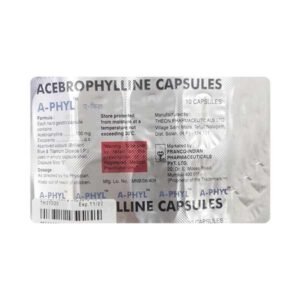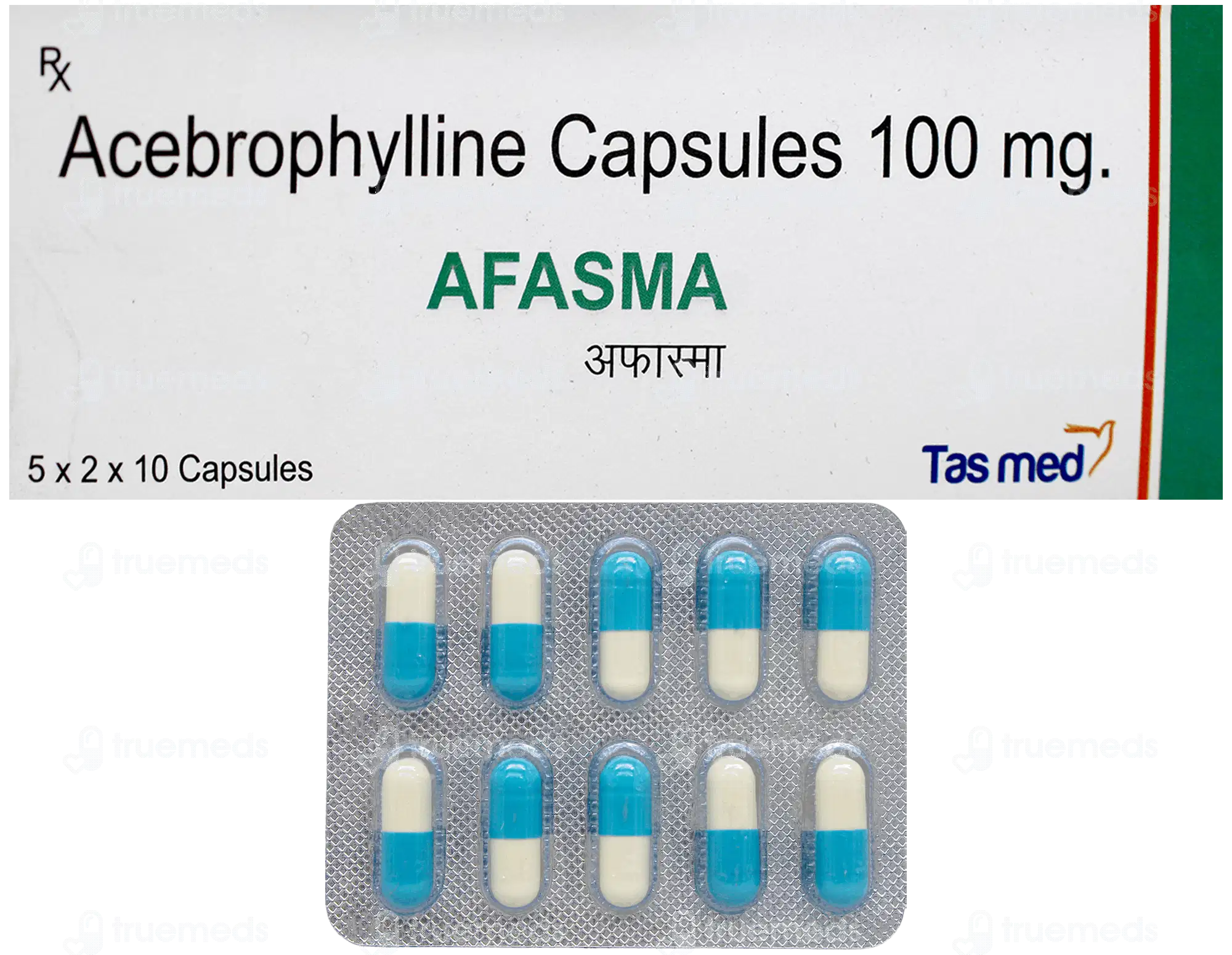
Afasma Capsule 10
₹102.85
Quick fact
Afasma Capsule 10 contains acebrophylline and is used to manage asthma, chronic obstructive pulmonary disease and bronchitis. It may help ease breathing by relaxing airway muscles and loosening mucus.
Uses
What is Afasma Capsule 10 & Important Details
Afasma Capsule 10 is a capsule containing acebrophylline. It is used for breathing problems associated with certain airway conditions.
- The pack contains 10 capsules.
- It is used to manage asthma, chronic obstructive pulmonary disease (COPD) and bronchitis.
- Whether this medicine requires a prescription is not established in the available information.
How does Afasma Capsule 10 work (mechanism of action)?
Acebrophylline helps relax the muscles around the airways and loosens mucus, which can help clear the airways and make breathing easier.
- It relaxes airway muscles.
- It loosens mucus in the airways, helping clear them.
- Clearing the airway can ease breathing.
Specialized or Off-Label Uses of Afasma Capsule 10
No off-label uses are supported by the available information. Ask a doctor before using Afasma for a condition other than the stated uses.
Conditions That Afasma Capsule 10 Will Not Treat
Afasma is not a rescue treatment for a sudden asthma attack. If breathing suddenly worsens, contact a doctor or go to a hospital.
Benefits
What are the benefits of taking Afasma Capsule 10
Afasma is used to manage breathing difficulty associated with asthma, COPD and bronchitis. Its effects on airway muscles and mucus may help breathing feel easier.
- It helps relax the muscles around the airways.
- It helps loosen mucus and clear the airway.
- It may ease breathing in the conditions for which it is used.
Side Effects
What are the most common side effects of Afasma Capsule 10?
Afasma can cause side effects. The following effects are listed as common for this medicine.
- Stomach pain or discomfort, heartburn, or loss of appetite.
- Nausea or vomiting.
- Dizziness or drowsiness.
- Diarrhea, constipation, or nasal inflammation.
Contact your doctor if side effects trouble you or persist.
What are the serious side effects of Afasma Capsule 10?
Seek medical advice promptly for severe or persistent symptoms. Serious effects listed for Afasma include:
- Irregular heartbeat or chest pain.
- Severe stomach pain or signs of bleeding.
- Seizures.
Contact a doctor immediately if a severe or persistent side effect occurs.
Severe Allergic Reactions of Afasma Capsule 10?
A severe allergic reaction is listed as a serious effect. Warning symptoms include:
- Swelling.
- Difficulty breathing.
Get emergency medical care if these symptoms suggest a severe allergic reaction.
What side effects may I notice from receiving this medication?
You may notice effects such as:
- Rash, itching, or red spots or bumps.
- Stomach discomfort, nausea, or vomiting.
- Dizziness or drowsiness.
- Diarrhea or constipation.
Tell your doctor if an effect worries you or does not settle.
Afasma Capsule 10 Dosage Guidelines
Overview
Adults are generally prescribed one or two doses per day. The exact amount is not specified in the product dosing information; the doctor decides the dose and duration.
Adults
Adults are prescribed one or two doses per day; the amount and maximum daily dose are not specified here. The doctor may change it.
Children
Afasma is not recommended for children and adolescents below 18 years. A doctor must decide whether it is appropriate.
Older adults
Use Afasma with caution in older adults; the dose should be individualised. The doctor decides the final dose.
- The doctor considers age, body weight and disease condition when deciding the dose.
Dosage Adjustments for Kidney, Liver, or Other Health Problems
Dose changes depend on health conditions. Ask the prescriber how Afasma applies to your situation.
- Normal kidney function: A specific dose adjustment is not established in the available information.
- Reduced kidney function: Tell your doctor; use requires medical advice and caution.
- Severe kidney impairment: Afasma is not recommended for patients with severe kidney problems.
- Dialysis: A dialysis dose or adjustment is not established in the available information.
- Liver disease: Tell your doctor. Use caution with hepatic dysfunction; Afasma is not recommended for severe liver problems.
- Other important conditions: Tell your doctor about heart problems, fits, stomach ulcers, viral infections, hypertension or hyperthyroidism before use.
Do not change your dose without medical advice.
How Often and How Long to Take Afasma Capsule 10?
For adults, Afasma is generally prescribed as one or two doses per day. The duration depends on your condition and your doctor’s instructions.
- Take it as directed by your doctor.
- Do not stop or reduce the dose without consulting your doctor.
How should I take Afasma Capsule 10?
Taking Afasma Capsule 10 With or Without Food
Food instructions differ in the available information: one instruction says to take Afasma with or after food, while another says it may be taken with or without food. Follow your doctor’s or pack’s directions.
How to Take Specific Forms (Tablets, Chewables, Liquid Suspension)
Capsules: Swallow the capsule whole with water. Do not crush or chew it.
Overdose/Missed Dose
What should I do if I accidentally use too much Afasma Capsule 10?
Taking too much may cause nausea, vomiting, upper stomach pain, restlessness, fits, a fast heart rate or hyperactivity. Seek urgent medical advice if an overdose is suspected.
What should I do if I miss a dose of Afasma Capsule 10?
Take the missed dose as soon as possible. If it is time for the next dose, skip the missed dose and take the next one at the regular time. Do not double the dose.
Interactions
Does Afasma Capsule 10 interact with foods or drinks?
Avoid excessive caffeine-containing foods or drinks, which may increase the risk of side effects. Alcohol may worsen dizziness or stomach irritation, so use caution.
Does Afasma Capsule 10 interact with other medicines (drug interactions)
Tell your doctor about all medicines you take, especially these groups, before starting Afasma:
- Anti-gout medicines, H2 blockers and antibiotics.
- Corticosteroids, calcium channel blockers and diuretics.
- Cardiac stimulants, oral contraceptives and benzimidazoles.
Afasma Capsule 10 and Blood Thinners
Tell your doctor if you take blood thinners. A specific interaction with Afasma is not established in the available information.
Afasma Capsule 10 and Birth Control (if applicable)
Oral contraceptives are among the medicines you should tell your doctor about before taking Afasma.
Interactions with Supplements, Vitamins, and Herbal Products
The available information does not establish specific interactions with vitamins, herbal products or supplements. Tell your doctor or pharmacist about anything you take.
Warnings & Precautions
Who should not use Afasma Capsule 10?
Do not take Afasma if you are allergic to acebrophylline or another ingredient. It is not recommended in some conditions; seek medical advice before use if you have:
- Severe kidney or liver problems.
- A previous myocardial infarction or arrhythmias.
- Pregnancy, or a child or adolescent below 18 years.
What should I know about Afasma Capsule 10 before using it?
Before taking Afasma, tell your doctor about your health conditions and all medicines you use.
- Mention liver, kidney or heart problems, fits, stomach ulcers, viral infections, hypertension or hyperthyroidism.
- Use caution with dizziness or drowsiness; do not drive or use machinery if affected.
- Do not stop treatment without consulting your doctor.
Precautions for Pre-existing Conditions (Heart, Kidney, Liver)
Kidney disease: Tell your doctor. Afasma is not recommended for severe kidney problems; caution may be needed with other kidney problems.
Liver disease: Tell your doctor. Use caution with hepatic dysfunction; Afasma is not recommended for severe liver problems.
Heart disease: Tell your doctor about heart problems. It is not recommended after myocardial infarction or with arrhythmias, and caution is advised with heart failure or other heart problems.
Alcohol: Can You Drink Alcohol While Taking Afasma Capsule 10?
Use caution with alcohol while taking Afasma.
- Alcohol may worsen dizziness or stomach irritation.
Pregnancy and Breastfeeding
Pregnancy: Afasma is not recommended during pregnancy.
Breastfeeding: Whether it passes into breast milk is not known; use it only if a physician considers it necessary.
Children: It is not recommended for children and adolescents below 18 years.
Older adults: Use with caution in older adults.
Safe Usage & Best Practices
Why You Must Complete the Full Prescription
Continue Afasma for the duration prescribed. Do not stop it without consulting your doctor.
Consequences of Skipping Doses or Sharing Medication
Follow the prescribed schedule and do not share your medicine with another person.
- If you miss a dose, follow the missed-dose instructions and do not double it.
- Do not reduce or stop your dose without consulting your doctor.
Can Afasma Capsule 10 cause nausea?
Yes. Nausea is listed as a common side effect of Afasma.
- Other listed effects include vomiting, stomach discomfort, dizziness and drowsiness.
What should you do if you feel better before finishing the medication?
Keep taking Afasma for as long as your doctor prescribes it, even if your symptoms improve.
- Do not stop or reduce the dose suddenly without consulting your doctor.
Storage Details
Store Afasma as directed on its pack and keep it in a suitable place.
- Store below 25°temprature.
- Protect it from direct sunlight and heat.
- Keep it in a clean, dry place protected from moisture.
Frequently asked questions
-
1. What is Afasma used for?
Ans: It is used to manage asthma, COPD and bronchitis.
-
2. Can I use it for a sudden asthma attack?
Ans: No. It is not for treating an acute asthma attack.
-
3. Can I take it with food?
Ans: Instructions differ: information says with or after food, or with or without food. Follow your doctor’s or pack’s directions.
-
4. What if I miss a dose?
Ans: Take it when remembered unless it is time for the next dose; then skip it. Do not double the dose.
-
5. Can I stop when I feel better?
Ans: Do not stop or reduce the dose without consulting your doctor.