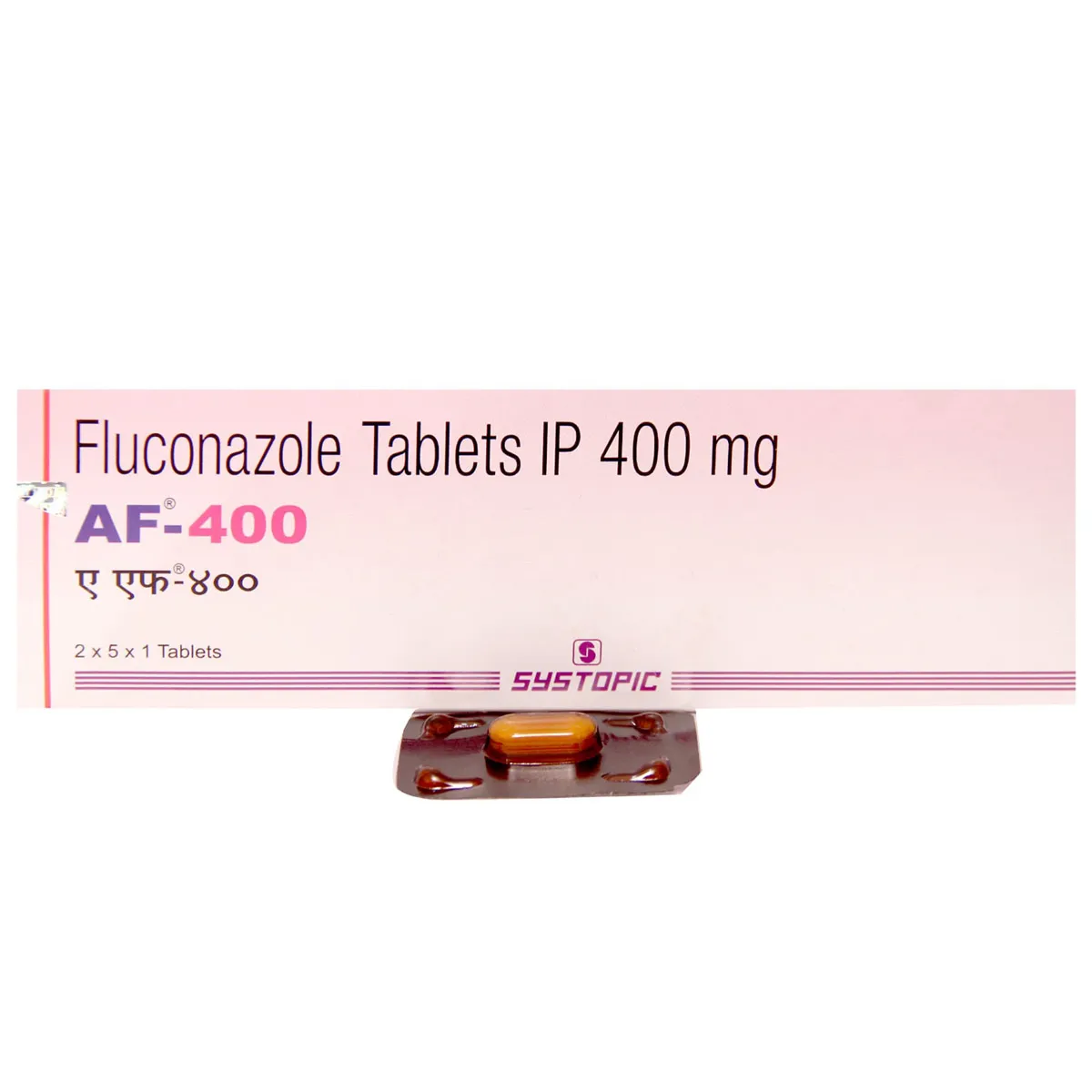
Af 400 Tablet 1
₹27.53
Quick fact
Af 400 Tablet 1 is an antifungal medicine containing fluconazole, used for fungal infections affecting areas such as the mouth, throat, vagina, nails and other parts of the body.
Uses
What is Af 400 Tablet 1 & Important Details
Af 400 Tablet 1 is an oral antifungal medicine.
- It is a tablet supplied in a pack of one tablet.
- The active ingredient is fluconazole.
How does Af 400 Tablet 1 work (mechanism of action)?
Fluconazole works by damaging the fungal cell membrane and stopping fungal growth.
- It blocks the production of ergosterol, which fungi need for their cell membranes.
- The weakened membrane helps stop fungi from growing and spreading.
Specialized or Off-Label Uses of Af 400 Tablet 1
Doctors may also use fluconazole to help prevent fungal infections in people with weakened immune systems.
Conditions That Af 400 Tablet 1 Will Not Treat
This is an antifungal medicine, not a treatment for infections that are not caused by fungi.
Benefits
What are the benefits of taking Af 400 Tablet 1
By treating the underlying fungal infection, Af 400 Tablet 1 may help ease related discomfort as the infection clears.
- It treats fungal infections affecting the mouth, throat, vagina, nails and other parts of the body.
- It may improve symptoms such as itching, burning and pain as the infection clears.
Side Effects
What are the most common side effects of Af 400 Tablet 1?
Common side effects reported with Af 400 Tablet 1 include stomach and digestive symptoms, headache and skin symptoms.
- Diarrhoea, nausea, vomiting, indigestion or stomach pain.
- Headache, dizziness, a change in taste or skin rash.
What are the serious side effects of Af 400 Tablet 1?
Some symptoms may need prompt medical attention, including signs of liver problems or a severe skin reaction.
- Yellowing of the eyes or skin, dark urine, or stomach pain.
- A severe rash, including blistering with fever.
- Irregular heartbeat or breathing difficulty.
Contact a doctor promptly if these symptoms occur. Seek urgent medical help for severe symptoms.
Severe Allergic Reactions of Af 400 Tablet 1?
An allergic reaction can cause symptoms affecting the skin, face, throat or breathing.
- Rash or swelling of the lips, throat or face.
- Difficulty swallowing or breathing, dizziness or nausea.
Stop taking the medicine and inform a doctor if these signs occur. Get emergency medical care for a severe reaction or breathing difficulty.
What side effects may I notice from receiving this medication?
Other effects have also been reported with fluconazole.
- Hair loss or heartburn.
- Swelling of the face, lips, eyelids, tongue, hands or feet.
Tell a doctor if an effect is severe, persistent or worrying.
Af 400 Tablet 1 Dosage Guidelines
Overview
The dose and treatment duration depend on the fungal infection. Adult dosing commonly varies by condition; follow the prescription, and the doctor decides the final dose.
Adults
Take AF 400 exactly as prescribed; the dose and treatment length depend on the condition being treated. Do not change it yourself; the doctor may change it.
Children
A doctor may prescribe this medicine for a child and sets the dose according to the infection, age and weight. A doctor must decide the final dose.
Older adults
Older adults need individual assessment; usual dosing may need adjustment, particularly with kidney problems. Use the lowest effective dose; the doctor decides.
- The infection being treated and how the patient responds can affect the dose and duration.
- Kidney function and other health conditions may affect safe dosing; discuss these with the doctor.
Dosage Adjustments for Kidney, Liver, or Other Health Problems
Fluconazole dosing may need to be changed according to kidney function and the reason for treatment.
- Normal kidney function: The usual dose depends on the infection; follow the prescriber’s instructions.
- Reduced kidney function: For repeated doses, the maintenance dose is generally reduced when creatinine clearance is 50 mL/min or lower; a clinician must determine the adjustment.
- Severe kidney impairment: A specific adjustment for severe impairment is not established in the available product information; seek the prescriber’s advice.
- Dialysis: A specific dialysis dose is not established in the available product information; ask the treating doctor to set the dose.
- Liver disease: Use with caution and tell the doctor about liver problems. The doctor may monitor liver function.
- Other important conditions: Tell the doctor about heart failure, a weak immune system, or other health conditions before treatment.
Do not adjust the dose yourself. The prescriber should choose the dose and monitor treatment where needed.
How Often and How Long to Take Af 400 Tablet 1?
How often and how long to take Af 400 Tablet 1 depends on the infection and the prescribed treatment plan.
- Follow the schedule given by the doctor.
- Continue until the prescription is finished, even if symptoms disappear.
How should I take Af 400 Tablet 1?
Taking Af 400 Tablet 1 With or Without Food
Af 400 Tablet 1 may be taken with or without food.
How to Take Specific Forms (Tablets, Chewables, Liquid Suspension)
Tablets: Swallow the tablet whole. Do not chew, crush or break it.
Overdose/Missed Dose
What should I do if I accidentally use too much Af 400 Tablet 1?
If too much is taken, seek medical help right away. Overdose may cause confusion, seizures or unusual behaviour; severe dizziness or changes in perception have also been reported.
What should I do if I miss a dose of Af 400 Tablet 1?
Take a missed dose when remembered unless the next scheduled dose is only a few hours away; then skip it. Do not take a double dose.
Interactions
Does Af 400 Tablet 1 interact with foods or drinks?
The tablet can be taken with or without food.
Does Af 400 Tablet 1 interact with other medicines (drug interactions)
Fluconazole can interact with other medicines. Tell the doctor or pharmacist about all medicines you take before starting treatment.
- Blood thinners.
- Some diabetes medicines and heart medicines, including medicines that affect heart rhythm.
- Antacids: avoid taking them within one hour before or two hours after this tablet.
Af 400 Tablet 1 and Blood Thinners
Fluconazole can interact with blood thinners.
Af 400 Tablet 1 and Birth Control (if applicable)
A reliable method of contraception is advised while taking this medicine to prevent pregnancy.
Interactions with Supplements, Vitamins, and Herbal Products
Specific interactions with supplements, vitamins or herbal products are not established in the available information.
Warnings & Precautions
Who should not use Af 400 Tablet 1?
People with a known allergy to this medicine should not use it. People with heart conditions should discuss treatment with a doctor because cardiovascular effects are possible.
- Tell the doctor about a history of heart failure or a weak immune system, including HIV/AIDS.
- Tell the doctor about kidney or liver problems.
What should I know about Af 400 Tablet 1 before using it?
Before starting treatment, review your health conditions and medicines with the doctor. Do not stop or change treatment without medical advice.
- The doctor may check liver function before treatment and regularly afterwards; monitoring may be considered if treatment lasts more than a month.
- Dizziness may occur; do not drive or operate machinery until it is safe to do so.
Precautions for Pre-existing Conditions (Heart, Kidney, Liver)
Kidney disease: Tell the doctor about kidney problems, as they may affect treatment decisions.
Liver disease: Use with caution and tell the doctor. Liver-function checks may be done before and during treatment.
Heart disease: The medicine is not recommended for heart patients because of possible cardiovascular effects. Discuss this with a doctor.
Alcohol: Can You Drink Alcohol While Taking Af 400 Tablet 1?
Avoid or limit alcohol while taking Af 400 Tablet 1.
- Alcohol may increase the risk of liver damage and worsen dizziness.
Pregnancy and Breastfeeding
Pregnancy: If pregnant or planning to conceive, consult a doctor before starting. Do not take it during pregnancy unless a doctor has told you to.
Breastfeeding: Use this medicine while breastfeeding only with caution and a doctor’s advice.
Children: A doctor may prescribe it depending on the infection and set the dose by age and weight.
Older adults: Older adults should consult a healthcare provider; special dosing or another treatment may be needed.
Safe Usage & Best Practices
Why You Must Complete the Full Prescription
Finish the full prescribed course even if you feel better. Stopping early may allow the infection to return.
Consequences of Skipping Doses or Sharing Medication
Skipping doses or stopping early can increase the risk of the infection returning.
- Take doses at evenly spaced times.
- Do not share your medicine; ask a doctor or pharmacist if you have questions.
Can Af 400 Tablet 1 cause diarrhoea?
Yes.
- Other common effects include nausea, vomiting, stomach pain, headache and skin rash.
What should you do if you feel better before finishing the medication?
Keep taking Af 400 Tablet 1 for the full prescribed course even if you feel better; stopping early may allow the infection to return.
- Do not stop treatment early.
- Ask the doctor if you are unsure about continuing.
Storage Details
Store Af 400 Tablet 1 at room temperature and keep it safely out of children’s reach.
- The suggested storage range is 20°C to 25°C (68°F to 77°F).
- Keep it in a cool, dry place away from direct sunlight and moisture.
Frequently asked questions
-
1. What is Af 400 Tablet 1 used for?
Ans: It is used to treat fungal infections, including infections of the mouth, throat, vagina, nails and other body areas.
-
2. Can I take it with food?
Ans: Yes. The tablet may be taken with or without food.
-
3. What if I miss a dose?
Ans: Take it when remembered unless the next dose is only a few hours away; skip it then. Do not double the dose.
-
4. Should I finish the prescribed course?
Ans: Yes. Continue until the prescription is finished, even if symptoms disappear.
-
5. What should I do if I get a rash or swelling?
Ans: Stop taking it and inform a doctor if you have signs of an allergic reaction. Seek emergency help for a severe reaction or breathing difficulty.