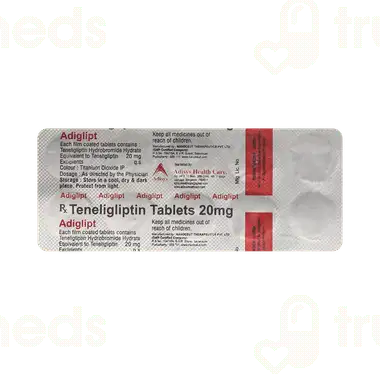
Adiglipt 20 MG Tablet 10
₹98.44
Quick fact
Adiglipt is a prescription tablet used with diet and exercise to help manage type 2 diabetes in adults. It contains teneligliptin and helps control blood sugar.
Uses
What is Adiglipt 20 MG Tablet 10 & Important Details
Adiglipt 20 MG Tablet 10 is an oral prescription medicine for adults with type 2 diabetes. It is used alongside diet and exercise to help manage blood sugar.
- It is a tablet supplied in a pack of 10 tablets.
- Its active ingredient is teneligliptin.
- It may help when diet and exercise alone do not provide enough blood sugar control.
How does Adiglipt 20 MG Tablet 10 work (mechanism of action)?
Teneligliptin affects incretins, hormones involved in insulin release when glucose is present.
- It inhibits DPP-4, an enzyme that breaks down incretins.
- This increases incretin levels and insulin levels.
- It also decreases glucagon secretion.
Specialized or Off-Label Uses of Adiglipt 20 MG Tablet 10
No off-label uses are established in the available information. Use Adiglipt only for a purpose advised by your doctor.
Conditions That Adiglipt 20 MG Tablet 10 Will Not Treat
Adiglipt is not for type 1 diabetes or diabetic ketoacidosis. The available information does not establish other conditions it treats.
Benefits
What are the benefits of taking Adiglipt 20 MG Tablet 10
Adiglipt helps manage blood sugar in adults with type 2 diabetes when used with diet and exercise.
- It can help lower and stabilise blood sugar levels throughout the day.
- Maintaining healthier blood sugar may help reduce the risk of diabetes-related complications affecting the kidneys, nerves, eyes and heart.
Side Effects
What are the most common side effects of Adiglipt 20 MG Tablet 10?
Possible side effects include low blood sugar and other symptoms. The supplied information labels several of these effects as common.
- Low blood sugar (hypoglycaemia), dizziness, headache and constipation.
- Nausea, diarrhoea, joint pain and nasal congestion.
- Fever is also listed as a possible side effect.
Tell your doctor if a side effect does not improve or becomes serious. Do not stop the medicine unless your doctor advises you to.
What are the serious side effects of Adiglipt 20 MG Tablet 10?
Severe, persistent stomach pain that spreads to your back is a warning symptom.
- Watch for severe, constant stomach pain radiating to the back.
Stop taking the medicine and seek medical advice immediately if this occurs. Get prompt medical help for any severe or worrying symptoms.
Severe Allergic Reactions of Adiglipt 20 MG Tablet 10?
A serious allergic reaction is a reason to stop Adiglipt and contact a doctor immediately. Specific allergy symptoms are not listed in the available information.
- Specific emergency allergy symptoms are not established in the available information.
Seek emergency medical care if you think you are having a severe allergic reaction.
What side effects may I notice from receiving this medication?
Possible effects include headache and digestive symptoms.
- Headache, nausea, diarrhoea and constipation.
- Gas and cold-like symptoms are also listed as possible mild effects.
Contact your doctor if symptoms persist, become serious or concern you.
Adiglipt 20 MG Tablet 10 Dosage Guidelines
Overview
The usual adult dose is 20 mg once daily; the maximum is 40 mg per day. Follow your doctor’s directions, as the final dose is decided for you.
Adults
The usual dose is 20 mg once daily; maximum 40 mg per day. The doctor may change it.
Children
Adiglipt is not recommended for children; its safety and efficacy have not been established. A doctor must decide.
Older adults
A doctor may adjust the dose based on your condition. The doctor decides the final dose.
- Your doctor may consider your health conditions and other medicines when deciding your dose.
Dosage Adjustments for Kidney, Liver, or Other Health Problems
Dose changes depend on individual health needs. The supplied information advises discussing kidney or liver disease with a doctor.
- Normal kidney function: No dose adjustment is generally needed.
- Reduced kidney function: A dose adjustment is generally not required; discuss kidney problems with your doctor.
- Severe kidney impairment: No standard adjustment is generally required, but your doctor should assess your condition.
- Dialysis: A specific dialysis adjustment is not established in the available information; ask your doctor.
- Liver disease: No adjustment is generally needed for mild or moderate disease; severe disease needs medical assessment before use.
- Other important conditions: Tell your doctor about heart failure or pancreas problems before starting treatment.
Do not change your dose without your doctor’s advice.
How Often and How Long to Take Adiglipt 20 MG Tablet 10?
Adiglipt is typically taken once daily. The duration of treatment should be decided by your doctor.
- Take it at the same time every day.
- Follow your doctor’s instructions about your treatment schedule.
How should I take Adiglipt 20 MG Tablet 10?
Taking Adiglipt 20 MG Tablet 10 With or Without Food
You can take Adiglipt with or without food. Follow the instructions given by your doctor.
How to Take Specific Forms (Tablets, Chewables, Liquid Suspension)
Tablets: Swallow the tablet whole with a glass of water. Do not crush, chew or break it.
Overdose/Missed Dose
What should I do if I accidentally use too much Adiglipt 20 MG Tablet 10?
If you take more than prescribed, seek immediate medical attention or contact a poison control centre, even if you feel well.
What should I do if I miss a dose of Adiglipt 20 MG Tablet 10?
Take a missed dose when you remember. If it is almost time for your next dose, skip it and resume your schedule. Do not take two doses together.
Interactions
Does Adiglipt 20 MG Tablet 10 interact with foods or drinks?
Alcohol can interfere with blood sugar control and increase the risk of low blood sugar and pancreas inflammation. It is best to limit or avoid alcohol.
Does Adiglipt 20 MG Tablet 10 interact with other medicines (drug interactions)
Tell your doctor about all medicines you use. Some combinations can affect blood sugar or increase the risk of low blood sugar.
- Sulfonylureas or insulin may increase the risk of low blood sugar when combined with Adiglipt; a doctor may need to adjust doses.
- Beta-blockers may mask warning signs of low blood sugar, such as a fast heart rate or shaking.
- Corticosteroids and diuretics may raise blood sugar levels.
Adiglipt 20 MG Tablet 10 and Blood Thinners
A specific interaction with blood thinners is not established in the available information. Ask your doctor or pharmacist about your medicines.
Adiglipt 20 MG Tablet 10 and Birth Control (if applicable)
An interaction with birth control is not established in the available information. Ask your doctor or pharmacist if you have concerns.
Interactions with Supplements, Vitamins, and Herbal Products
Specific interactions with supplements, vitamins or herbal products are not established in the available information. Tell your doctor about anything you take.
Warnings & Precautions
Who should not use Adiglipt 20 MG Tablet 10?
Do not take Adiglipt for type 1 diabetes or diabetic ketoacidosis. Discuss your medical history with your doctor before using it.
- Do not take it if you have had a severe allergic reaction to similar medicines.
- Talk to your doctor first if you have heart failure, pancreas problems, or severe kidney or liver disease.
What should I know about Adiglipt 20 MG Tablet 10 before using it?
Before starting Adiglipt, tell your doctor about your health conditions and all medicines you take.
- Discuss a history of heart failure, pancreas problems, or severe kidney or liver disease.
- Tell your doctor about other medicines, especially insulin or sulfonylureas, which may increase low blood sugar risk with Adiglipt.
Precautions for Pre-existing Conditions (Heart, Kidney, Liver)
Kidney disease: Discuss kidney disease with your doctor before taking Adiglipt.
Liver disease: Discuss severe liver disease with your doctor before taking Adiglipt.
Heart disease: Tell your doctor about a history of heart failure before starting treatment.
Alcohol: Can You Drink Alcohol While Taking Adiglipt 20 MG Tablet 10?
It is best to limit or avoid alcohol while taking Adiglipt.
- Alcohol can affect blood sugar control and increase the risk of low blood sugar or pancreas inflammation.
Pregnancy and Breastfeeding
Pregnancy: Safety in pregnancy is not established. Take Adiglipt only if prescribed by a doctor.
Breastfeeding: Consult your doctor before taking Adiglipt while breastfeeding.
Children: It is not recommended for children; safety and efficacy have not been established.
Older adults: A doctor may adjust the dose based on the person’s condition.
Safe Usage & Best Practices
Why You Must Complete the Full Prescription
Keep taking Adiglipt as prescribed. Do not stop treatment unless your doctor advises you to.
Consequences of Skipping Doses or Sharing Medication
Take Adiglipt only as prescribed and do not share it with anyone. If you miss a dose, follow the missed-dose instructions.
- Do not take two doses at the same time to make up for a missed dose.
- Ask your doctor if you are unsure about your schedule.
Can Adiglipt 20 MG Tablet 10 cause headache?
Yes. Headache is listed as a possible common side effect of Adiglipt.
- Other listed effects include nausea, diarrhoea and constipation.
What should you do if you feel better before finishing the medication?
Feeling better does not mean you should stop Adiglipt. Continue it as prescribed unless your doctor advises otherwise.
- Ask your doctor before changing or stopping treatment.
Storage Details
Store Adiglipt in a cool, dry place away from sunlight.
- Keep it out of reach of children.
- Store at 10ºC to 25ºC or below 30ºC.
Frequently asked questions
-
1. What is Adiglipt used for?
Ans: It is used with diet and exercise to manage type 2 diabetes in adults.
-
2. How often is it usually taken?
Ans: It is typically taken once daily, as directed by your doctor.
-
3. Can I take it with food?
Ans: Yes, it can be taken with or without food.
-
4. What if I miss a dose?
Ans: Take it when remembered unless it is almost time for the next dose; do not take two doses together.
-
5. Can children take Adiglipt?
Ans: It is not recommended for children; its safety and efficacy have not been established.