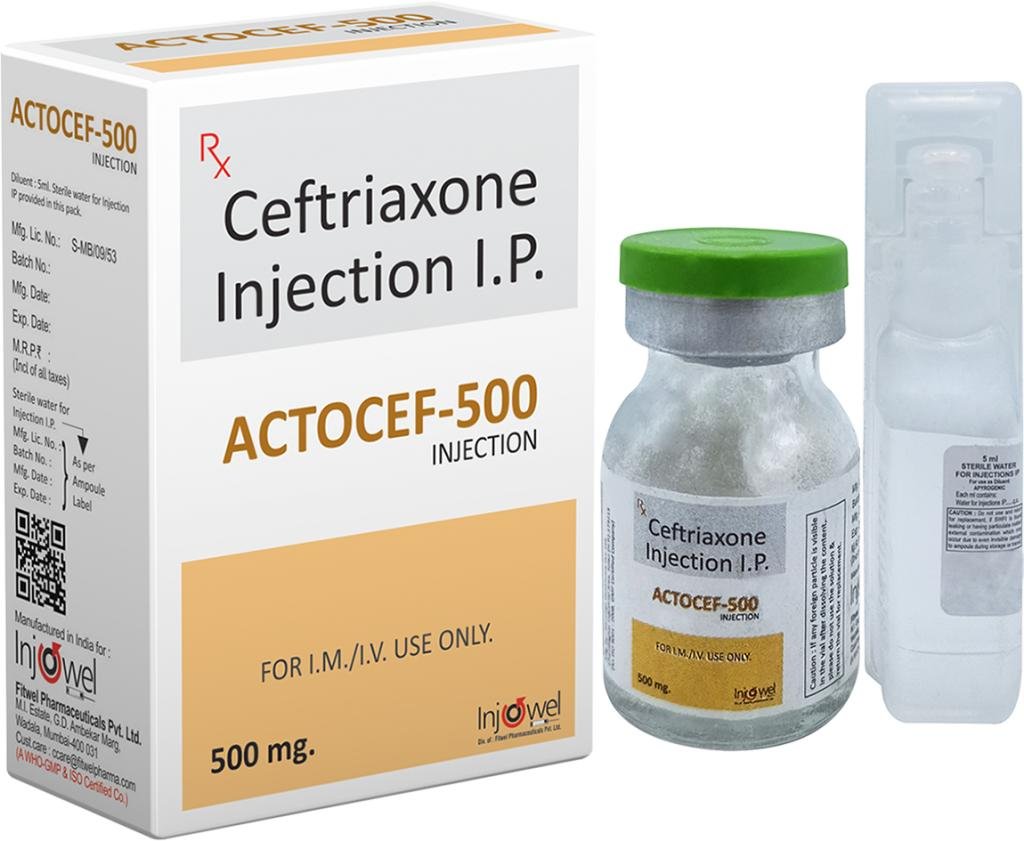
Actocef 500 MG Injection 1
₹41.18
Quick fact
Actocef 500 is a ceftriaxone antibiotic injection used for bacterial infections, including infections of the lungs, brain, urinary tract, skin, bones, blood and heart.
Uses
What is Actocef 500 MG Injection 1 & Important Details
Actocef 500 is an antibiotic injection given by a healthcare professional. It is used to treat bacterial infections and may also be used to prevent infection during some surgeries.
- The product is an injection supplied as one injection.
- The active ingredient is ceftriaxone.
How does Actocef 500 MG Injection 1 work (mechanism of action)?
Actocef 500 is an antibiotic. It acts against bacteria by interfering with a protective structure they need to survive.
- It prevents bacteria from forming the protective cell wall needed for survival.
- Without this protective wall, the bacteria are killed.
Specialized or Off-Label Uses of Actocef 500 MG Injection 1
No off-label use is established in the available information.
Conditions That Actocef 500 MG Injection 1 Will Not Treat
Actocef 500 is an antibiotic for bacterial infections.
Benefits
What are the benefits of taking Actocef 500 MG Injection 1
When prescribed for an infection caused by bacteria, Actocef 500 can help treat that infection.
- It is used for infections such as meningitis and pneumonia.
- It is also used for infections of the ear, urinary tract, skin and soft tissues, bones and joints, blood, and heart.
Side Effects
What are the most common side effects of Actocef 500 MG Injection 1?
The product information describes the following as common or most common side effects. Contact your doctor if they persist or worry you.
- Diarrhea and rash.
- Changes in liver function tests and blood cell counts.
Diarrhea should settle after the course. Tell your doctor if it continues after treatment or if you notice blood in your stools.
What are the serious side effects of Actocef 500 MG Injection 1?
Get medical advice promptly for symptoms that may signal a serious problem.
- Tell your doctor if diarrhea does not stop after the course or if you notice blood in your stools.
- A rash, itchy skin, swelling of the face or mouth, or difficulty breathing may indicate an allergic reaction. Stop the medicine and inform a doctor immediately.
Severe Allergic Reactions of Actocef 500 MG Injection 1?
An allergic reaction can require urgent attention. Stop the medicine and inform a doctor immediately if these symptoms occur.
- Rash or itchy skin.
- Swelling of the face or mouth.
- Difficulty breathing.
Difficulty breathing or swelling of the face or mouth needs emergency medical care.
What side effects may I notice from receiving this medication?
You may notice effects where the injection is given.
- Temporary redness or pain at the injection site.
Tell your doctor if these effects persist or concern you.
Actocef 500 MG Injection 1 Dosage Guidelines
Overview
For adults, a usual ceftriaxone injection dose is 1–2 g once daily or divided into doses every 12 hours; the maximum is 4 g in a day. The doctor decides the final dose and schedule.
Adults
Usual adult dose: 1–2 g once daily or divided every 12 hours; maximum 4 g daily. The doctor decides the final dose.
Children
Children’s dosing is weight- and infection-dependent; this injection should be given only under medical supervision. A doctor must decide the dose.
Older adults
Older adults are generally treated using the usual adult dose, with caution and clinical monitoring. The doctor decides the dose.
- The dose depends on the infection being treated, its severity, and your response to treatment.
- The prescribed schedule may use evenly spaced doses; follow the doctor’s instructions and complete the course.
Dosage Adjustments for Kidney, Liver, or Other Health Problems
The prescriber chooses the dose and monitors people with kidney, liver, or other health problems.
- Normal kidney function: No special adjustment is generally needed; the dose depends on the infection and clinical response.
- Reduced kidney function: Kidney problems require caution and clinician review; an adjustment may depend on the full clinical picture.
- Severe kidney impairment: A clinician should assess the dose, particularly if liver function is also impaired.
- Dialysis: The treating clinician should decide the dose and schedule for a person receiving dialysis.
- Liver disease: Tell the doctor about liver problems before treatment; use requires caution and clinical review.
- Other important conditions: Tell the doctor about other health problems and all medicines being taken so the treatment can be assessed.
Do not change the dose yourself. Ask the treating doctor or pharmacist if you are unsure.
How Often and How Long to Take Actocef 500 MG Injection 1?
The injection is given at evenly spaced intervals according to the schedule prescribed by your doctor.
- Follow the schedule set by your doctor.
- Do not skip doses, and complete the full course even if you feel better.
How should I take Actocef 500 MG Injection 1?
Taking Actocef 500 MG Injection 1 With or Without Food
No specific food instruction is established for this injection. It is administered by a healthcare professional.
How to Take Specific Forms (Tablets, Chewables, Liquid Suspension)
Injection: A doctor or nurse gives Actocef 500 by infusion into a vein or by injection into a vein or muscle. Do not self-administer it.
Overdose/Missed Dose
What should I do if I accidentally use too much Actocef 500 MG Injection 1?
A healthcare professional administers this injection. If you think too much was given, tell the treating doctor or nurse immediately; nausea, vomiting, and diarrhea are listed as possible overdose symptoms.
What should I do if I miss a dose of Actocef 500 MG Injection 1?
Contact the doctor or clinic if a scheduled injection is missed. They can advise when it should be given; do not increase or change the dose yourself.
Interactions
Does Actocef 500 MG Injection 1 interact with foods or drinks?
No known interaction with food is reported. Ask your doctor or pharmacist if you have questions about food or drink during treatment.
Does Actocef 500 MG Injection 1 interact with other medicines (drug interactions)
Tell your doctor about all medicines you take, because some may interact with Actocef 500.
- Blood thinners such as warfarin or heparin may increase the risk of bleeding.
- Diuretics such as furosemide or hydrochlorothiazide may increase the risk of kidney damage when used with this injection.
- The injection may reduce the effectiveness of birth control pills.
Actocef 500 MG Injection 1 and Blood Thinners
Warfarin or heparin may interact with Actocef 500 and increase bleeding risk. Tell your doctor if you take either medicine.
Actocef 500 MG Injection 1 and Birth Control (if applicable)
Actocef 500 may reduce the effectiveness of birth control pills. Ask your doctor about suitable precautions during treatment.
Interactions with Supplements, Vitamins, and Herbal Products
No interaction with supplements, vitamins, or herbal products is established in the available information.
Warnings & Precautions
Who should not use Actocef 500 MG Injection 1?
Tell the doctor about allergies and health conditions before treatment. A history of allergy to ceftriaxone or other cephalosporins is listed as a contraindication.
- Do not use it without medical review if you have had an allergic reaction to ceftriaxone or another cephalosporin.
- Tell the doctor if you have an antibiotic allergy or kidney or liver problems.
What should I know about Actocef 500 MG Injection 1 before using it?
Actocef 500 should be given under medical supervision. Make sure the doctor knows your medical history and current medicines.
- Mention any antibiotic allergies and kidney or liver problems.
- Tell the doctor about all other medicines you are taking.
Precautions for Pre-existing Conditions (Heart, Kidney, Liver)
Kidney disease: Tell the doctor before treatment; kidney problems require caution.
Liver disease: Tell the doctor before treatment; liver problems require caution.
Heart disease: A specific precaution for heart disease is not established in the available information.
Alcohol: Can You Drink Alcohol While Taking Actocef 500 MG Injection 1?
Specific alcohol guidance is not established in the available information. Ask your doctor or pharmacist whether alcohol is appropriate during your treatment.
Pregnancy and Breastfeeding
Pregnancy: Use this injection during pregnancy only when necessary, and consult your doctor before use.
Breastfeeding: Caution is advised because ceftriaxone may pass into breast milk and affect the baby. Consult your doctor.
Children: Give this injection to children only under medical supervision.
Older adults: Older patients should use it under medical supervision, especially if they have kidney or liver problems.
Safe Usage & Best Practices
Why You Must Complete the Full Prescription
Complete the full course as prescribed, even if you feel better. Stopping early may cause the infection to return or worsen.
Consequences of Skipping Doses or Sharing Medication
Skipping doses or stopping early may allow the infection to return or worsen.
- Follow the prescribed schedule and do not skip doses.
- This prescription is for the person it was given to; ask a doctor before any change.
Can Actocef 500 MG Injection 1 cause Diarrhea?
Yes.
- Tell your doctor if diarrhea does not stop after the course or if there is blood in your stools.
What should you do if you feel better before finishing the medication?
Keep following the doctor’s instructions and complete the full course, even if you feel better.
- Do not stop or change treatment without speaking to your doctor.
Storage Details
Store Actocef 500 in a cool, dry place, away from direct sunlight and moisture.
- Keep it out of reach of children.
Frequently asked questions
-
1. What is Actocef 500 used for?
Ans: It is used for bacterial infections and may be used to prevent infection during some surgeries.
-
2. Who gives the injection?
Ans: A doctor or nurse gives it under medical supervision. Do not self-administer.
-
3. Can it cause diarrhea?
Ans: Yes. Diarrhea is listed among its common side effects; tell your doctor if it persists or there is blood in your stools.
-
4. What if I miss a dose?
Ans: Contact the treating clinic for advice about the missed injection. Do not increase the dose yourself.
-
5. Should I finish the prescribed course?
Ans: Yes. Do not skip doses, and complete the full course as prescribed, even if you feel better.