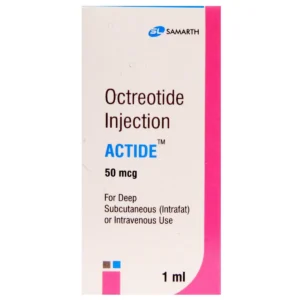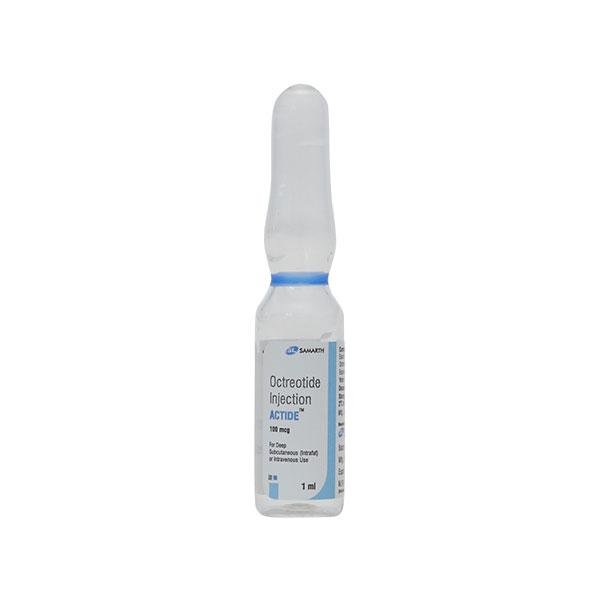
Actide 100mcg Injection 1ml
₹705.00
Quick fact
Actide is an octreotide injection used for several hormone-related conditions, including acromegaly, certain tumour symptoms, and bleeding from gastro-esophageal varices.
Uses
What is Actide 100mcg Injection 1ml & Important Details
Actide is an injection containing octreotide acetate.
- The listed pack is 1 ml.
- It is used to reduce growth hormone in acromegaly when surgery, radiation, or another medication cannot be used.
How does Actide 100mcg Injection 1ml work (mechanism of action)?
Octreotide is derived from somatostatin, a naturally occurring substance.
- It inhibits growth hormone, glucagon, and insulin more effectively than natural somatostatin.
- In acromegaly, it reduces growth hormone and IGF-I.
Specialized or Off-Label Uses of Actide 100mcg Injection 1ml
The available information lists uses for specific conditions but does not establish whether any use is off-label.
Conditions That Actide 100mcg Injection 1ml Will Not Treat
The available information does not identify conditions that Actide will not treat.
Benefits
What are the benefits of taking Actide 100mcg Injection 1ml
Actide may help control symptoms or hormone activity associated with the conditions for which it is prescribed.
- For acromegaly, it helps control excessive growth hormone and may relieve related symptoms such as enlarged hands and feet, joint pain, and facial changes.
- For esophageal varices, it helps control bleeding by reducing blood flow to affected veins.
Side Effects
What are the most common side effects of Actide 100mcg Injection 1ml?
Common side effects reported with Actide include digestive symptoms and headache.
- Diarrhea, flatulence, abdominal pain, nausea, constipation, and headache.
- Back pain and tiredness.
Tell your doctor if side effects persist, worsen, or concern you.
What are the serious side effects of Actide 100mcg Injection 1ml?
Serious effects listed for Actide include changes in heart rate, heart rhythm, blood sugar, thyroid levels, and vitamin B12, as well as gallstones.
- A faster heart rate or changes in heart rhythm.
- Blood sugar becoming too high or too low, changes in thyroid levels, vitamin B12 deficiency, or gallstones.
- Sudden, severe pain in the upper right stomach or a very slow heart rate needs prompt medical attention.
Contact a doctor promptly if these symptoms occur; seek urgent medical help for severe or sudden symptoms.
Severe Allergic Reactions of Actide 100mcg Injection 1ml?
Do not use Actide if you are allergic to octreotide or any of its ingredients.
- The available information does not describe specific allergy symptoms. If you suspect a serious allergic reaction, get emergency medical help.
Tell your doctor about any previous severe allergic reaction after using Actide.
What side effects may I notice from receiving this medication?
You may notice side effects while receiving Actide.
- Diarrhea, nausea, abdominal pain, flatulence, constipation, or headache.
Tell your doctor if symptoms persist, worsen, or worry you.
Actide 100mcg Injection 1ml Dosage Guidelines
Overview
Actide is usually administered three times daily or as prescribed by the doctor. The amount and schedule depend on the condition being treated; the doctor decides the final dose.
Adults
Actide is usually administered three times daily or as prescribed by the doctor; the available information does not state an amount or maximum daily dose. The doctor may change it.
Children
Actide should not be used for children below the age of 18 years because it is not approved for children. A doctor must decide.
Older adults
Limited information is available for use of Actide in elderly patients; consult a doctor. The doctor decides.
- The condition being treated and your response to treatment affect the prescribed dose.
- Tell your doctor about liver or kidney problems, as the dose may need adjustment.
Dosage Adjustments for Kidney, Liver, or Other Health Problems
The available information does not give a specific adjustment for each kidney or liver category. A doctor must determine what is appropriate.
- Normal kidney function: A specific dose for this category is not established in the available information.
- Reduced kidney function: Use caution; the dose may need adjustment by a doctor.
- Severe kidney impairment: A specific adjustment is not established in the available information.
- Dialysis: A specific adjustment is not established in the available information.
- Liver disease: Tell your doctor about liver disease; dose adjustment may be necessary. The supplied information states Actide is contraindicated in acute liver failure.
- Other important conditions: Tell your doctor about gallstones, blood sugar problems, vitamin B12 deficiency, or heart problems; monitoring may be needed.
Do not change your dose yourself. Follow your doctor’s directions.
How Often and How Long to Take Actide 100mcg Injection 1ml?
Actide is usually administered three times daily or as prescribed by the doctor.
- Use it exactly as prescribed.
- Ask your doctor or pharmacist if you are unsure about the schedule.
How should I take Actide 100mcg Injection 1ml?
Taking Actide 100mcg Injection 1ml With or Without Food
No specific food instruction for this injection is established in the available information.
How to Take Specific Forms (Tablets, Chewables, Liquid Suspension)
Injection: Depending on the condition, Actide may be given under the skin, into the muscle of the buttocks, or into a vein. A healthcare professional administers intravenous and intramuscular injections.
Overdose/Missed Dose
What should I do if I accidentally use too much Actide 100mcg Injection 1ml?
If you may have received too much Actide, contact a doctor or emergency service promptly. Possible overdose symptoms include irregular heartbeat, severe upper stomach pain, nausea, diarrhea, weakness, and slow breathing.
What should I do if I miss a dose of Actide 100mcg Injection 1ml?
If you forget an injection, inform your healthcare professional immediately and reschedule the appointment. Do not decide on a replacement dose yourself.
Interactions
Does Actide 100mcg Injection 1ml interact with foods or drinks?
No known clinically significant interactions with food or drinks are reported, although some interactions may be unknown.
Does Actide 100mcg Injection 1ml interact with other medicines (drug interactions)
Tell your doctor about all medicines, supplements, vitamins, and herbal products you take. Actide may interact with some medicines or affect their doses.
- Insulin and oral diabetes medicines: blood sugar may change, and diabetes medicine doses may need adjustment.
- Heart medicines such as Metoprolol or Verapamil may increase the risk of a dangerously low heart rate when combined with Actide.
- Actide can lower cyclosporine levels and increase bromocriptine absorption; the doctor may need to adjust treatment.
Actide 100mcg Injection 1ml and Blood Thinners
The available information does not state a specific interaction between Actide and blood thinners.
Actide 100mcg Injection 1ml and Birth Control (if applicable)
Women who do not wish to conceive should use effective contraception while taking Actide. Ask your doctor which method is suitable.
Interactions with Supplements, Vitamins, and Herbal Products
Tell your doctor about nutritional or vitamin supplements and herbal products.
Warnings & Precautions
Who should not use Actide 100mcg Injection 1ml?
Do not use Actide if you are allergic to octreotide or any of its ingredients. Discuss your medical history with your doctor before treatment.
- Tell your doctor if you have gallstones, blood sugar problems, vitamin B12 deficiency, or liver disease.
- Actide should not be used for children below the age of 18 years because it is not approved for children.
What should I know about Actide 100mcg Injection 1ml before using it?
Before treatment, tell your doctor about your health conditions and all medicines you take.
- Report gallstones, diabetes or other blood sugar problems, liver or kidney disease, heart or blood vessel problems, thyroid problems, or vitamin B12 deficiency.
- Actide may lower your heart rate; a doctor may monitor heart function during treatment.
Precautions for Pre-existing Conditions (Heart, Kidney, Liver)
Kidney disease: Use with caution; the dose may need adjustment by your doctor.
Liver disease: Tell your doctor before treatment; dose adjustments may be necessary. Actide is contraindicated in acute liver failure.
Heart disease: Tell your doctor about heart disease. Actide may lower heart rate, and heart function may need monitoring.
Alcohol: Can You Drink Alcohol While Taking Actide 100mcg Injection 1ml?
Alcohol is reported as unsafe while taking Actide because it may damage the liver.
Pregnancy and Breastfeeding
Pregnancy: Actide will be given during pregnancy only if needed. Tell your doctor if you are pregnant, may be pregnant, or plan to become pregnant.
Breastfeeding: Breastfeeding is not recommended during treatment because the medicine passes into breast milk and may harm the baby.
Children: Actide is not approved for children below the age of 18 years.
Older adults: Information for older patients is limited; consult a doctor.
Safe Usage & Best Practices
Why You Must Complete the Full Prescription
Use Actide for the duration and in the way prescribed by your doctor.
Consequences of Skipping Doses or Sharing Medication
If you miss an injection, contact your healthcare professional to reschedule it.
- Do not share your medicine or injection equipment; ask a healthcare professional how to use it safely.
Can Actide 100mcg Injection 1ml cause diarrhea?
Yes.
- Other common digestive effects include flatulence, abdominal pain, nausea, and constipation.
What should you do if you feel better before finishing the medication?
Keep following your doctor’s instructions even if you feel better.
- Contact your doctor if you are unsure whether to continue treatment.
Storage Details
Store Actide in a refrigerator at 2°C to 8°C.
- Protect it from light and excessive moisture.
- If necessary, it may be kept at room temperature (below 25°C) for up to 14 days if protected from light; discard unused medicine after this period.
Frequently asked questions
-
1. What is Actide used for?
Ans: It is used for several specific conditions, including acromegaly, certain tumour symptoms, and bleeding from gastro-esophageal varices.
-
2. How is Actide given?
Ans: Depending on the condition, it may be given under the skin, into a muscle, or into a vein.
-
3. Can I give myself the injection?
Ans: A healthcare professional gives intravenous and intramuscular injections. A doctor or healthcare professional will explain how to give a prescribed under-the-skin injection.
-
4. What if I miss an injection?
Ans: Inform your healthcare professional immediately and reschedule the appointment.
-
5. How should I store Actide?
Ans: Keep it refrigerated at 2°C to 8°C, do not freeze it, and protect it from light and excessive moisture.