
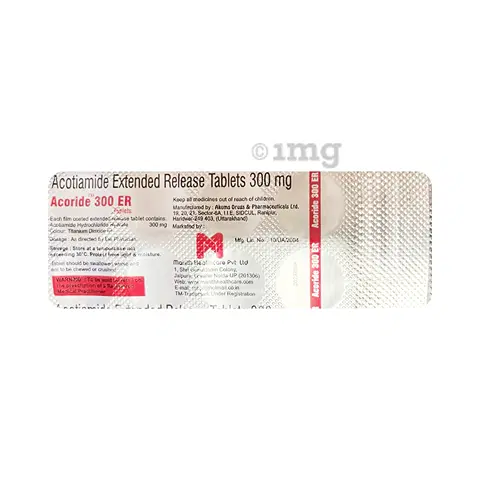
Acoride 300 Er Tablet 10
₹391.80
Quick fact
Acoride 300 ER is an extended-release acotiamide tablet used for indigestion, including functional dyspepsia. It may help with symptoms such as bloating and discomfort after eating.
Uses
What is Acoride 300 Er Tablet 10 & Important Details
Acoride 300 ER is prescribed for functional dyspepsia, a form of indigestion not associated with a specific cause.
- It is an extended-release tablet containing acotiamide.
- The listed pack contains ten tablets.
- The product is described as requiring a prescription.
- Functional dyspepsia may involve early fullness, stomach discomfort, nausea, or bloating.
How does Acoride 300 Er Tablet 10 work (mechanism of action)?
The product is described as helping stomach movement and allowing food to pass more smoothly, without changing stomach acid levels.
- It supports acetylcholine, a natural chemical involved in controlling stomach movement.
- This is described as increasing the rate of stomach emptying.
Specialized or Off-Label Uses of Acoride 300 Er Tablet 10
No off-label uses are established in the available information. Use Acoride 300 ER only for the purpose prescribed by your doctor.
Conditions That Acoride 300 Er Tablet 10 Will Not Treat
The available information supports use for functional dyspepsia, not other conditions. This medicine does not change stomach acid levels.
Benefits
What are the benefits of taking Acoride 300 Er Tablet 10
Acoride 300 ER is used to help relieve symptoms associated with functional dyspepsia.
- It may help ease bloating after meals.
- It may help relieve pain in the upper abdomen.
- It may help with early fullness after eating.
- The product is described as helping food pass more smoothly through the stomach.
Side Effects
What are the most common side effects of Acoride 300 Er Tablet 10?
Diarrhea and constipation are listed as common side effects. Other listed effects include headache, nausea, vomiting, and rash.
- Diarrhea
- Constipation
- Headache, nausea, vomiting, or rash
Contact your doctor if side effects persist or concern you.
What are the serious side effects of Acoride 300 Er Tablet 10?
Serious reactions listed for this medicine need immediate medical attention.
- Anaphylaxis or a severe skin reaction
- Jaundice
- Severe abdominal cramps
Seek urgent medical help if any of these serious symptoms occur.
Severe Allergic Reactions of Acoride 300 Er Tablet 10?
A sudden allergic reaction can require emergency care.
- Sudden skin rash or hives
- Swelling
Stop taking the medicine and seek emergency medical care if these symptoms develop.
What side effects may I notice from receiving this medication?
Side effects can include changes that may need medical attention.
- Increased prolactin in the blood
- Increased liver enzymes
- Increased triglycerides in the blood
Tell your doctor if you notice unusual or concerning symptoms.
Acoride 300 Er Tablet 10 Dosage Guidelines
Overview
The stated adult dose is one 300mg tablet three times a day. Your doctor decides the final dose and treatment duration.
Adults
The stated adult dose is one 300mg tablet three times a day. A maximum daily dose is not specified here; the doctor may change the dose.
Children
Avoid use in children because information is unavailable due to lack of research. A doctor must decide whether it is appropriate.
Older adults
Older adults may receive this medicine with extreme caution if prescribed; a dose adjustment may be needed. The doctor decides the dose.
- Your doctor may adjust the dose based on your health and response to treatment.
- Follow the dose and duration prescribed for you.
Dosage Adjustments for Kidney, Liver, or Other Health Problems
Health conditions can affect whether this medicine is suitable and whether the doctor needs to adjust the dose.
- Normal kidney function: A specific adjustment is not established in the available information.
- Reduced kidney function: Use with caution and tell your doctor about kidney problems; the doctor may adjust the dose.
- Severe kidney impairment: A specific dose adjustment for severe impairment is not established in the available information.
- Dialysis: A dose recommendation for dialysis is not established in the available information.
- Liver disease: Use with caution and tell your doctor about liver problems; the doctor may adjust the dose.
- Other important conditions: Do not take it if you have gastrointestinal haemorrhage, mechanical obstruction, or perforation.
Do not change your dose without advice from your doctor.
How Often and How Long to Take Acoride 300 Er Tablet 10?
The stated adult schedule is one 300mg tablet three times a day. Take it for the duration advised by your doctor.
- Follow the schedule prescribed for you.
- Do not stop treatment early without advice, as symptoms may return.
How should I take Acoride 300 Er Tablet 10?
Taking Acoride 300 Er Tablet 10 With or Without Food
Take Acoride 300 ER before meals, on an empty stomach, as directed by your doctor. Taking it with or immediately after food may reduce absorption.
How to Take Specific Forms (Tablets, Chewables, Liquid Suspension)
Tablets: Swallow the extended-release tablet whole. Do not chew, crush, or break it.
Overdose/Missed Dose
What should I do if I accidentally use too much Acoride 300 Er Tablet 10?
Taking too much may cause severe stomach upset or diarrhoea. Seek immediate medical attention or contact a local emergency health service.
What should I do if I miss a dose of Acoride 300 Er Tablet 10?
If you miss a dose, take it when remembered before the next meal. If the next scheduled dose is almost due, skip the missed dose and resume your schedule. Do not take two doses together.
Interactions
Does Acoride 300 Er Tablet 10 interact with foods or drinks?
Taking this medicine with or immediately after a meal may reduce absorption and make it less effective. Take it before meals as advised.
Does Acoride 300 Er Tablet 10 interact with other medicines (drug interactions)
Tell your doctor about all medicines you take, as some may affect how Acoride 300 ER works.
- Anticholinergic medicines, such as atropine or some allergy and bladder medicines, may block its effects.
- Other medicines that stimulate gut movement may cause excessive stomach activity or cramping when taken together.
Acoride 300 Er Tablet 10 and Blood Thinners
A specific interaction with blood thinners is not established in the available information. Ask your doctor or pharmacist.
Acoride 300 Er Tablet 10 and Birth Control (if applicable)
A specific interaction with birth control is not established in the available information. Ask your doctor or pharmacist.
Interactions with Supplements, Vitamins, and Herbal Products
Tell your doctor about herbal supplements and other products you take. Specific supplement interactions are not established in the available information.
Warnings & Precautions
Who should not use Acoride 300 Er Tablet 10?
Do not use this medicine if you have a known allergy to its ingredients. Some gut conditions are also listed as reasons not to take it.
- Gastrointestinal haemorrhage
- Mechanical obstruction or perforation
- A known allergy to an ingredient
What should I know about Acoride 300 Er Tablet 10 before using it?
Before starting Acoride 300 ER, discuss your health conditions and medicines with your doctor.
- Tell your doctor if you have liver or kidney problems.
- Tell your doctor about prescription medicines, non-prescription medicines, and herbal supplements.
- Do not drive or operate heavy machinery if you feel dizzy.
Precautions for Pre-existing Conditions (Heart, Kidney, Liver)
Kidney disease: Use with caution and tell your doctor; a dose adjustment may be needed.
Liver disease: Use with caution and tell your doctor; a dose adjustment may be needed.
Heart disease: The supplied information says this medicine is not recommended in cardiac patients.
Alcohol: Can You Drink Alcohol While Taking Acoride 300 Er Tablet 10?
Avoid alcohol while taking Acoride 300 ER; the available information says it may worsen stomach irritation and digestion issues.
Pregnancy and Breastfeeding
Pregnancy: Avoid taking it during pregnancy unless prescribed by a doctor. Discuss any concerns with your doctor.
Breastfeeding: It is not recommended while breastfeeding unless prescribed by a doctor.
Children: Avoid use in children because information is unavailable due to lack of research.
Older adults: Use only if prescribed, with extreme caution; dose adjustment may be needed.
Safe Usage & Best Practices
Why You Must Complete the Full Prescription
Keep taking Acoride 300 ER for as long as your doctor recommends; stopping too early may bring symptoms back.
Consequences of Skipping Doses or Sharing Medication
Stopping treatment too early may cause symptoms to return and the condition to worsen.
- Follow your prescribed schedule and ask your doctor what to do if you miss a dose.
- Do not share this medicine with anyone else.
Can Acoride 300 Er Tablet 10 cause diarrhea?
Yes. Diarrhea is listed as a common side effect of Acoride 300 ER.
- Constipation is also listed as a common side effect.
What should you do if you feel better before finishing the medication?
Feeling better does not mean you should stop treatment early; symptoms may return and your condition may worsen.
- Continue for the duration recommended by your doctor.
- Ask your doctor before making changes to treatment.
Storage Details
Keep Acoride 300 ER in its original packaging and store it in a cool, dry place away from sunlight.
- Store at room temperature, ideally below 30°C.
- Keep it out of the sight and reach of children.
Frequently asked questions
-
1. What is Acoride 300 ER used for?
Ans: It is used to treat functional dyspepsia, a form of indigestion.
-
2. Should I take it with food?
Ans: Take it before meals on an empty stomach, as advised by your doctor.
-
3. Can children take Acoride 300 ER?
Ans: Use in children is cautioned against because information is unavailable due to lack of research.
-
4. What if I take too much?
Ans: An overdose may cause severe stomach upset or diarrhoea; seek immediate medical attention.
-
5. How should I store it?
Ans: Keep it in its original packaging at room temperature, ideally below 30°C, and away from sunlight.