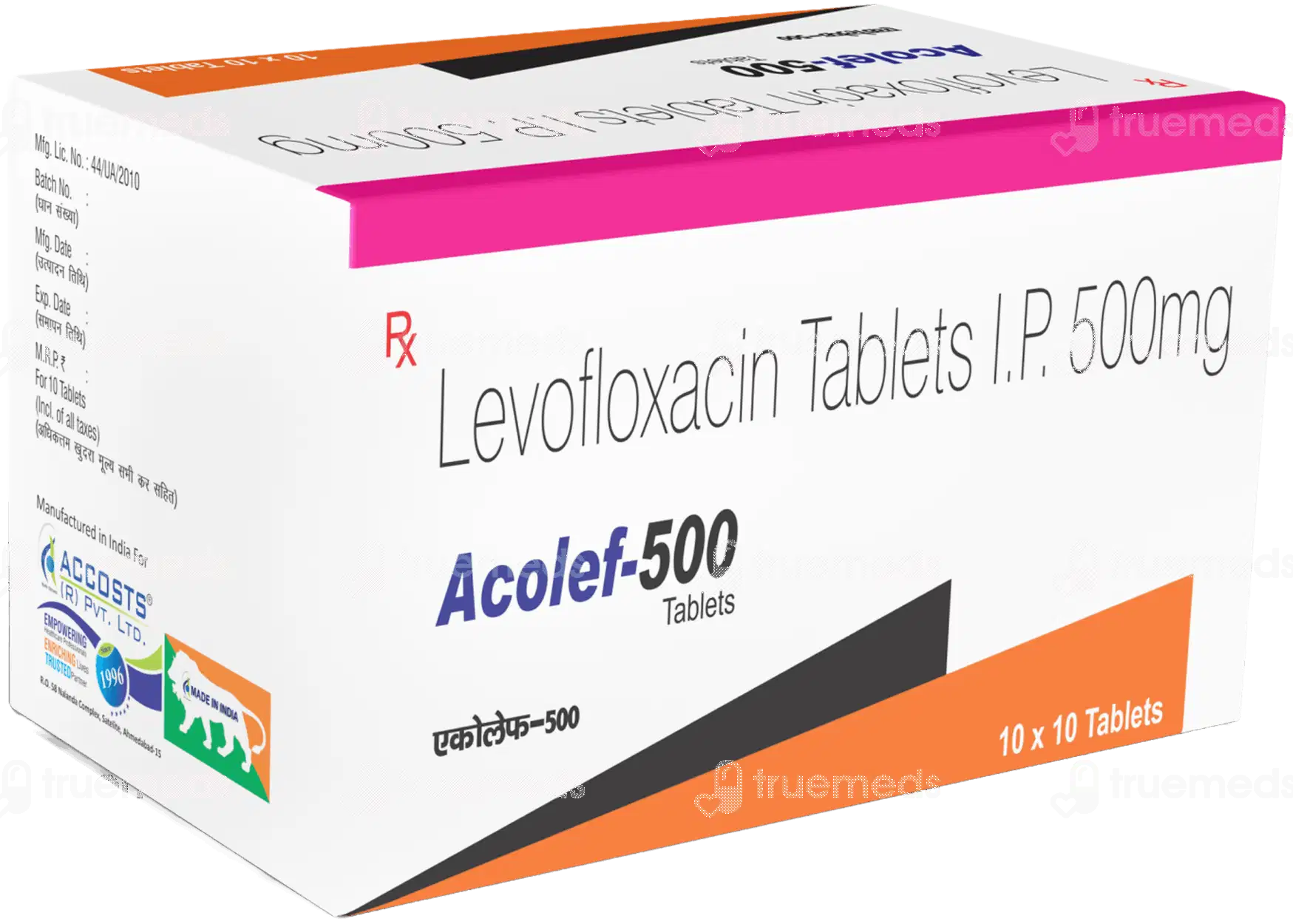
Acolef 500 Tablet 10
₹93.75
Quick fact
Acolef 500 Tablet 10 is a levofloxacin tablet used for certain bacterial infections, including infections of the lungs, sinuses, urinary tract, skin and soft tissues.
Uses
What is Acolef 500 Tablet 10 & Important Details
Acolef 500 is an antibiotic used to treat bacterial infections. Take it only as prescribed by a doctor.
- It is a tablet supplied in a pack of 10 tablets.
- Its active ingredient is levofloxacin.
- It is used for bacterial infections of the lungs, sinuses, urinary tract, skin and soft tissues.
- It is also used for pneumonia, bronchitis and complicated urinary tract infections.
How does Acolef 500 Tablet 10 work (mechanism of action)?
Levofloxacin acts on bacterial enzymes involved in cell division and the copying of bacterial DNA.
- It inhibits bacterial DNA gyrase and topoisomerase IV.
- This disrupts bacterial cell division and DNA replication, halting bacterial growth and multiplication and leading to bacterial death.
Specialized or Off-Label Uses of Acolef 500 Tablet 10
No off-label use is established in the available information. Use Acolef only for an infection diagnosed and treated by a doctor.
Conditions That Acolef 500 Tablet 10 Will Not Treat
Acolef is not used for common flu or cold symptoms caused by viruses. Antibiotics treat bacterial infections, not these viral illnesses.
Benefits
What are the benefits of taking Acolef 500 Tablet 10
When prescribed for a susceptible bacterial infection, Acolef can help treat the infection by stopping bacteria from multiplying.
- Uses include bacterial infections of the lungs, sinuses, urinary tract, skin and soft tissues.
- Examples include pneumonia, bronchitis and complicated urinary tract infections.
Side Effects
What are the most common side effects of Acolef 500 Tablet 10?
Common side effects listed for Acolef include digestive and nervous system symptoms.
- Nausea, diarrhoea and constipation.
- Headache, dizziness and trouble sleeping.
Speak with your doctor if a side effect does not improve or becomes serious.
What are the serious side effects of Acolef 500 Tablet 10?
Serious effects have been reported. Seek medical help promptly if you notice concerning symptoms such as these:
- Tendon swelling or rupture.
- An irregular heartbeat or seizures.
- Hallucinations, confusion, severe diarrhoea or signs of liver problems.
Contact a doctor urgently if any of these effects occur; seek emergency care for severe symptoms.
Severe Allergic Reactions of Acolef 500 Tablet 10?
A severe allergic reaction, including anaphylaxis, is listed as a serious side effect.
- The available information does not specify particular allergy symptoms.
What side effects may I notice from receiving this medication?
Other reported effects include:
- Vomiting, abdominal discomfort and fatigue.
- Rash, itching, sensitivity to sunlight, joint or muscle pain, and changes in taste.
Tell your doctor if an effect persists or becomes severe.
Acolef 500 Tablet 10 Dosage Guidelines
Overview
A usual adult regimen for levofloxacin tablets is 500 mg once daily; the dose and treatment length depend on the infection. The doctor decides the final dose.
Adults
The usual dose depends on the infection being treated and is not specified here. Take Acolef only as prescribed; the doctor may change it.
Children
This medicine is generally not given to children unless specifically prescribed by a doctor. A doctor must decide.
Older adults
The usual adult regimen may be used, with the lowest effective dose and attention to kidney function. The doctor decides.
- The type and severity of infection affect the prescribed regimen.
- Kidney function can require dose adjustment.
- Other health conditions and medicines should be discussed with the doctor.
Dosage Adjustments for Kidney, Liver, or Other Health Problems
Dose changes depend on kidney function and other medical conditions. Your clinician should select the regimen.
- Normal kidney function: A usual adult regimen is 500 mg once daily; the doctor selects the dose for the infection.
- Reduced kidney function: Dose modification is required; the doctor should adjust it to kidney function.
- Severe kidney impairment: A specific adjustment is not established in the available product information; medical supervision is needed.
- Dialysis: A specific adjustment is not established in the available product information. Ask the treating doctor for an individual dose.
- Liver disease: Limited information is available for liver impairment; discuss use with a doctor.
- Other important conditions: Tell the doctor about heart rhythm problems; a specific dose adjustment is not established here.
Do not change your dose yourself. Ask your doctor or pharmacist if you are unsure.
How Often and How Long to Take Acolef 500 Tablet 10?
Take Acolef at the frequency and for the duration prescribed by your doctor; the usual duration is not established here.
- Take it at the same time each day.
- Complete the full prescribed course, even if symptoms improve.
- Follow your doctor’s instructions about the dose and duration.
How should I take Acolef 500 Tablet 10?
Taking Acolef 500 Tablet 10 With or Without Food
Acolef may be taken with or without food. Avoid taking it with dairy products such as milk, cheese, curd, butter, paneer or ice cream.
How to Take Specific Forms (Tablets, Chewables, Liquid Suspension)
Tablets: Swallow the tablet whole with water. Do not chew or crush it.
Overdose/Missed Dose
What should I do if I accidentally use too much Acolef 500 Tablet 10?
If you take more than prescribed, contact a doctor immediately and go to a nearby hospital.
What should I do if I miss a dose of Acolef 500 Tablet 10?
If it is almost time for your next dose, skip the missed dose and return to your regular schedule. Do not take an extra or double dose.
Interactions
Does Acolef 500 Tablet 10 interact with foods or drinks?
Avoid taking Acolef with dairy products. Iron-rich foods may also interfere with levofloxacin absorption; the available information does not specify how to time these foods.
Does Acolef 500 Tablet 10 interact with other medicines (drug interactions)
Tell your doctor about all medicines you take. Acolef may interact with some medicines, including:
- Antacids containing aluminium hydroxide or magnesium hydroxide can reduce levofloxacin absorption.
- Warfarin and other anticoagulants may increase bleeding risk.
- Theophylline levels may increase, potentially causing adverse effects.
- Amiodarone or sotalol may increase the risk of irregular heartbeats when combined with Acolef.
Acolef 500 Tablet 10 and Blood Thinners
Acolef may interact with anticoagulants such as warfarin and increase the risk of bleeding. Tell your doctor if you take a blood thinner.
Acolef 500 Tablet 10 and Birth Control (if applicable)
An interaction with birth control is not established in the available information. Ask your doctor or pharmacist if you have questions.
Interactions with Supplements, Vitamins, and Herbal Products
Tell your doctor about supplements and herbal products you take. Specific interactions with these products are not established in the available information.
Warnings & Precautions
Who should not use Acolef 500 Tablet 10?
Do not take Acolef if you are allergic to levofloxacin or other quinolone medicines. Discuss your medical history with a doctor before use.
- A history of myasthenia gravis is listed as a contraindication.
- It should not be given to children unless specifically prescribed by a doctor.
What should I know about Acolef 500 Tablet 10 before using it?
Before starting Acolef, tell your doctor about your health conditions and all medicines you take.
- Mention kidney disease or heart rhythm problems.
- Report any allergy to levofloxacin or other quinolone medicines.
- Seek advice about use during pregnancy or breastfeeding.
Precautions for Pre-existing Conditions (Heart, Kidney, Liver)
Kidney disease: Use with caution; dose modification may be required. Tell your doctor about kidney problems.
Liver disease: Information is limited for liver impairment. Discuss use with your doctor.
Heart disease: Tell your doctor if you have heart rhythm problems before starting treatment.
Alcohol: Can You Drink Alcohol While Taking Acolef 500 Tablet 10?
Avoid alcohol while taking Acolef; it may increase side effects such as dizziness.
Pregnancy and Breastfeeding
Pregnancy: Avoid use unless necessary. Discuss treatment with a doctor if pregnant or planning to conceive.
Breastfeeding: Use is not recommended; consult a doctor about potential risks and benefits.
Children: Use in children should be specifically prescribed by a doctor.
Older adults: Use with caution; dose changes or an alternative may be needed depending on medical conditions.
Safe Usage & Best Practices
Why You Must Complete the Full Prescription
Complete the full course prescribed by your doctor, even if you start to feel better.
Consequences of Skipping Doses or Sharing Medication
Follow the prescribed schedule and do not share Acolef with anyone else.
- If a dose is missed, follow the missed-dose instructions and do not double the next dose.
- Complete the prescribed course to help prevent antibiotic resistance.
Can Acolef 500 Tablet 10 cause nausea?
Yes. Nausea is listed as a common side effect of Acolef.
- Other listed common effects include diarrhoea, constipation, headache, dizziness and trouble sleeping.
What should you do if you feel better before finishing the medication?
Keep taking Acolef for the full course prescribed, even if you feel better. Do not stop unless your doctor advises you to.
- Ask your doctor if you have concerns about continuing treatment.
Storage Details
Store Acolef as directed on its pack and keep it away from children.
- Protect it from light, heat and moisture.
- Keep it out of the reach of children.
Frequently asked questions
-
1. What is Acolef used for?
Ans: It treats certain bacterial infections, including infections of the lungs, sinuses, urinary tract, skin and soft tissues.
-
2. Can I stop taking it when I feel better?
Ans: No. Complete the full course prescribed by your doctor, unless your doctor advises otherwise.
-
3. Can I take it with food?
Ans: It may be taken with or without food. Avoid taking it with dairy products.
-
4. What if I miss a dose?
Ans: If it is almost time for your next dose, skip the missed dose. Do not take a double dose.
-
5. What should I tell my doctor before taking it?
Ans: Mention kidney disease, heart rhythm problems, allergies and all medicines, supplements or herbal products you take.