
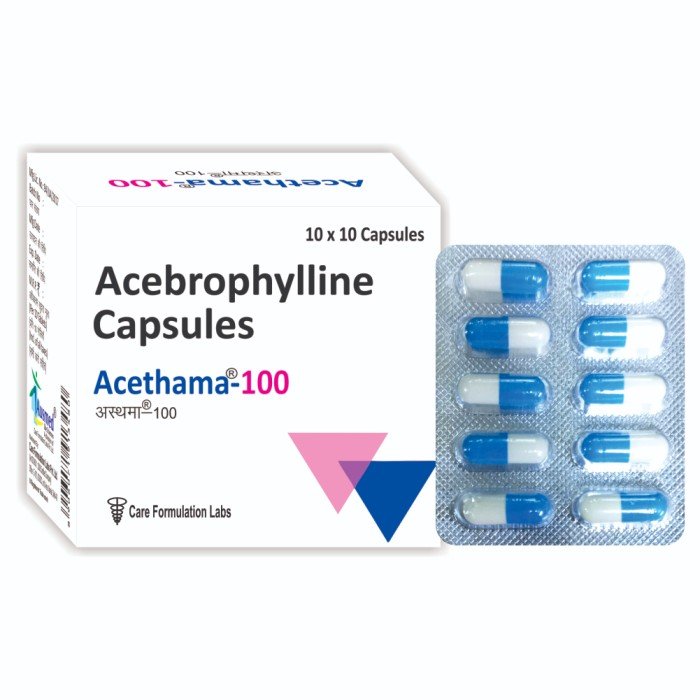
Acethama 100 MG Capsule 10
₹89.06
Quick fact
Acethama is an acebrophylline capsule used in adults to manage COPD, bronchial asthma and chronic bronchitis. It is a bronchodilator and mucus-thinning medicine.
Uses
What is Acethama 100 MG Capsule 10 & Important Details
Acethama contains acebrophylline and is used in adults for respiratory conditions.
- It is used to manage COPD, bronchial asthma and chronic bronchitis.
- It is described as a bronchodilator and mucus-thinning medicine.
How does Acethama 100 MG Capsule 10 work (mechanism of action)?
The medicine acts on the airways and mucus, which may make breathing and clearing congestion easier.
- It relaxes the smooth muscles of the airways, allowing them to widen and improving airflow.
- It thins and loosens thick mucus, making it easier to clear congestion.
Specialized or Off-Label Uses of Acethama 100 MG Capsule 10
No off-label use is stated in the available information.
Conditions That Acethama 100 MG Capsule 10 Will Not Treat
Acethama does not work immediately or prevent breathing trouble that has already started.
Benefits
What are the benefits of taking Acethama 100 MG Capsule 10
Acethama is used to manage respiratory symptoms in adults.
- In adults with long-term lung disease, it helps keep the airways open and reduce breathlessness.
- For chronic bronchitis, it helps clear sticky mucus from inflamed bronchial tubes so air flows more easily.
Side Effects
What are the most common side effects of Acethama 100 MG Capsule 10?
Commonly listed side effects include stomach and nervous-system symptoms. The effects experienced can vary from person to person.
- Nausea, diarrhoea, stomach discomfort and heartburn.
- Headache, dizziness, restlessness and difficulty sleeping.
Speak to your doctor if a side effect does not improve or becomes serious. Do not stop the medicine unless your doctor advises you to.
What are the serious side effects of Acethama 100 MG Capsule 10?
Contact your doctor if you notice symptoms that may need medical attention, including changes in your heartbeat or severe symptoms.
- A fast or irregular heartbeat.
- Severe nausea or marked restlessness.
Contact your doctor promptly if any of these occur, or if your symptoms worsen. For urgent concerns, seek medical help.
Severe Allergic Reactions of Acethama 100 MG Capsule 10?
Allergic skin reactions are listed among possible side effects. More detail about the reaction is not established in the available information.
- Allergic skin reactions.
Seek emergency medical care for a severe allergic reaction. If you know you are allergic to acebrophylline or another ingredient, avoid using the medicine and consult your doctor.
What side effects may I notice from receiving this medication?
Other listed side effects include the following; the information does not assign a frequency to them.
- Vomiting, abdominal pain, drowsiness, loss of appetite, constipation or abdominal distension.
- Rash, itching, red spots or bumps, breathing problems, nasal inflammation or esophageal bleeding.
This is not a complete list.
Acethama 100 MG Capsule 10 Dosage Guidelines
Overview
The stated adult dose is one 100 mg capsule once or twice daily; the dose depends on the condition and the patient’s tolerance. The doctor decides the final dose.
Adults
One capsule of 100mg once or twice daily; the total should not exceed 200mg daily unless a physician specifically advises otherwise. The doctor decides the final dose.
Children
This capsule is not the described form for children; do not give it without a paediatrician’s instructions. A doctor must decide the dose.
Older adults
Older patients should take Acethama only under medical supervision. The doctor decides the dose.
- The dose is based on the severity of the respiratory condition and how well the patient tolerates the medicine.
- Do not exceed the stated maximum daily dose unless a physician specifically advises it.
Dosage Adjustments for Kidney, Liver, or Other Health Problems
Dose adjustment details for these situations are not fully established in the available information. Discuss your health conditions and medicines with your doctor before use.
- Normal kidney function: A specific adjustment is not established in the available information.
- Reduced kidney function: Use caution and consult your doctor before starting treatment.
- Severe kidney impairment: A specific adjustment is not established in the available information; consult your doctor.
- Dialysis: A specific adjustment is not established in the available information; ask your doctor or pharmacist.
- Liver disease: Tell your doctor before use; caution is recommended with liver problems.
- Other important conditions: Tell your doctor about heart disease, severe peptic ulcer disease or high blood pressure before use.
Do not change the dose yourself. Your doctor can assess your condition and decide what is appropriate.
How Often and How Long to Take Acethama 100 MG Capsule 10?
The stated adult schedule is once or twice daily, with duration determined by the prescriber.
- Take it regularly as prescribed.
- Do not change the dose without consulting your doctor.
How should I take Acethama 100 MG Capsule 10?
Taking Acethama 100 MG Capsule 10 With or Without Food
The page advises taking Acethama with meals. If you are unsure how to fit it into your routine, ask your doctor or pharmacist.
How to Take Specific Forms (Tablets, Chewables, Liquid Suspension)
Capsule: Swallow the capsule whole with a glass of water. Do not chew or break it.
Overdose/Missed Dose
What should I do if I accidentally use too much Acethama 100 MG Capsule 10?
Taking more than prescribed may cause nausea, restlessness or a fast heartbeat. Inform your doctor if you take too much, and seek medical advice.
What should I do if I miss a dose of Acethama 100 MG Capsule 10?
Take a missed dose when you remember, unless it is nearly time for the next dose; then skip it and continue your regular schedule. Do not take extra to make up for it.
Interactions
Does Acethama 100 MG Capsule 10 interact with foods or drinks?
Limit caffeine-containing items such as coffee, tea, cola and chocolate. Caffeine may increase tremor, difficulty sleeping, palpitations and other xanthine-type side effects.
Does Acethama 100 MG Capsule 10 interact with other medicines (drug interactions)
Some medicines may interact with Acethama and change its effects or side-effect risk. Tell your doctor and pharmacist about all medicines you take.
- The antibiotics erythromycin and ciprofloxacin may interact with the medicine.
- The antifungals fluconazole and ketoconazole can affect how the body processes the medicine.
Acethama 100 MG Capsule 10 and Blood Thinners
A specific interaction with blood thinners is not stated in the available information. Ask your doctor or pharmacist about your medicines.
Acethama 100 MG Capsule 10 and Birth Control (if applicable)
Birth control pills may interfere with clearance of Acethama, increasing medicine levels and the chance of side effects; a dose reduction may be needed. Ask your doctor.
Interactions with Supplements, Vitamins, and Herbal Products
Specific interactions with supplements, vitamins or herbal products are not established in the available information.
Warnings & Precautions
Who should not use Acethama 100 MG Capsule 10?
If you are allergic to acebrophylline or any other ingredient, avoid using Acethama. Discuss relevant health problems with your doctor before starting it.
- Tell your doctor if you have heart disease, liver or kidney problems, severe peptic ulcer disease or high blood pressure.
- Older patients should use it under medical supervision.
What should I know about Acethama 100 MG Capsule 10 before using it?
Before taking Acethama, discuss your medical history and current medicines with your doctor. Do not alter the dose without medical advice.
- Use caution when driving or operating heavy machinery until you know how the medicine affects you, as it may cause dizziness.
- Tell your doctor if you are pregnant or breastfeeding.
Precautions for Pre-existing Conditions (Heart, Kidney, Liver)
Kidney disease: Tell your doctor before use; caution is recommended if you have a history of kidney problems.
Liver disease: Tell your doctor before use. The medicine may affect liver function, so discuss your situation with your doctor.
Heart disease: Tell your doctor before use if you have heart disease.
Alcohol: Can You Drink Alcohol While Taking Acethama 100 MG Capsule 10?
The available information does not establish a specific alcohol interaction for this product. Ask your doctor or pharmacist whether alcohol is appropriate for you.
Pregnancy and Breastfeeding
Pregnancy: Information about use during pregnancy is not available. Consult your doctor before taking it.
Breastfeeding: Information about use while breastfeeding is not available. Consult your doctor before taking it.
Children: Do not give this capsule to a child without a paediatrician’s instructions.
Older adults: Older patients should take the product under medical supervision.
Safe Usage & Best Practices
Why You Must Complete the Full Prescription
Continue taking Acethama regularly as prescribed, even if breathing improves. Follow your doctor’s instructions about when to stop.
Consequences of Skipping Doses or Sharing Medication
Taking doses irregularly may mean you do not follow the prescribed treatment plan.
- Do not change the dose without consulting your doctor.
- If you miss a dose, follow the missed-dose instructions rather than taking extra.
Can Acethama 100 MG Capsule 10 cause nausea?
Yes.
- Other commonly listed effects include diarrhoea, stomach discomfort and heartburn.
What should you do if you feel better before finishing the medication?
Keep taking Acethama regularly as prescribed even if your breathing improves.
- Ask your doctor if you are unsure how long to continue.
Storage Details
Store Acethama in a cool, dry place and protect it from direct sunlight and moisture.
- Keep it below 30°C.
- Keep it out of reach of children and pets.
Frequently asked questions
-
1. What is Acethama used for?
Ans: It is used in adults to manage COPD, bronchial asthma and chronic bronchitis.
-
2. How should I take the capsule?
Ans: Swallow it whole with water; do not chew or break it. The page advises taking it with meals.
-
3. Can children take this capsule?
Ans: Do not give it to a child without a paediatrician’s instructions.
-
4. What if I miss a dose?
Ans: Take it when remembered unless it is nearly time for the next dose; then skip it and continue as usual.
-
5. What side effects should I watch for?
Ans: Commonly listed effects include nausea, diarrhoea, stomach discomfort, heartburn, headache, dizziness, restlessness and difficulty sleeping.

