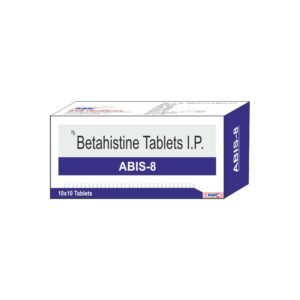
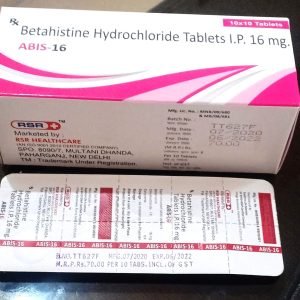
Abis 16 MG Tablet 10
₹60.94
Quick fact
Abis 16 MG Tablet 10 contains betahistine and is used to prevent and treat Ménière’s disease, an inner-ear disorder associated with dizziness, ringing in the ears and hearing loss.
Uses
What is Abis 16 MG Tablet 10 & Important Details
Abis is a betahistine tablet prescribed for Ménière’s disease, a disorder of the inner ear. Follow your doctor’s directions for using it.
- The product is supplied as tablets.
- The pack contains 10 tablets.
- Its active ingredient is betahistine.
How does Abis 16 MG Tablet 10 work (mechanism of action)?
Abis is described as a histamine analog. The available information describes its effects on blood flow, fluid pressure and nerve signals in the inner ear.
- It improves blood flow to the inner ear.
- This may reduce pressure from excess fluid in the ear.
Specialized or Off-Label Uses of Abis 16 MG Tablet 10
The available information supports use for Ménière’s disease. It does not establish any specialized or off-label uses for this product.
Conditions That Abis 16 MG Tablet 10 Will Not Treat
The available information does not establish which other conditions Abis treats or rules out. Ask a doctor about symptoms that have not been diagnosed as Ménière’s disease.
Benefits
What are the benefits of taking Abis 16 MG Tablet 10
Abis may help manage symptoms linked to Ménière’s disease by reducing pressure from excess fluid in the inner ear.
- It may make symptoms such as nausea, dizziness, ringing in the ears and hearing loss milder.
- It may reduce how often symptoms occur, but may not stop attacks completely.
Side Effects
What are the most common side effects of Abis 16 MG Tablet 10?
Common side effects listed for Abis include digestive symptoms and headache. Taking it with food can help reduce stomach problems.
- Nausea
- Indigestion
- Headache
- Stomach pain and bloating
Contact your doctor if side effects persist or worry you.
What are the serious side effects of Abis 16 MG Tablet 10?
The available information does not identify specific serious side effects or warning symptoms for Abis.
- A specific list of serious side effects is not established in the available information.
Seek medical advice if a side effect is severe, persists or causes concern.
Severe Allergic Reactions of Abis 16 MG Tablet 10?
Do not take Abis if you are allergic to betahistine or any of its components. Specific allergy symptoms are not listed in the available information.
- The specific symptoms of a severe allergic reaction are not established in the available information.
Get emergency medical care if you believe you are having a severe allergic reaction.
What side effects may I notice from receiving this medication?
Possible side effects include:
- Nausea, indigestion, headache, stomach pain or bloating.
- Vomiting or diarrhoea.
The frequency of these additional effects is not stated. Ask your doctor if you are concerned.
Abis 16 MG Tablet 10 Dosage Guidelines
Overview
Your doctor decides Abis’s dose and how often to take it. Follow the prescribed dose and duration; do not change them without advice. A complete schedule for adults, children or older adults is not established in the available information.
Adults
A specific adult dose is not established in the available information. Your prescriber decides the dose and schedule.
Children
A child dose is not established. This medicine is not recommended under 18 years old because safety data are lacking; ask a doctor.
Older adults
A specific dose for older adults is not established in the available information. Ask your doctor to decide what is suitable.
- The dose may vary with individual factors and your response to the medicine.
Dosage Adjustments for Kidney, Liver, or Other Health Problems
Condition-specific dose guidance is limited.
- Normal kidney function: A specific dose is not established.
- Reduced kidney function: Use cautiously; consult your doctor.
- Severe kidney impairment: An adjustment is not established.
- Dialysis: Use guidance is not established.
- Liver disease: An adjustment is not established.
- Other important conditions: Discuss ulcers, asthma, high or low blood pressure.
Do not adjust without your doctor’s advice.
How Often and How Long to Take Abis 16 MG Tablet 10?
Your doctor decides how often to take Abis and how long you should continue it. Treatment may need to continue for several months.
- Take it at the same time each day.
- Continue for as long as your doctor prescribes, even if you feel better.
How should I take Abis 16 MG Tablet 10?
Taking Abis 16 MG Tablet 10 With or Without Food
Abis may be taken with or without food. Taking it with food can help reduce stomach problems.
How to Take Specific Forms (Tablets, Chewables, Liquid Suspension)
Tablets: Swallow the tablet whole with water. Do not chew, crush or break it.
Overdose/Missed Dose
What should I do if I accidentally use too much Abis 16 MG Tablet 10?
Taking too much Abis could make headache, stomach upset and skin reactions more pronounced. Contact a doctor for advice if you have taken more than prescribed.
What should I do if I miss a dose of Abis 16 MG Tablet 10?
If you miss a dose, skip it and resume your regular schedule. Do not take a double dose to make up for the missed one.
Interactions
Does Abis 16 MG Tablet 10 interact with foods or drinks?
The available information states that no food interactions are known. Abis may be taken with or without food; taking it with food can help reduce stomach problems.
Does Abis 16 MG Tablet 10 interact with other medicines (drug interactions)
Tell your doctor about your medicines; some may interact.
- H2 blockers with Abis: cimetidine, ranitidine.
- Antihistamines with Abis: diphenhydramine, promethazine.
- Monoamine oxidase inhibitors with Abis: selegiline, phenelzine.
Abis 16 MG Tablet 10 and Blood Thinners
A specific interaction between Abis and blood thinners is not established in the available information. Tell your doctor what medicines you take.
Abis 16 MG Tablet 10 and Birth Control (if applicable)
A specific interaction with birth control is not established in the available information. Ask your doctor or pharmacist if you have concerns.
Interactions with Supplements, Vitamins, and Herbal Products
Interactions with supplements, vitamins or herbal products are not established in the available information. Tell your doctor about everything you take.
Warnings & Precautions
Who should not use Abis 16 MG Tablet 10?
Do not take Abis if you are allergic to betahistine or any of its components. Discuss relevant health conditions with your doctor.
- People with an allergy to betahistine or any component should avoid this medicine.
- It is not recommended for children under 18 years old because safety data are lacking.
- Discuss a history of stomach ulcer, asthma, or high or low blood pressure with a doctor.
What should I know about Abis 16 MG Tablet 10 before using it?
Before taking Abis, tell your doctor about your health conditions and other medicines. Ask for advice if you are pregnant, planning pregnancy or breastfeeding.
- Discuss a history of stomach ulcer, asthma, or high or low blood pressure.
- Tell your doctor about other medicines you take.
- Do not stop taking Abis suddenly without first speaking to your doctor.
Precautions for Pre-existing Conditions (Heart, Kidney, Liver)
Kidney disease: Use Abis cautiously if you have kidney problems and consult your doctor before starting it.
Liver disease: Specific advice for liver disease is not established in the available information. Ask your doctor.
Heart disease: Specific advice for heart disease is not established in the available information. Ask your doctor.
Alcohol: Can You Drink Alcohol While Taking Abis 16 MG Tablet 10?
The available information does not establish whether alcohol interacts with Abis. Ask your doctor or pharmacist for advice.
Pregnancy and Breastfeeding
Pregnancy: Speak to a doctor before use if you are pregnant or trying to become pregnant.
Breastfeeding: Speak to a doctor before using Abis while breastfeeding.
Children: It is not recommended under 18 years old because safety data are lacking. Ask a doctor before giving it to a child.
Older adults: A specific recommendation for older adults is not established in the available information. Ask your doctor.
Safe Usage & Best Practices
Why You Must Complete the Full Prescription
Take Abis for as long as prescribed, even if you feel better. Do not stop suddenly without first talking to your doctor.
Consequences of Skipping Doses or Sharing Medication
Taking Abis regularly as prescribed may help manage symptoms. Do not share your medicine with anyone.
- Try not to miss doses.
- If you miss a dose, skip it and resume your regular schedule; do not double the dose.
Can Abis 16 MG Tablet 10 cause nausea?
Yes. Nausea is listed as a common side effect of Abis.
- Indigestion and headache are also listed as common side effects.
- Taking the medicine with food can help reduce stomach problems.
What should you do if you feel better before finishing the medication?
Keep taking Abis for as long as your doctor prescribed, even if you start feeling better. Do not stop suddenly without medical advice.
- Take it at the same time each day.
- Talk to your doctor before changing or stopping your treatment.
Storage Details
Store Abis in a cool, dry place and keep it in its original packaging.
- Protect the tablets from direct light and moisture.
- Keep the medicine far out of children’s reach.
Common brand names – Abis 16 MG Tablet 10 available in India, USA, UK, Canada
- India: Sold as Abis 16 MG Tablet 10 by Indian online pharmacies such as Tata 1mg, Truemeds and medibuddy.in. Other brand names are not established in the available information.
- USA: Availability under a specific brand name is not established in the available information.
- UK: Availability under a specific brand name is not established in the available information.
- Canada: Availability under a specific brand name is not established in the available information.
Frequently asked questions
-
1. What is Abis for?
Ans: Ménière’s disease.
-
2. Can I take it with food?
Ans: Yes; food may help stomach problems.
-
3. How do I take it?
Ans: Swallow whole with water.
-
4. Miss a dose?
Ans: Skip it; do not double.
-
5. When should I ask your doctor?
Ans: For persistent or concerning effects.