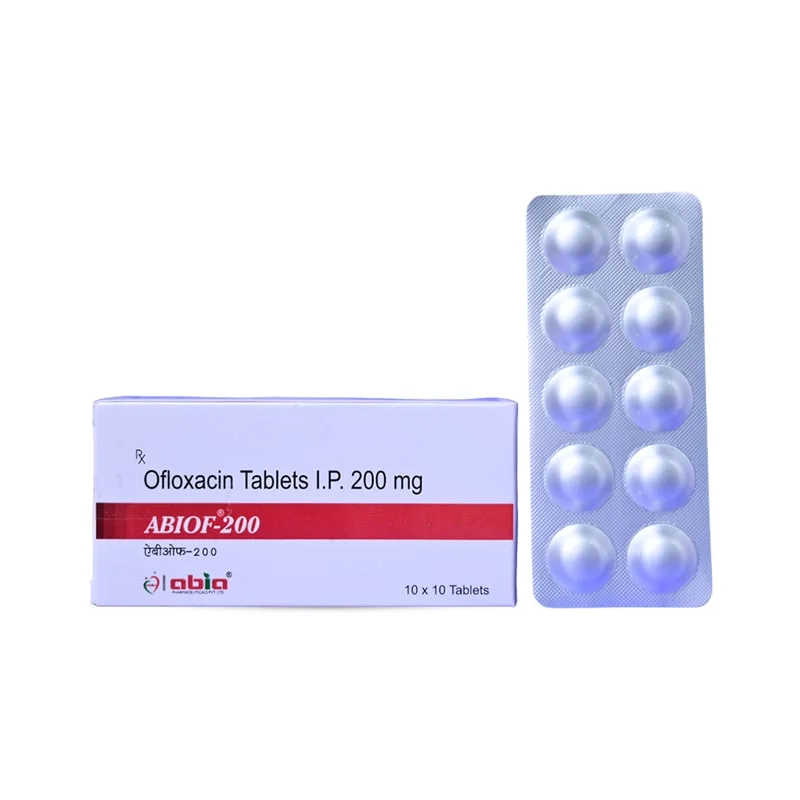
Abiof 200 MG Tablet 10
₹46.78
Quick fact
Abiof is an ofloxacin antibiotic tablet used for certain bacterial infections, including infections of the urinary tract, nose and throat, skin and soft tissues, and pneumonia.
Uses
What is Abiof 200 MG Tablet 10 & Important Details
Abiof is an antibiotic medicine.
- It is a tablet supplied in a pack of 10 tablets.
- Its active ingredient is ofloxacin.
How does Abiof 200 MG Tablet 10 work (mechanism of action)?
Ofloxacin acts on a bacterial enzyme called DNA-gyrase.
- It stops the action of DNA-gyrase.
- This prevents bacterial cells from dividing and repairing, which kills them.
Specialized or Off-Label Uses of Abiof 200 MG Tablet 10
No specific off-label use is established in the available information.
Conditions That Abiof 200 MG Tablet 10 Will Not Treat
Abiof is an antibiotic for bacterial infections; it does not treat viral infections such as viral flu or colds.
Benefits
What are the benefits of taking Abiof 200 MG Tablet 10
Abiof treats infections caused by bacteria.
- It is used for bacterial infections of the urinary tract, nose and throat, skin and soft tissues, and pneumonia.
- It is also listed for certain sexually transmitted and gut infections.
Side Effects
What are the most common side effects of Abiof 200 MG Tablet 10?
Common side effects include digestive symptoms and effects on the nervous system.
- Nausea, vomiting, abdominal pain and diarrhoea.
- Headache, dizziness and difficulty sleeping.
Speak to your doctor if a side effect becomes serious or does not improve.
What are the serious side effects of Abiof 200 MG Tablet 10?
Serious effects can involve tendons, nerves, digestion, mood or the liver.
- Tendon swelling or rupture, especially involving the Achilles tendon, or nerve symptoms such as tingling, numbness or burning pain.
- Severe diarrhoea, possibly bloody or watery; anxiety, confusion or hallucinations; or yellowing of the skin or eyes and dark urine.
Contact your doctor promptly if these serious symptoms occur. Get urgent medical help for severe symptoms or breathing problems.
Severe Allergic Reactions of Abiof 200 MG Tablet 10?
A severe allergic reaction can occur with Abiof and needs urgent attention.
- Rash or swelling of the lips, tongue or face.
- Shortness of breath or difficulty breathing.
Seek emergency medical care if these symptoms occur.
What side effects may I notice from receiving this medication?
You may notice side effects while taking Abiof.
- Nausea or vomiting.
- Abdominal pain or diarrhoea.
Tell your doctor if a side effect does not improve or becomes serious.
Abiof 200 MG Tablet 10 Dosage Guidelines
Overview
Use Abiof in the dose and for the duration prescribed by your doctor. A specific dose amount and frequency are not established in the available information.
Adults
A specific adult dose is not established in the available information. The prescriber decides the dose.
Children
A child dose is not established. Abiof is not recommended for children or adolescents; ask a doctor about suitability.
Older adults
A specific dose for older adults is not established. Use requires medical supervision.
- The dose is based on the severity of the condition and how you respond to treatment.
- Your doctor should decide the dose, taking your health circumstances into account.
Dosage Adjustments for Kidney, Liver, or Other Health Problems
Dose adjustments for specific health conditions are not established in the available information. Ask your prescriber how your health affects treatment.
- Normal kidney function: A specific dose for normal kidney function is not established.
- Reduced kidney function: A dose adjustment for reduced kidney function is not established. Tell your doctor about kidney disease.
- Severe kidney impairment: A specific dose for severe kidney impairment is not established.
- Dialysis: A dose for people receiving dialysis is not established.
- Liver disease: A specific dose adjustment for liver disease is not established. Tell your doctor if you have liver problems.
- Other important conditions: Tell your doctor about epilepsy, tendon problems or heart rhythm problems before treatment.
Do not change your dose without advice from your doctor.
How Often and How Long to Take Abiof 200 MG Tablet 10?
The dosing frequency and treatment duration are not specified here.
- Taking it at a fixed time is advised.
- Do not skip doses, and finish the prescribed course even if you feel better.
How should I take Abiof 200 MG Tablet 10?
Taking Abiof 200 MG Tablet 10 With or Without Food
Abiof may be taken with or without food. Follow your doctor’s directions and keep a gap of at least 2 hours between Abiof and antacids, dairy products, or iron and calcium supplements.
How to Take Specific Forms (Tablets, Chewables, Liquid Suspension)
Tablets: Swallow the tablet whole. Do not chew, crush or break it.
Overdose/Missed Dose
What should I do if I accidentally use too much Abiof 200 MG Tablet 10?
An overdose may cause dizziness, confusion and stomach problems. Seek medical advice promptly if you have taken more than prescribed, and do not increase your dose without your doctor’s advice.
What should I do if I miss a dose of Abiof 200 MG Tablet 10?
Take a missed dose when you remember. If it is nearly time for your next dose, skip the missed dose and continue your regular schedule. Do not take an extra dose to make up for it.
Interactions
Does Abiof 200 MG Tablet 10 interact with foods or drinks?
Keep a gap of at least 2 hours between Abiof and antacids, dairy products, or iron and calcium supplements. Avoid alcohol while taking it.
Does Abiof 200 MG Tablet 10 interact with other medicines (drug interactions)
Abiof may interact with some medicines. Tell your doctor or pharmacist about all medicines you take before starting treatment.
- Warfarin and aspirin may have increased effects and bleeding risk.
- Amiodarone or sotalol may increase the risk of QT prolongation.
- Other medicines may also interact; check with your doctor or pharmacist before combining treatments.
Abiof 200 MG Tablet 10 and Blood Thinners
Abiof may enhance the effects of warfarin and aspirin, potentially increasing bleeding risk.
Abiof 200 MG Tablet 10 and Birth Control (if applicable)
A specific interaction with birth control is not established in the available information. Ask your doctor or pharmacist if you have concerns.
Interactions with Supplements, Vitamins, and Herbal Products
Keep a gap of at least 2 hours between Abiof and iron or calcium supplements, antacids, or dairy products.
Warnings & Precautions
Who should not use Abiof 200 MG Tablet 10?
Do not take Abiof if you are allergic to its ingredients. Discuss your health and allergy history with your doctor before starting it.
- It is not recommended for children or adolescents.
- Older adults should use it under medical supervision; caution is advised for patients over 70 years of age.
What should I know about Abiof 200 MG Tablet 10 before using it?
Before taking Abiof, tell your doctor about your health conditions and medicines. Ask for advice if you are unsure whether it is suitable for you.
- Mention epilepsy, tendon problems, kidney or liver problems, heart rhythm problems, and allergy to quinolone antibiotics.
- Abiof may cause dizziness, so take care when driving.
Precautions for Pre-existing Conditions (Heart, Kidney, Liver)
Kidney disease: Tell your doctor if you have a history of kidney disease.
Liver disease: Tell your doctor if you have liver problems before taking Abiof.
Heart disease: Tell your doctor if you have heart rhythm problems. A specific recommendation for other heart conditions is not established.
Alcohol: Can You Drink Alcohol While Taking Abiof 200 MG Tablet 10?
Avoid alcohol while taking Abiof.
Pregnancy and Breastfeeding
Pregnancy: Speak to your doctor before taking Abiof if you are pregnant.
Breastfeeding: Speak to your doctor before taking Abiof if you are breastfeeding.
Children: Abiof is not recommended for children or adolescents. Ask a doctor before giving medicine to a child.
Older adults: Older adults should take Abiof under medical supervision; caution is advised for patients over 70 years of age.
Safe Usage & Best Practices
Why You Must Complete the Full Prescription
Finish the full course prescribed by your doctor, even if you feel better, to help clear the infection and reduce the risk of resistance.
Consequences of Skipping Doses or Sharing Medication
Skipping doses or stopping early may prevent the infection from clearing fully and can contribute to bacterial resistance.
- Avoid skipping doses and finish the prescribed course.
- Use Abiof only as prescribed; ask your doctor or pharmacist if you have questions.
Can Abiof 200 MG Tablet 10 cause nausea?
Yes.
- Other common digestive effects include vomiting, abdominal pain and diarrhoea.
What should you do if you feel better before finishing the medication?
Keep taking Abiof for the full course prescribed, even if you feel better.
- Take it as prescribed and avoid skipping doses.
- Contact your doctor if side effects become serious or do not improve.
Storage Details
Store Abiof in a cool, dry place and protect it from light and heat.
- Keep it away from moisture and direct sunlight.
- Keep it out of reach of children.
Common brand names – Abiof 200 MG Tablet 10 available in India, USA, UK, Canada
- India: Sold as Abiof 200 MG Tablet 10 by Indian online pharmacies such as Tata 1mg, sayacare.in and Truemeds. Other brand names are not established in the available information.
- USA: Availability under a specific brand name is not established in the available information.
- UK: Availability under a specific brand name is not established in the available information.
- Canada: Availability under a specific brand name is not established in the available information.
Frequently asked questions
-
1. Can Abiof treat viral infections?
Ans: No. It is an antibiotic for bacterial infections, not viral infections.
-
2. Can I take Abiof with food?
Ans: Yes. It may be taken with or without food.
-
3. What if I miss a dose?
Ans: Take it when you remember unless it is nearly time for the next dose; then skip it and continue your schedule.
-
4. Can children take Abiof?
Ans: It is not recommended for children or adolescents. Ask a doctor before giving medicine to a child.
-
5. What should I do if I develop breathing problems?
Ans: A severe allergic reaction can cause breathing problems. Seek urgent medical help.