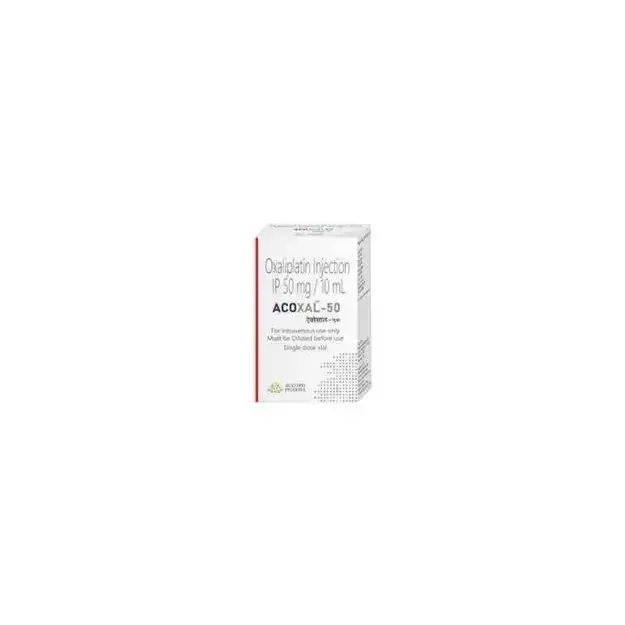
Acoxal 50 MG Injection 1
₹2,493.75
Quick fact
Acoxal 50 MG Injection 1 is an oxaliplatin injection used to treat colon and rectal cancer. A healthcare professional gives it into a vein; it can cause nausea and other side effects.
Uses
What is Acoxal 50 MG Injection 1 & Important Details
Acoxal contains oxaliplatin, a platinum-based anti-cancer medicine. It is used to treat cancers of the colon and rectum.
- It is an injection supplied as a pack of 1 injection.
- It is used for stage 3 colon cancer after surgery and for metastatic colon or rectum cancer with other anti-cancer medicines.
How does Acoxal 50 MG Injection 1 work (mechanism of action)?
Oxaliplatin works by damaging genetic material in cancer cells, which interferes with their growth and multiplication.
- It damages cancer-cell DNA and RNA.
- This interference slows or stops cancer-cell growth and multiplication.
Specialized or Off-Label Uses of Acoxal 50 MG Injection 1
No off-label use is established in the available information.
Conditions That Acoxal 50 MG Injection 1 Will Not Treat
The available information supports use for colon and rectal cancer, not other conditions. Ask your doctor whether it is appropriate for your diagnosis.
Benefits
What are the benefits of taking Acoxal 50 MG Injection 1
Acoxal is used as part of cancer treatment to help manage cancers of the colon and rectum. Your specialist will decide whether it belongs in your treatment plan.
- It may be used for stage 3 colon cancer after the primary tumour has been surgically removed.
- It may be combined with other anti-cancer medicines for metastatic colon and rectum cancer.
Side Effects
What are the most common side effects of Acoxal 50 MG Injection 1?
Common side effects reported with Acoxal include changes in blood cells and digestive symptoms. Not everyone will experience them.
- Nausea or vomiting.
- Diarrhoea.
What are the serious side effects of Acoxal 50 MG Injection 1?
Serious effects listed with Acoxal include changes affecting bleeding, digestion, the heart, muscles, or the nervous system.
- Abnormal bleeding or bruising.
- Continuous diarrhoea or vomiting, or mouth ulcers.
- Irregular heartbeat, muscle pain, or muscle weakness.
- Altered mental function, blurred vision, or seizures.
Contact your doctor promptly if you notice a serious symptom or one that is worsening. Seek urgent medical care for an emergency.
Severe Allergic Reactions of Acoxal 50 MG Injection 1?
Severe allergic reactions are listed as a serious possible side effect. Allergic symptoms may include:
- Sore lips or mouth ulcers.
- Itching.
Get emergency medical care if you think you are having a severe allergic reaction.
What side effects may I notice from receiving this medication?
Tell your treatment team about side effects you notice during treatment.
- Nausea, vomiting, or diarrhoea.
- Fatigue or an unpleasant throat sensation.
Seek medical advice if symptoms are serious or worsening.
Acoxal 50 MG Injection 1 Dosage Guidelines
Overview
A usual adult regimen is oxaliplatin 85 mg/m² by intravenous infusion every 2 weeks as part of a combination cancer-treatment regimen. The doctor sets the final dose; Acoxal is infused slowly into a vein.
Adults
Acoxal is given as a slow intravenous infusion over 2 to 6 hours. The dose is prescribed according to body surface area; the usual adult amount, frequency and maximum daily dose are not established in the available information. The doctor may change it.
Children
Acoxal is meant for adults; it is generally not advised for children under 18 years unless a doctor recommends it. A doctor must decide the final dose.
Older adults
Older adults require medical supervision; use the usual regimen cautiously and individualise it, especially with liver or kidney problems. The doctor decides the final dose.
- The prescribed dose is based on body surface area and the treatment plan.
- Your doctor may consider your health and kidney, liver, or heart problems when planning treatment.
Dosage Adjustments for Kidney, Liver, or Other Health Problems
Dose changes depend on kidney function, the treatment regimen, and the patient’s health. Your oncology team should determine any adjustment.
- Normal kidney function: The usual adult regimen is 85 mg/m² by intravenous infusion every 2 weeks in combination treatment.
- Reduced kidney function: A dose adjustment may be needed; the treating doctor should assess kidney function and choose the regimen.
- Severe kidney impairment: The available product information says patients with severe kidney problems should not use Acoxal.
- Dialysis: A specific dialysis dose is not established in the available information. Ask the oncology team for individual advice.
- Liver disease: Tell the doctor about liver problems before treatment; the dose should be decided after medical assessment.
- Other important conditions: Tell the doctor about heart disorders, low blood cells, or tingling or numbness in the fingers before treatment.
Do not change or delay your treatment dose yourself; contact your cancer specialist about health changes.
How Often and How Long to Take Acoxal 50 MG Injection 1?
A usual adult combination regimen is given every 2 weeks, but the schedule and treatment duration depend on the cancer plan and your response. Acoxal is infused over 2 to 6 hours.
- A healthcare professional administers the infusion.
- Follow the appointment schedule set by your cancer team.
How should I take Acoxal 50 MG Injection 1?
Taking Acoxal 50 MG Injection 1 With or Without Food
Acoxal is given into a vein, so food instructions for taking it by mouth do not apply. No specific food interaction is identified in the available information.
How to Take Specific Forms (Tablets, Chewables, Liquid Suspension)
Acoxal is an injection administered into a vein by a qualified medical professional; no tablet, chewable, or liquid oral form is described.
Overdose/Missed Dose
What should I do if I accidentally use too much Acoxal 50 MG Injection 1?
An overdose is described as highly unlikely because a skilled healthcare professional administers Acoxal. If you are concerned about an infusion or dose, tell the treatment team immediately.
What should I do if I miss a dose of Acoxal 50 MG Injection 1?
If you miss a scheduled treatment, contact your doctor for advice. Do not arrange a replacement dose yourself.
Interactions
Does Acoxal 50 MG Injection 1 interact with foods or drinks?
No specific food items are known to interact negatively with Acoxal. The available information does not establish whether alcohol is safe; ask your doctor.
Does Acoxal 50 MG Injection 1 interact with other medicines (drug interactions)
Tell your doctor about all medicines you take and any vaccinations before treatment. The available product information does not identify a specific interacting medicine.
- Include prescription medicines, non-prescription medicines, and vaccinations in the list you share with your doctor.
Acoxal 50 MG Injection 1 and Blood Thinners
A specific interaction with blood thinners is not established in the available information. Tell your doctor if you take one.
Acoxal 50 MG Injection 1 and Birth Control (if applicable)
Women are advised to use effective contraception during and after the 4 months of treatment. Male patients are advised to use effective contraception during therapy and six months after treatment.
Interactions with Supplements, Vitamins, and Herbal Products
Specific interactions with supplements, vitamins, or herbal products are not established in the available information.
Warnings & Precautions
Who should not use Acoxal 50 MG Injection 1?
Acoxal may not be suitable for some people. Discuss your health and treatment history with your doctor before receiving it.
- The available information says people with severe kidney problems, low blood cells, or tingling or numbness in the fingers should not use it.
- It should not be used by people allergic to Acoxal or by breastfeeding mothers, according to the available information.
What should I know about Acoxal 50 MG Injection 1 before using it?
Before treatment, make sure your doctor knows about your medical conditions and medicines.
- Report kidney or liver problems, heart disorders, or lung conditions.
- Tell your doctor about all medicines and vaccinations.
Precautions for Pre-existing Conditions (Heart, Kidney, Liver)
Kidney disease: Tell your doctor about kidney problems. Severe kidney problems are listed as a reason not to use Acoxal.
Liver disease: Tell your doctor about liver problems before treatment so your care can be assessed.
Heart disease: Tell your doctor about heart disorders before treatment.
Alcohol: Can You Drink Alcohol While Taking Acoxal 50 MG Injection 1?
It is unknown whether alcohol is safe with Acoxal. Ask your doctor for advice during treatment.
Pregnancy and Breastfeeding
Pregnancy: Acoxal is not recommended during pregnancy. Women should use effective contraception during and after the 4 months of treatment.
Breastfeeding: Breastfeeding during treatment is unsafe; your doctor may advise stopping for some time.
Children: It is meant for adults; do not give it to a child without consulting a doctor.
Older adults: Older adults should receive it under medical supervision, with caution especially above 70 years of age and with liver or kidney problems.
Safe Usage & Best Practices
Why You Must Complete the Full Prescription
Follow the cancer-treatment plan agreed with your specialist. Do not change or stop treatment without discussing it with them.
Consequences of Skipping Doses or Sharing Medication
A missed treatment can affect your planned care. Contact your doctor for advice and do not share this prescription medicine.
- Do not change the dose or schedule on your own.
Can Acoxal 50 MG Injection 1 cause nausea?
Yes. Nausea is listed as a common side effect of Acoxal.
- Other reported digestive effects include vomiting and diarrhoea.
What should you do if you feel better before finishing the medication?
Feeling better does not mean you should change your cancer-treatment plan.
- Keep to the schedule advised by your treatment team.
Storage Details
Store Acoxal as directed by the healthcare professional or pharmacist.
- Store below 30°C.
- Protect it from light.
Frequently asked questions
-
1. What is Acoxal used for?
Ans: It is used to treat colon and rectal cancer.
-
2. How is Acoxal given?
Ans: A healthcare professional gives it slowly into a vein over 2 to 6 hours.
-
3. Can Acoxal be used during pregnancy?
Ans: It is not recommended during pregnancy.
-
4. Can I breastfeed during treatment?
Ans: No. Breastfeeding during treatment is described as unsafe; discuss alternatives with your doctor.
-
5. What if I miss a scheduled dose?
Ans: Contact your doctor for advice about the missed dose.