
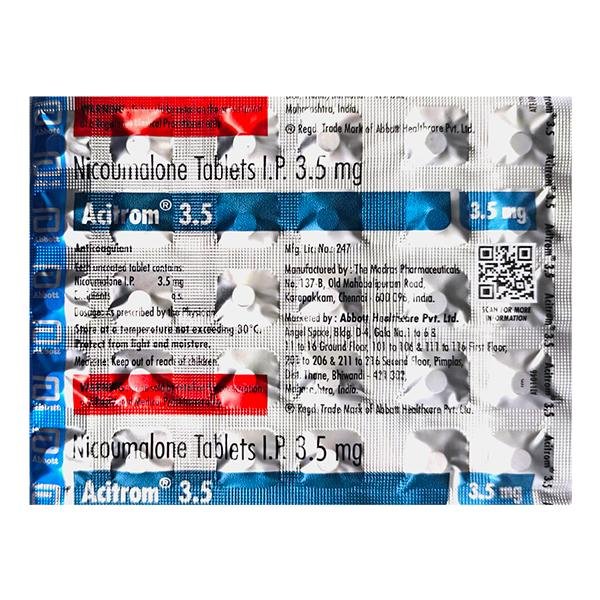
Acitrom 3.5 Tablet 30
₹653.19
Quick fact
Acitrom contains acenocoumarol, a medicine used to prevent or treat deep vein thrombosis and pulmonary embolism, which are blood clots in the veins and lungs.
Uses
What is Acitrom 3.5 Tablet 30 & Important Details
Acitrom is a tablet containing acenocoumarol. It is used to prevent or treat certain blood clots and requires careful use as advised by a doctor.
- The pack contains 30 tablets.
- It is used for deep vein thrombosis and pulmonary embolism, and for stroke prevention.
- A prescription is required.
How does Acitrom 3.5 Tablet 30 work (mechanism of action)?
Acenocoumarol reduces the liver’s production of clotting proteins by blocking vitamin K action. This makes blood less likely to form clots.
- It blocks the action of vitamin K.
- The liver makes fewer clotting proteins, slowing blood clot formation.
Specialized or Off-Label Uses of Acitrom 3.5 Tablet 30
No specialized or off-label uses are established in the available information. Use it only for a reason discussed with your doctor.
Conditions That Acitrom 3.5 Tablet 30 Will Not Treat
The available information does not establish conditions that Acitrom treats beyond the uses listed. Ask a doctor whether it is suitable for your condition.
Benefits
What are the benefits of taking Acitrom 3.5 Tablet 30
Acitrom helps reduce the chance of harmful clots forming. Its use needs medical guidance and monitoring.
- It helps prevent or treat clots in deep veins.
- It is used to prevent or treat pulmonary embolism and to help prevent stroke.
- It helps prevent harmful clots in the legs, lungs, brain, and heart.
Side Effects
What are the most common side effects of Acitrom 3.5 Tablet 30?
Bleeding is described as the most common side effect. Other listed common effects include dizziness, headache, weakness, and blurred vision.
- Bleeding
- Dizziness, headache, weakness, or blurred vision
Tell your doctor if side effects persist or worry you. Seek prompt medical advice for warning signs of bleeding.
What are the serious side effects of Acitrom 3.5 Tablet 30?
Bleeding can be a serious concern with Acitrom. Contact a doctor promptly if you notice the warning signs listed below.
- A pinpoint rash
- Blood in vomit, urine, or stool
Get prompt medical attention if these occur. If you think you have taken too much, contact a doctor immediately or go to the nearest hospital.
Severe Allergic Reactions of Acitrom 3.5 Tablet 30?
A specific allergic reaction to this product is not described in the available information.
- Specific allergy warning symptoms are not established in the available information.
What side effects may I notice from receiving this medication?
Side effects listed for Acitrom include:
- Bleeding
- Dizziness, headache, weakness, and blurred vision
Talk to your doctor if an effect persists or concerns you; seek prompt care for blood in vomit, urine, or stool, or a pinpoint rash.
Acitrom 3.5 Tablet 30 Dosage Guidelines
Overview
Acenocoumarol dosing is adjusted to the individual and monitored with blood tests. A usual starting dose cannot safely be applied to everyone; the doctor decides the final dose.
Adults
The amount and frequency for adults are decided by the doctor and are not specified here. The doctor may change it; the doctor decides the final dose.
Children
A standard child dose is not provided here; use Acitrom in children only on a doctor’s advice. A doctor must decide.
Older adults
Older adults may need a lower starting dose and close monitoring; use the lowest effective dose. The doctor decides.
- The dose depends on the reason for treatment and blood-test results.
- Follow the dose and duration prescribed by your doctor.
Dosage Adjustments for Kidney, Liver, or Other Health Problems
Dose changes depend on individual health and monitoring. Do not adjust Acitrom yourself.
- Normal kidney function: A specific dose adjustment is not established here; follow the doctor’s dose and monitoring plan.
- Reduced kidney function: Tell your doctor about kidney disease; an individual dose and monitoring plan may be needed.
- Severe kidney impairment: A specific adjustment for severe kidney impairment is not established in the available information.
- Dialysis: A specific dose adjustment for dialysis is not established in the available information.
- Liver disease: Tell your doctor about liver disease so they can assess the dose and monitoring needed.
- Other important conditions: Tell your doctor about other health conditions and all medicines you take.
Keep blood-test appointments; your doctor may use them to check that treatment is working properly.
How Often and How Long to Take Acitrom 3.5 Tablet 30?
The exact frequency and duration are set by your doctor; no amount or schedule is specified for this product in the supplied dosing information.
- Take it at a fixed time as advised.
- Do not stop it abruptly without consulting your doctor.
- Follow your doctor’s instructions and attend blood-test appointments.
How should I take Acitrom 3.5 Tablet 30?
Taking Acitrom 3.5 Tablet 30 With or Without Food
Acitrom may be taken with or without food. Avoid sudden major changes to your diet during treatment.
How to Take Specific Forms (Tablets, Chewables, Liquid Suspension)
Tablets: Swallow the tablet whole. Do not chew, crush, or break it. Take it at the dose and for the duration advised by your doctor.
Overdose/Missed Dose
What should I do if I accidentally use too much Acitrom 3.5 Tablet 30?
Taking too much may cause dangerous bleeding, blood in vomit, urine, or stools, severe headache, or marked weakness. Contact a doctor immediately or go to the nearest hospital.
What should I do if I miss a dose of Acitrom 3.5 Tablet 30?
Take a missed dose when remembered unless it is time for the next dose; then skip it and continue your regular schedule. Do not take a double dose.
Interactions
Does Acitrom 3.5 Tablet 30 interact with foods or drinks?
Avoid sudden major changes to your diet during treatment. The available information advises against consuming alcohol while taking Acitrom.
Does Acitrom 3.5 Tablet 30 interact with other medicines (drug interactions)
Some medicines can affect how Acitrom works or increase bleeding risk. Tell your doctor about all medicines you take.
- Aspirin and other pain relievers
- Antibiotics and antifungals
- Medicines that prevent clotting or reduce platelet function
- Seizure medicines
Acitrom 3.5 Tablet 30 and Blood Thinners
Other medicines that prevent clotting or reduce platelet function may interact with Acitrom. Tell your doctor about them.
Acitrom 3.5 Tablet 30 and Birth Control (if applicable)
A specific interaction with birth control is not established in the available information. Ask your doctor or pharmacist about your medicines.
Interactions with Supplements, Vitamins, and Herbal Products
Tell your doctor about vitamins, supplements, and herbal products you take, as well as other medicines.
Warnings & Precautions
Who should not use Acitrom 3.5 Tablet 30?
The available information does not list specific conditions in which everyone must avoid Acitrom. It does require medical guidance and careful attention to bleeding risk.
- Tell your doctor if you have kidney or liver disease.
- Tell your doctor about all medicines, supplements, and herbal products you take.
What should I know about Acitrom 3.5 Tablet 30 before using it?
Acitrom increases bleeding risk. Follow your doctor’s instructions and keep any recommended blood-test appointments.
- Be careful with sharp objects, shaving, nail trimming, and contact sports.
- Tell your doctor before surgery or dental treatment; do not stop the medicine unless your doctor advises it.
- Do not stop treatment abruptly without consulting your doctor.
Precautions for Pre-existing Conditions (Heart, Kidney, Liver)
Kidney disease: Tell your doctor if you have kidney disease.
Liver disease: Tell your doctor if you have liver disease.
Heart disease: Specific advice for pre-existing heart disease is not established in the available information; discuss your condition with your doctor.
Alcohol: Can You Drink Alcohol While Taking Acitrom 3.5 Tablet 30?
The product information advises not consuming alcohol while taking Acitrom, as it may increase side effects.
Pregnancy and Breastfeeding
Pregnancy: Tell your doctor if you are pregnant.
Breastfeeding: Tell your doctor if you are breastfeeding.
Children: Use in children only as directed by a doctor.
Older adults: Ask your doctor to determine the appropriate dose and monitoring.
Safe Usage & Best Practices
Why You Must Complete the Full Prescription
Take Acitrom for the duration advised by your doctor. Do not stop it abruptly without consulting them.
Consequences of Skipping Doses or Sharing Medication
Do not skip doses or share Acitrom with another person. It is prescribed for an individual and needs medical supervision.
- Do not stop treatment abruptly without consulting your doctor.
- If you miss a dose, follow the missed-dose instructions and do not double the next dose.
Can Acitrom 3.5 Tablet 30 cause bleeding?
Yes. Bleeding is described as the most common side effect of Acitrom.
- Other listed effects include dizziness, headache, weakness, and blurred vision.
- Seek prompt attention for blood in vomit, urine, or stool, or a pinpoint rash.
What should you do if you feel better before finishing the medication?
Feeling better is not a reason to stop Acitrom. Do not stop it abruptly without first consulting your doctor.
- Continue only as prescribed and attend recommended blood tests.
Storage Details
Store Acitrom below 30°C in a dry place, away from direct sunlight.
- Keep it in its original pack and out of reach of children.
- Do not use it after expiry.
Frequently asked questions
-
1. What is Acitrom used for?
Ans: It is used to prevent or treat deep vein thrombosis and pulmonary embolism, and for stroke prevention.
-
2. Can I take Acitrom with food?
Ans: Yes. It may be taken with or without food.
-
3. What if I miss a dose?
Ans: Take it when remembered unless it is time for the next dose; then skip it. Do not take a double dose.
-
4. Should I stop taking it if I feel better?
Ans: No. Do not stop it abruptly without consulting your doctor.
-
5. What should I do if I see blood in my urine?
Ans: Contact your doctor promptly if you see blood in your urine, vomit, or stool.


