
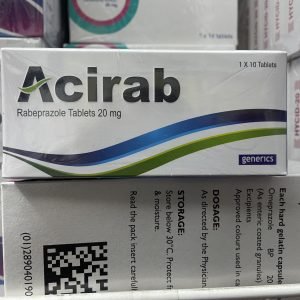
Acirab 20 MG Tablet 10
₹37.41
Quick fact
Acirab is a rabeprazole tablet used for acidity, acid reflux, peptic ulcer disease and Zollinger-Ellison syndrome. It reduces the amount of acid produced in the stomach.
Uses
What is Acirab 20 MG Tablet 10 & Important Details
Acirab contains rabeprazole, which reduces stomach acid. It is used for acidity, acid reflux, peptic ulcer disease and Zollinger-Ellison syndrome.
- It is a tablet supplied in a pack of 10 tablets.
- Each tablet contains Rabeprazole (20mg).
How does Acirab 20 MG Tablet 10 work (mechanism of action)?
Rabeprazole reduces stomach acid by blocking proton pumps in the stomach wall. These pumps produce acid.
- It blocks the action of proton pumps in the stomach wall.
- This reduces the amount of acid produced in the stomach.
Specialized or Off-Label Uses of Acirab 20 MG Tablet 10
The available information does not establish any uses of Acirab beyond its stated acid-related uses.
Conditions That Acirab 20 MG Tablet 10 Will Not Treat
The available information does not identify specific conditions that Acirab will not treat. It is described for acid-related conditions, so ask a doctor whether it is suitable for your symptoms.
Benefits
What are the benefits of taking Acirab 20 MG Tablet 10
By reducing stomach acid, Acirab may ease symptoms and help promote healing.
- It is used for acidity and acid reflux.
- It is used to treat peptic ulcer disease and Zollinger-Ellison syndrome.
Side Effects
What are the most common side effects of Acirab 20 MG Tablet 10?
Common side effects of Acirab include the following. They may be mild, but contact your doctor if they persist or worry you.
- Headache, nausea or vomiting.
- Abdominal pain, diarrhoea or flatulence.
Do not drive or use machinery if the medicine makes you feel dizzy or sleepy.
What are the serious side effects of Acirab 20 MG Tablet 10?
Long-term use may be associated with certain health risks.
- Use for more than 1 year may increase the risk of bone fractures, especially with higher doses.
- Low blood magnesium has been seen in some people taking the medicine for 3 months or more. It may cause tiredness, confusion, dizziness, muscle twitches or an irregular heartbeat.
Contact your doctor about these symptoms or concerns, particularly during long-term treatment. Your doctor may monitor magnesium levels.
Severe Allergic Reactions of Acirab 20 MG Tablet 10?
Do not take Acirab if you are allergic to rabeprazole or other proton pump inhibitors.
- Specific symptoms of a severe allergic reaction are not established in the available information.
What side effects may I notice from receiving this medication?
Other listed effects may also occur; the available information does not state how often they happen.
- Sleeplessness.
- Cough, runny nose or sore throat.
Tell your doctor if a symptom persists or concerns you.
Acirab 20 MG Tablet 10 Dosage Guidelines
Overview
For adults, a usual dose for acid reflux is 20 mg once daily. The final dose and duration depend on the condition and response; the doctor decides the final dose.
Adults
The dose depends on the condition being treated and how you respond to Acirab; take it as advised by your doctor. The doctor may change it.
Children
Acirab is not recommended for children. A child under 12 should receive it only on a doctor’s advice; a doctor must decide.
Older adults
The dose depends on the condition; use the lowest effective dose for the shortest duration needed. The doctor decides.
- The condition being treated and your response to the medicine affect the prescribed dose.
- Follow the dose and duration advised by your doctor.
Dosage Adjustments for Kidney, Liver, or Other Health Problems
Tell your doctor about health problems before starting Acirab. Individual dose advice should come from your doctor.
- Normal kidney function: No specific adjustment is established in the available information.
- Reduced kidney function: A dose adjustment is not established in the available information. Ask your doctor for advice.
- Severe kidney impairment: A dose adjustment is not established in the available information. Ask your doctor for advice.
- Dialysis: A specific dose for dialysis is not established in the available information.
- Liver disease: Tell your doctor before taking Acirab if you have severe liver problems.
- Other important conditions: Tell your doctor if you have osteoporosis, as bone-fracture risk may increase with long-term use.
Do not change your dose without medical advice.
How Often and How Long to Take Acirab 20 MG Tablet 10?
How often and how long to take Acirab depend on the condition and your response. Follow your doctor’s prescription.
- Take it regularly at the same time each day, as advised.
- Continue it for the duration prescribed, even if symptoms improve quickly.
How should I take Acirab 20 MG Tablet 10?
Taking Acirab 20 MG Tablet 10 With or Without Food
Food instructions differ across the available product information. One listing advises taking Acirab on an empty stomach, one hour before a meal, preferably in the morning. Follow the instructions from your doctor or pharmacist.
How to Take Specific Forms (Tablets, Chewables, Liquid Suspension)
Tablets: Swallow the tablet whole. Do not chew, crush or break it. Take it as advised by your doctor.
Overdose/Missed Dose
What should I do if I accidentally use too much Acirab 20 MG Tablet 10?
Taking too many tablets may cause headache, nausea and stomach pain. If an overdose is suspected, contact your doctor promptly.
What should I do if I miss a dose of Acirab 20 MG Tablet 10?
Take the missed dose when you remember. If the next dose is due soon, skip the missed one and continue as normal. Do not take two doses together.
Interactions
Does Acirab 20 MG Tablet 10 interact with foods or drinks?
One listing advises taking Acirab on an empty stomach, before a meal. Follow your prescribed instructions about food; the available listings give differing advice.
Does Acirab 20 MG Tablet 10 interact with other medicines (drug interactions)
Acirab may interact with some medicines. Tell your doctor or pharmacist about all medicines you take before starting treatment.
- HIV medicines such as Atazanavir, Nelfinavir or Rilpivirine.
- Anticoagulants such as Warfarin; the listing notes an increased risk of bleeding and ulcers.
- Antacids: one listing advises avoiding them with Acirab; check with your doctor or pharmacist before combining them.
Acirab 20 MG Tablet 10 and Blood Thinners
Anticoagulants such as Warfarin may increase the risk of bleeding and ulcers when used with Acirab. Ask your doctor for advice.
Acirab 20 MG Tablet 10 and Birth Control (if applicable)
The available information does not establish whether Acirab affects birth control. Ask your doctor or pharmacist if you have concerns.
Interactions with Supplements, Vitamins, and Herbal Products
Tell your doctor or pharmacist about supplements, vitamins and herbal products you use.
Warnings & Precautions
Who should not use Acirab 20 MG Tablet 10?
Acirab may not be suitable for everyone. Discuss your medical history and medicines with your doctor before taking it.
- Do not take it if you are allergic to rabeprazole or other proton pump inhibitors.
- Tell your doctor if you have severe liver problems or osteoporosis.
- Tell your doctor if you take medicines for HIV.
What should I know about Acirab 20 MG Tablet 10 before using it?
Before taking Acirab, make sure your doctor knows about your health conditions and all medicines you use.
- Discuss severe liver problems and osteoporosis with your doctor.
- Long-term use may increase the risk of bone fractures and low blood magnesium.
Precautions for Pre-existing Conditions (Heart, Kidney, Liver)
Kidney disease: Specific advice for kidney disease is not established in the available information. Tell your doctor about your health conditions.
Liver disease: Tell your doctor before taking Acirab if you have severe liver problems.
Heart disease: Specific advice for heart disease is not established in the available information.
Alcohol: Can You Drink Alcohol While Taking Acirab 20 MG Tablet 10?
Alcohol may worsen acidity and stomach symptoms, so it is best to avoid it or limit intake.
Pregnancy and Breastfeeding
Pregnancy: Advice differs in the available information. Consult your doctor before taking Acirab if you are pregnant or may be pregnant.
Breastfeeding: Advice differs in the available information. Ask your doctor before taking Acirab while breastfeeding.
Children: Not recommended for children; a child under 12 should use it only on a doctor’s advice.
Older adults: Use the lowest effective dose for the shortest duration needed, as advised by a doctor.
Safe Usage & Best Practices
Why You Must Complete the Full Prescription
Continue Acirab for the duration prescribed, even if symptoms improve quickly. Do not stop or change treatment without consulting your doctor.
Consequences of Skipping Doses or Sharing Medication
Missing a dose may reduce the effectiveness of treatment. Use Acirab only as prescribed and do not share it.
- If you miss a dose, follow the missed-dose instructions.
- Do not take two doses together to make up for one missed dose.
Can Acirab 20 MG Tablet 10 cause headache?
Yes. Headache is listed as a common side effect of Acirab.
- Other common effects include nausea, vomiting, abdominal pain, dizziness, diarrhoea, flatulence and weakness.
What should you do if you feel better before finishing the medication?
Keep taking Acirab for the duration prescribed, even if you feel better. Symptoms may improve before treatment is complete.
- Do not stop or change the dose without asking your doctor.
Storage Details
Store Acirab below 25°C, protected from direct sunlight and moisture.
- Keep it out of the sight and reach of children and pets.
Frequently asked questions
-
1. What does Acirab do?
Ans: It reduces the amount of acid produced in the stomach.
-
2. Can children take Acirab?
Ans: It is not recommended for children; a child under 12 should take it only on a doctor’s advice.
-
3. What if I miss a dose?
Ans: Take it when remembered unless the next dose is due soon; then skip it. Do not take two doses together.
-
4. Can Acirab cause headache?
Ans: Yes. Headache is listed as a common side effect.
-
5. How should I store Acirab?
Ans: Store it below 25°C and protect it from direct sunlight and moisture.


