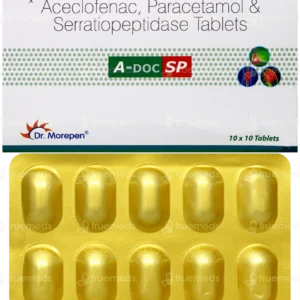
Acipact S 100/325/15 MG Tablet 10
₹70.31
Quick fact
Acipact S is a combination tablet used for pain relief. It contains aceclofenac, paracetamol, and serratiopeptidase, and may help reduce pain, inflammation, and swelling.
Uses
What is Acipact S 100/325/15 MG Tablet 10 & Important Details
Acipact S is a combination medicine used for pain relief.
- Its active ingredients are aceclofenac, paracetamol, and serratiopeptidase.
- It is described for muscle, joint, and postoperative pain, including pain and inflammation associated with some forms of arthritis.
How does Acipact S 100/325/15 MG Tablet 10 work (mechanism of action)?
The medicine combines three ingredients.
- Aceclofenac and paracetamol block the release of certain chemical messengers that cause pain and fever.
- Serratiopeptidase is described as an enzyme that breaks down abnormal proteins at the site of inflammation and helps support healing.
Specialized or Off-Label Uses of Acipact S 100/325/15 MG Tablet 10
No uses outside the pain-relief uses described for this product are established in the available information.
Conditions That Acipact S 100/325/15 MG Tablet 10 Will Not Treat
The available information does not establish that Acipact S treats causes of pain or conditions beyond the uses described.
Benefits
What are the benefits of taking Acipact S 100/325/15 MG Tablet 10
Acipact S is described as helping relieve pain and inflammation associated with injuries and conditions affecting joints and muscles.
- It may help reduce pain, inflammation, and swelling.
- It is described for discomfort such as arthritis, muscle pain, and post-injury swelling.
Side Effects
What are the most common side effects of Acipact S 100/325/15 MG Tablet 10?
Common side effects listed for Acipact S include the following.
- Nausea, vomiting, stomach pain, indigestion, and heartburn.
- Increased liver enzymes, dizziness, drowsiness, and diarrhoea.
What are the serious side effects of Acipact S 100/325/15 MG Tablet 10?
Long-term use may lead to stomach bleeding and kidney problems. Watch for warning symptoms and seek medical advice promptly.
- Black stools, vomiting blood, severe stomach pain, or unusual bruising.
- Yellowing of the skin is also described as a serious symptom requiring contact with a healthcare provider.
Get urgent medical attention for black stools, vomiting blood, severe stomach pain, or unusual bruising.
Severe Allergic Reactions of Acipact S 100/325/15 MG Tablet 10?
Stop taking Acipact S and seek medical help if you develop signs of an allergic reaction.
- Rash.
- Swelling of the face.
- Difficulty breathing.
Facial swelling or breathing difficulty can be an emergency. Seek urgent medical help.
What side effects may I notice from receiving this medication?
Some side effects are listed as common with this medicine.
- Nausea, vomiting, stomach pain, indigestion, or heartburn.
- Dizziness, drowsiness, diarrhoea, or increased liver enzymes.
Contact your doctor if symptoms persist or concern you.
Acipact S 100/325/15 MG Tablet 10 Dosage Guidelines
Overview
A usual adult regimen is one tablet twice daily, with a maximum of two tablets in a day. The doctor decides the final dose and duration.
Adults
Usual adult dose: one tablet twice daily; maximum two tablets in a day. The doctor may change it.
Children
Acipact S is not recommended for children because safety and effectiveness are not established. A doctor must decide.
Older adults
Older adults should use this medicine cautiously, at the lowest effective dose for the shortest time. The doctor decides.
- The prescribed dose and duration should be followed. Kidney or liver problems may affect how the medicine is used.
Dosage Adjustments for Kidney, Liver, or Other Health Problems
Health problems can affect whether this medicine is suitable and whether the dose needs adjustment. Ask your doctor for individual advice.
- Normal kidney function: Follow the dose prescribed by your doctor.
- Reduced kidney function: Use with caution if you have kidney disease; your doctor can advise whether the dose needs adjustment.
- Severe kidney impairment: A specific adjustment is not established in the available information. Ask your doctor before use.
- Dialysis: A dose adjustment for dialysis is not established in the available information. Ask your doctor.
- Liver disease: Use with caution if you have liver disease; your doctor may need to adjust the dose.
- Other important conditions: Tell your doctor about heart disease, asthma, stomach ulcers, or uncontrolled high blood pressure before use.
Do not change your dose yourself. Your doctor will consider your health conditions and decide what is appropriate.
How Often and How Long to Take Acipact S 100/325/15 MG Tablet 10?
The usual adult regimen is one tablet twice daily, but the doctor sets the duration.
- Use the lowest dose that works for the shortest possible time.
- Follow your doctor’s dose and duration instructions.
How should I take Acipact S 100/325/15 MG Tablet 10?
Taking Acipact S 100/325/15 MG Tablet 10 With or Without Food
The product information differs on food: one instruction allows taking the tablet with or without food, while another advises taking it with food or milk.
How to Take Specific Forms (Tablets, Chewables, Liquid Suspension)
Tablets: Swallow the tablet whole. Do not chew, crush, or break it.
Overdose/Missed Dose
What should I do if I accidentally use too much Acipact S 100/325/15 MG Tablet 10?
If you think you have taken too much Acipact S, contact a doctor immediately. Do not take more than the prescribed dose.
What should I do if I miss a dose of Acipact S 100/325/15 MG Tablet 10?
Take a missed dose when you remember. If it is nearly time for the next dose, skip the missed one. Do not take a double dose.
Interactions
Does Acipact S 100/325/15 MG Tablet 10 interact with foods or drinks?
Avoid alcohol while taking Acipact S.
Does Acipact S 100/325/15 MG Tablet 10 interact with other medicines (drug interactions)
Tell your doctor about all medicines you take. Some medicines may raise bleeding risk or duplicate ingredients in Acipact S.
- Do not take other medicines containing paracetamol unless your doctor advises it.
- Avoid combining it with other NSAID painkillers unless your doctor recommends it.
- Tell your doctor if you take blood thinners, steroids, or certain antidepressants, as they may increase bleeding risk.
Acipact S 100/325/15 MG Tablet 10 and Blood Thinners
Tell your doctor if you take blood thinners; they may increase bleeding risk with Acipact S.
Acipact S 100/325/15 MG Tablet 10 and Birth Control (if applicable)
An interaction with birth control is not established in the available information. Ask your doctor or pharmacist about your medicines.
Interactions with Supplements, Vitamins, and Herbal Products
Interactions with supplements, vitamins, and herbal products are not established in the available information.
Warnings & Precautions
Who should not use Acipact S 100/325/15 MG Tablet 10?
Get medical advice before using Acipact S if you have a health condition that may increase risks or have had an allergy to pain relievers.
- Tell your doctor if you have kidney disease, heart disease, asthma, stomach ulcers, or uncontrolled high blood pressure.
- The product information advises against use with active stomach ulcers, severe heart failure, or a history of allergic reactions to other pain relievers.
- It is not recommended during pregnancy or breastfeeding without a doctor’s direction.
What should I know about Acipact S 100/325/15 MG Tablet 10 before using it?
Use Acipact S only as prescribed and tell your doctor about your health conditions and other medicines.
- Avoid other medicines containing paracetamol or other NSAID painkillers unless your doctor advises otherwise.
- Stay well hydrated; dehydration may increase the risk of kidney-related side effects.
Precautions for Pre-existing Conditions (Heart, Kidney, Liver)
Kidney disease: Tell your doctor before use. Dehydration may increase the risk of kidney-related side effects.
Liver disease: Use with caution and discuss your history with your doctor; the dose may need adjustment.
Heart disease: Tell your doctor before use. The product information advises caution in people with heart disease.
Alcohol: Can You Drink Alcohol While Taking Acipact S 100/325/15 MG Tablet 10?
Avoid alcohol while taking Acipact S.
- Alcohol may increase stomach irritation and the risk of liver damage or stomach bleeding.
Pregnancy and Breastfeeding
Pregnancy: Acipact S is not recommended during pregnancy; ask a healthcare provider about alternatives.
Breastfeeding: Use only if prescribed by a doctor; safety data in nursing mothers is lacking.
Children: The product is not recommended for children because safety and effectiveness are not established.
Older adults: Older adults should use Acipact S cautiously and under medical advice.
Safe Usage & Best Practices
Why You Must Complete the Full Prescription
Use Acipact S for the duration prescribed.
Consequences of Skipping Doses or Sharing Medication
Take Acipact S only as prescribed.
- If you miss a dose, follow the missed-dose instructions and do not double the next dose.
- Ask your doctor or pharmacist if you are unsure what to do.
Can Acipact S 100/325/15 MG Tablet 10 cause Nausea?
Yes.
- Other listed effects include vomiting, stomach pain, indigestion, and heartburn.
What should you do if you feel better before finishing the medication?
Feeling better does not change the prescribed duration.
- Ask your doctor before stopping or changing the treatment.
Storage Details
Store Acipact S in its original blister packaging, protected from moisture and direct sunlight.
- Keep it at room temperature, ideally between 15°C and 30°C (59°F to 86°F).
Frequently asked questions
-
1. What is Acipact S used for?
Ans: It is used for pain relief and is described for muscle, joint, and postoperative pain.
-
2. Can I take it with food?
Ans: Instructions differ: one allows with or without food, while another advises food or milk. Check with your doctor or pharmacist.
-
3. Can I take it with another painkiller?
Ans: Avoid other NSAID painkillers unless your doctor recommends them; do not add paracetamol-containing medicines without advice.
-
4. What if I miss a dose?
Ans: Take it when remembered unless it is nearly time for the next dose; do not double the dose.
-
5. What should I do if I suspect an overdose?
Ans: Contact a doctor immediately if you suspect you have taken too much.