
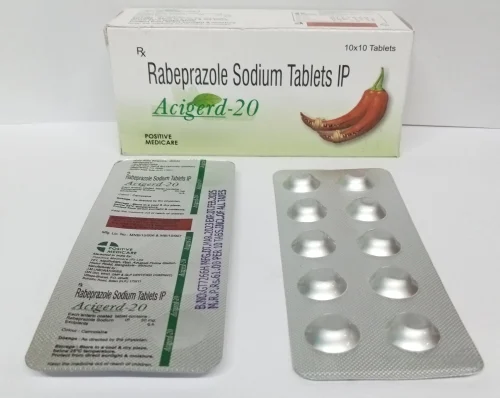
Acigerd 20 MG Tablet 10
₹45.75
Quick fact
Acigerd is a rabeprazole tablet used for acidity, acid reflux, peptic ulcers and other acid-related conditions. It reduces the amount of acid produced in the stomach.
Uses
What is Acigerd 20 MG Tablet 10 & Important Details
Acigerd contains rabeprazole and is used for conditions linked to excess stomach acid.
- It is a tablet supplied in a pack of 10 tablets.
- The tablet contains rabeprazole 20 mg.
- Uses include acidity, acid reflux, peptic ulcer disease and Zollinger-Ellison syndrome.
- It may also be used to prevent stomach ulcers in people taking non-steroidal anti-inflammatory drugs.
How does Acigerd 20 MG Tablet 10 work (mechanism of action)?
Rabeprazole reduces stomach acid by blocking proton pumps in the stomach lining.
- Proton pumps in the stomach lining release acid into the stomach.
- Rabeprazole blocks these pumps.
Specialized or Off-Label Uses of Acigerd 20 MG Tablet 10
No off-label use is established in the available information. The listed uses are acid-related conditions.
- It may be used with antibiotics for Helicobacter pylori infection.
Conditions That Acigerd 20 MG Tablet 10 Will Not Treat
The available information lists acid-related conditions as uses; it does not establish that Acigerd treats unrelated conditions. Ask a doctor about a condition not listed here.
Benefits
What are the benefits of taking Acigerd 20 MG Tablet 10
By reducing stomach acid, Acigerd can help relieve acid-related symptoms and support healing in the digestive tract.
- It is used to treat acidity and acid reflux.
- Lowering acid can support healing of acid-related damage in the digestive tract.
- It is used for peptic ulcer disease and Zollinger-Ellison syndrome.
Side Effects
What are the most common side effects of Acigerd 20 MG Tablet 10?
Common side effects include digestive symptoms and headache. Many side effects do not need medical attention, but speak to your doctor if they persist or worry you.
- Headache
- Nausea or vomiting
- Stomach or abdominal pain
- Flatulence or diarrhoea
- Dizziness or weakness
Contact your doctor if a side effect is severe, persists or gets worse.
What are the serious side effects of Acigerd 20 MG Tablet 10?
Long-term use may carry risks that need discussion with a doctor, including bone fractures and low blood magnesium.
- Long-term use, especially at higher doses, may increase the risk of bone fractures.
- Low magnesium has been seen in some people taking the medicine for 3 months or more. It may cause tiredness, confusion, dizziness, muscle twitches or an irregular heartbeat.
Contact your doctor promptly about concerning symptoms or if you need long-term treatment; your doctor may monitor mineral levels.
Severe Allergic Reactions of Acigerd 20 MG Tablet 10?
Do not take Acigerd if you are allergic to rabeprazole or other proton pump inhibitors.
- Specific allergy symptoms are not described in the available information.
- If you suspect a severe allergic reaction, seek emergency medical care.
Tell a healthcare professional about any previous allergy to rabeprazole or a similar medicine.
What side effects may I notice from receiving this medication?
You may notice digestive symptoms or other listed side effects while taking Acigerd.
- Nausea, vomiting, stomach pain, flatulence or diarrhoea
- Headache, dizziness or weakness
Ask your doctor if symptoms persist, worsen or concern you.
Acigerd 20 MG Tablet 10 Dosage Guidelines
Overview
The usual adult starting dose is 20 mg once daily, typically before a meal. Your doctor decides the final dose and how long you should take it.
Adults
Usual starting dose: 20 mg once daily; maximum usually 40 mg per day. The doctor may change it.
Children
Acigerd is not recommended for children because safety and effectiveness were not established. A doctor must decide.
Older adults
Older adults should use the lowest effective dose for the shortest duration needed. The doctor decides.
- The dose may depend on the condition being treated and your response.
- Tell your doctor about liver or kidney problems before treatment.
- Follow the dose prescribed for you; do not take more than advised.
Dosage Adjustments for Kidney, Liver, or Other Health Problems
A clinician should review your dose and health conditions before treatment.
- Normal kidney function: No dose adjustment is usually needed.
- Reduced kidney function: Dose adjustment is usually not required, but tell your doctor about kidney problems.
- Severe kidney impairment: The usual dose adjustment is not established here; ask your doctor to assess your treatment.
- Dialysis: A specific adjustment for dialysis is not established in the available information.
- Liver disease: Tell your doctor about liver problems; dose adjustment may be needed with liver impairment.
- Other important conditions: Discuss osteoporosis or low magnesium before starting treatment.
Do not adjust the dose yourself; your doctor should decide what is appropriate.
How Often and How Long to Take Acigerd 20 MG Tablet 10?
The usual adult starting pattern is once daily. How long to take it depends on your condition and your doctor’s instructions.
- Take it at the same time each day to help you remember.
- Use it for the duration prescribed and do not take more than advised.
How should I take Acigerd 20 MG Tablet 10?
Taking Acigerd 20 MG Tablet 10 With or Without Food
Take Acigerd preferably on an empty stomach in the morning, as directed by your doctor.
How to Take Specific Forms (Tablets, Chewables, Liquid Suspension)
Tablets: Swallow the tablet whole with water. Do not crush, chew or split it. Take it as your doctor directs.
Overdose/Missed Dose
What should I do if I accidentally use too much Acigerd 20 MG Tablet 10?
Taking too many tablets may cause headache, nausea and stomach pain. Tell your doctor if you suspect an overdose and seek medical advice.
What should I do if I miss a dose of Acigerd 20 MG Tablet 10?
Take the missed dose when you remember. If the next dose is due soon, skip the missed dose and continue as usual. Do not take two doses together.
Interactions
Does Acigerd 20 MG Tablet 10 interact with foods or drinks?
Fatty or spicy foods can trigger heartburn. The tablet is preferably taken on an empty stomach in the morning; follow your doctor’s instructions.
Does Acigerd 20 MG Tablet 10 interact with other medicines (drug interactions)
Tell your doctor about all medicines you take, as Acigerd can affect some medicines or their levels.
- Blood thinners such as warfarin may need monitoring because their effect can change.
- Acigerd can raise methotrexate levels; tell your doctor if you take it.
- If you take sucralfate, take Acigerd at least 30 minutes before it.
Acigerd 20 MG Tablet 10 and Blood Thinners
- Blood thinners such as warfarin may require monitoring because their effect can change.
- Tell your doctor if you take a blood thinner.
Acigerd 20 MG Tablet 10 and Birth Control (if applicable)
An interaction with birth control is not established in the available information. Ask your doctor or pharmacist about your medicines.
Interactions with Supplements, Vitamins, and Herbal Products
Specific interactions with supplements, vitamins or herbal products are not established in the available information. Tell your doctor or pharmacist what you use.
Warnings & Precautions
Who should not use Acigerd 20 MG Tablet 10?
Check with your doctor before taking Acigerd if you have a relevant allergy or health condition.
- Do not take it if you are allergic to rabeprazole or other proton pump inhibitors.
- Tell your doctor about severe liver disease, osteoporosis or low magnesium before starting.
- Tell your doctor about kidney problems.
What should I know about Acigerd 20 MG Tablet 10 before using it?
Before starting treatment, tell your doctor about your health conditions and other medicines.
- Report severe liver disease, osteoporosis or low magnesium.
- Tell your doctor if you have kidney problems.
- Discuss blood thinners and methotrexate with your doctor.
Precautions for Pre-existing Conditions (Heart, Kidney, Liver)
Kidney disease: Tell your doctor about kidney problems before taking the tablet.
Liver disease: Tell your doctor about liver problems; dose adjustment may be needed with liver impairment.
Heart disease: A specific precaution for heart disease is not established in the available information.
Alcohol: Can You Drink Alcohol While Taking Acigerd 20 MG Tablet 10?
Alcohol does not interact directly with Acigerd, but it can worsen reflux symptoms and irritate the stomach lining.
- Consider limiting alcohol if it worsens your symptoms.
Pregnancy and Breastfeeding
Pregnancy: Use Acigerd during pregnancy only if your doctor advises it.
Breastfeeding: Ask your doctor before using Acigerd while breastfeeding.
Children: It is not recommended for children because safety and effectiveness were not established.
Older adults: Use the lowest effective dose for the shortest duration needed, as advised by a doctor.
Safe Usage & Best Practices
Why You Must Complete the Full Prescription
Take Acigerd for the duration prescribed. Ask your doctor before changing or stopping your treatment.
Consequences of Skipping Doses or Sharing Medication
Follow your prescribed schedule and do not share your medicine with another person.
- If you miss a dose, follow the missed-dose instructions.
- Do not take two doses together.
Can Acigerd 20 MG Tablet 10 cause headache?
Yes. Headache is listed as a common side effect of Acigerd.
- Other listed effects include nausea, vomiting, stomach pain, dizziness, diarrhoea, flatulence and weakness.
What should you do if you feel better before finishing the medication?
Feeling better does not mean you should change your treatment without advice. Follow the duration and dose your doctor prescribed.
- Ask your doctor before stopping or changing the dose.
- Do not take more than advised.
Storage Details
Store Acigerd in a dry place away from moisture and light.
- Store below 30°C.
- Keep it away from light and moisture.
Frequently asked questions
-
1. What is Acigerd used for?
Ans: It is used for acidity, acid reflux, peptic ulcers and Zollinger-Ellison syndrome.
-
2. How should I take the tablet?
Ans: Swallow it whole with water; do not crush, chew or split it.
-
3. Can children take Acigerd?
Ans: It is not recommended for children because safety and effectiveness were not established.
-
4. What if I miss a dose?
Ans: Take it when remembered unless the next dose is due soon; do not take two doses together.
-
5. Can I take it during pregnancy?
Ans: Use it during pregnancy only if your doctor advises it.