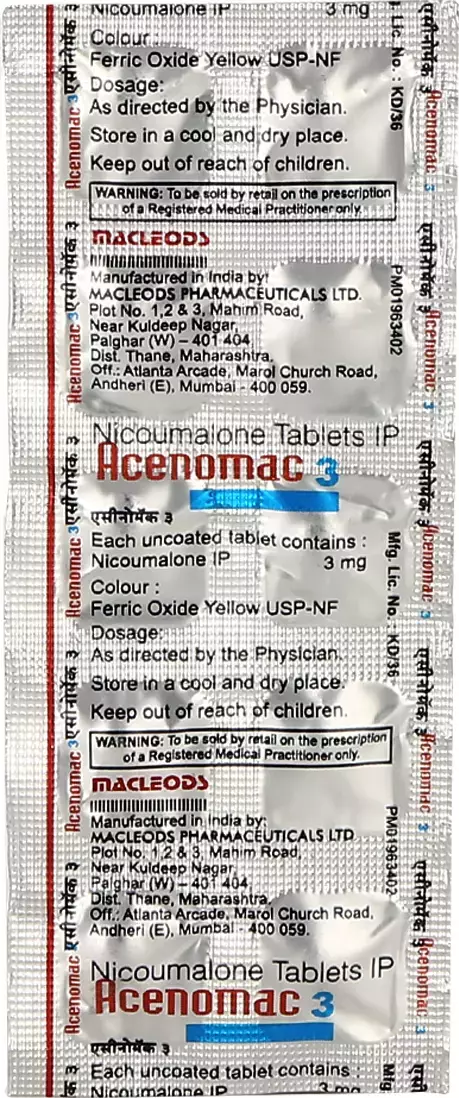
Acenomac 3 Tablet 10
₹126.84
Quick fact
Acenomac is an oral anticoagulant used to prevent and treat blood clots, including deep vein thrombosis and pulmonary embolism. It contains acenocoumarol and requires doctor-directed dosing and monitoring.
Uses
What is Acenomac 3 Tablet 10 & Important Details
Acenomac is an anticoagulant tablet prescribed to prevent or treat blood clots. Use it only as directed by your doctor.
- The pack contains tablets.
- The active ingredient is acenocoumarol.
How does Acenomac 3 Tablet 10 work (mechanism of action)?
Acenomac reduces the body’s ability to form blood clots by interfering with vitamin K, which is needed to make clotting proteins in the liver.
- It blocks the action of vitamin K.
- This reduces the production of clotting proteins in the liver.
Specialized or Off-Label Uses of Acenomac 3 Tablet 10
No off-label use is established in the available information.
Conditions That Acenomac 3 Tablet 10 Will Not Treat
The available information does not establish conditions that Acenomac does not treat.
Benefits
What are the benefits of taking Acenomac 3 Tablet 10
Acenomac helps prevent and treat harmful blood clots.
- It helps prevent and treat deep vein thrombosis by reducing the risk of harmful clots forming in deep veins.
- It is used for pulmonary embolism and for clot prevention in atrial fibrillation and mechanical heart valves.
Side Effects
What are the most common side effects of Acenomac 3 Tablet 10?
Bleeding is described as a common side effect. Other listed common side effects are dizziness, headache, weakness and blurred vision.
- Bleeding
- Dizziness
Tell your doctor if side effects persist or worry you. Seek prompt advice for bleeding symptoms.
What are the serious side effects of Acenomac 3 Tablet 10?
Bleeding can need urgent attention while taking Acenomac. Contact your doctor immediately if you notice blood in your vomit, urine or stool.
- Blood in vomit
- Blood in urine
- Blood in stool
- A pinpoint rash
Get medical help promptly if these warning signs occur, and contact emergency services for severe or uncontrolled bleeding.
Severe Allergic Reactions of Acenomac 3 Tablet 10?
A specific allergic-reaction description is not established in the available information. Tell your doctor about any known allergy to this medicine or similar anticoagulants.
- Specific emergency allergy symptoms are not described in the available information.
Seek emergency care for a severe or rapidly worsening reaction, and tell the treating team you take an anticoagulant.
What side effects may I notice from receiving this medication?
Side effects listed for Acenomac include bleeding and other symptoms.
- Dizziness, headache, weakness or blurred vision
- Bleeding
Contact your doctor if a side effect persists, worries you or involves bleeding.
Acenomac 3 Tablet 10 Dosage Guidelines
Overview
Acenomac dosing is individualised and adjusted using regular INR blood-test results. There is no single fixed dose or maximum daily amount that applies to everyone; your doctor decides the final dose.
Adults
The usual adult dose is not specified in the available information. Acenomac should be taken exactly as prescribed, with regular INR blood tests to guide dose adjustments. The doctor may change it.
Children
There is no standard child dose to give without specialist direction; use in children needs a doctor’s advice and monitoring. A doctor must decide the final dose.
Older adults
There is no single usual dose for older adults; dosing needs medical supervision and individual INR monitoring. Use the lowest effective dose; the doctor decides the final dose.
- INR test results guide dose adjustments.
- Attend monitoring appointments and take the dose exactly as prescribed.
- Your health conditions and other medicines should be discussed with your doctor.
Dosage Adjustments for Kidney, Liver, or Other Health Problems
Acenomac doses are adjusted to INR results and individual health needs. The available information does not give a specific dose adjustment for each condition below.
- Normal kidney function: A specific adjustment is not established; follow INR monitoring and your doctor’s instructions.
- Reduced kidney function: Kidney disease may affect the medicine’s effects, so careful monitoring is advised.
- Severe kidney impairment: A specific adjustment for severe impairment is not established. Ask your doctor how your kidney function affects treatment.
- Dialysis: A dialysis-specific adjustment is not established in the available information. Ask your doctor for individual advice.
- Liver disease: Tell your doctor about liver disease; people with liver problems may need lower doses and monitoring.
- Other important conditions: Tell your doctor about bleeding disorders and all other health conditions; individual monitoring may be needed.
Do not change your dose yourself. Your doctor should use your test results and health history to guide treatment.
How Often and How Long to Take Acenomac 3 Tablet 10?
The usual frequency and treatment duration are not specified for every patient; follow the schedule prescribed for you.
- Take it at a fixed time each day.
- Keep taking it as prescribed, even if you feel well.
How should I take Acenomac 3 Tablet 10?
Taking Acenomac 3 Tablet 10 With or Without Food
Acenomac may be taken with or without food. Keep your diet consistent during treatment and avoid sudden major changes, especially to vitamin K-rich foods.
How to Take Specific Forms (Tablets, Chewables, Liquid Suspension)
Tablets: Swallow the tablet whole. Do not chew, crush or break it; take it in the dose and for the duration advised by your doctor.
Overdose/Missed Dose
What should I do if I accidentally use too much Acenomac 3 Tablet 10?
Taking too much Acenomac may cause unusual bleeding, easy bruising, blood in stool or prolonged bleeding from cuts. Contact your doctor promptly if this happens.
What should I do if I miss a dose of Acenomac 3 Tablet 10?
If you forget a dose, take it when you remember unless it is nearly time for the next dose; then skip it and continue your regular schedule. Do not take a double dose.
Interactions
Does Acenomac 3 Tablet 10 interact with foods or drinks?
Cranberry juice may increase Acenomac’s anticoagulant effect and bleeding risk. Keep vitamin K-rich food intake consistent rather than making sudden changes.
Does Acenomac 3 Tablet 10 interact with other medicines (drug interactions)
Some medicines can increase bleeding risk or strengthen Acenomac’s anticoagulant effect. Check with your doctor or pharmacist before starting or stopping any medicine.
- Aspirin and NSAIDs, including ibuprofen and diclofenac, can increase bleeding risk.
- Some antibiotics, including erythromycin and ciprofloxacin, can enhance the anticoagulant effect and potentially increase bleeding risk.
- Tell your doctor about all medicines you take.
Acenomac 3 Tablet 10 and Blood Thinners
Tell your doctor about all other medicines, including blood thinners and medicines that may increase bleeding risk. Do not add or stop a medicine without medical advice.
Acenomac 3 Tablet 10 and Birth Control (if applicable)
An interaction with birth-control medicines is not established in the available information. Ask your doctor or pharmacist about your specific contraception.
Interactions with Supplements, Vitamins, and Herbal Products
Tell your doctor about all supplements and herbal remedies, because many may interact with Acenomac.
Warnings & Precautions
Who should not use Acenomac 3 Tablet 10?
The available information does not list a complete set of people who must not use Acenomac. Discuss your health and bleeding risk with a doctor before treatment.
- Tell your doctor if you have a bleeding disorder, kidney disease or liver disease.
- Tell your doctor about any known allergy to acenocoumarol or similar anticoagulants.
- Children should receive it only with a doctor’s advice and monitoring.
What should I know about Acenomac 3 Tablet 10 before using it?
Acenomac increases bleeding risk and requires regular INR monitoring. Follow the prescribed dose and attend all monitoring appointments.
- Tell your doctor about kidney or liver disease and all medicines, supplements and herbal products.
- Avoid sudden major changes to your diet.
Precautions for Pre-existing Conditions (Heart, Kidney, Liver)
Kidney disease: Tell your doctor; kidney function may affect the medicine’s effects and require careful monitoring.
Liver disease: Tell your doctor; liver problems may mean a lower dose is needed.
Heart disease: Acenomac is used in some people with atrial fibrillation or mechanical heart valves. Your doctor should decide whether it is suitable for you.
Alcohol: Can You Drink Alcohol While Taking Acenomac 3 Tablet 10?
Avoid alcohol while taking Acenomac; it may interfere with the medicine and increase bleeding risk.
Pregnancy and Breastfeeding
Pregnancy: Use during pregnancy is warned against. Consult your doctor if you are pregnant or planning to conceive.
Breastfeeding: Caution is advised; consult your doctor before taking Acenomac while breastfeeding.
Children: Consult a doctor before giving this medicine to a child; special monitoring may be needed.
Older adults: Use under medical supervision; caution is advised for older patients.
Safe Usage & Best Practices
Why You Must Complete the Full Prescription
Continue Acenomac for as long as your doctor prescribes. Do not stop it abruptly, even if you feel well.
Consequences of Skipping Doses or Sharing Medication
Take Acenomac exactly as prescribed.
- Do not stop treatment suddenly without consulting your doctor.
- Ask your doctor or pharmacist what to do if you are unsure about a dose.
Can Acenomac 3 Tablet 10 cause bleeding?
Yes.
- Dizziness, headache, weakness and blurred vision are also listed as common side effects.
What should you do if you feel better before finishing the medication?
Feeling better does not mean you should stop Acenomac.
- Continue taking it as prescribed.
- Ask your doctor before making any change to treatment.
Storage Details
Store Acenomac in a cool, dry place away from sunlight.
- Keep it away from heat and moisture.
- Keep it out of the sight and reach of children.
Frequently asked questions
-
1. What is Acenomac used for?
Ans: It is used to prevent and treat blood clots, including deep vein thrombosis and pulmonary embolism.
-
2. Can I take it with food?
Ans: It may be taken with or without food. Keep your diet consistent during treatment.
-
3. What should I do if I see blood in my urine?
Ans: Contact your doctor immediately if you see blood in your urine.
-
4. Do I need blood tests while taking it?
Ans: Regular INR blood-test monitoring is important; your doctor adjusts the dose based on the results.
-
5. Can I stop taking it when I feel better?
Ans: Do not stop Acenomac abruptly without consulting your doctor.