
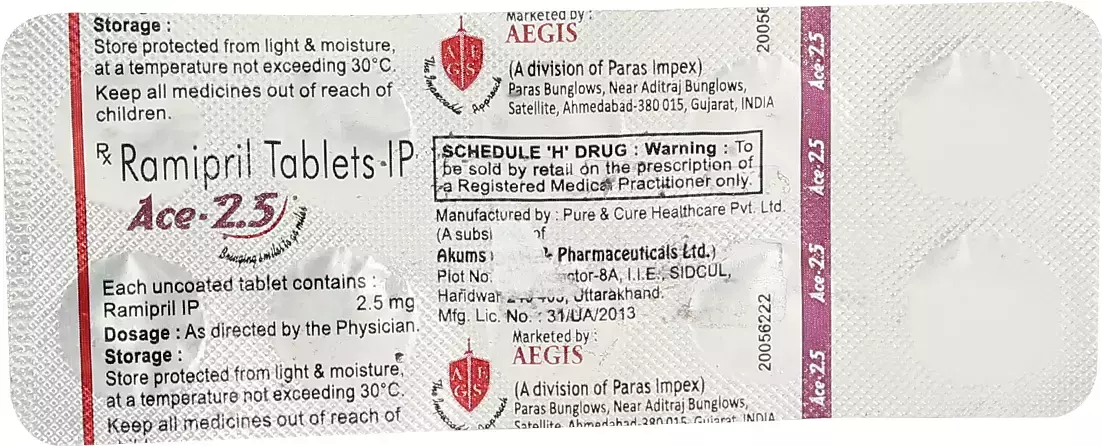
Ace 2.5 MG Tablet 10
₹46.03
Quick fact
Ace 2.5 MG Tablet 10 is a ramipril tablet used for high blood pressure and heart failure, and to help reduce the risk of heart attack and stroke.
Uses
What is Ace 2.5 MG Tablet 10 & Important Details
Ace 2.5 MG Tablet 10 contains ramipril and is used for high blood pressure and heart failure. It may also be used to help prevent heart attack and stroke.
- It is a tablet.
- The pack contains 10 tablets.
- A prescription is required.
How does Ace 2.5 MG Tablet 10 work (mechanism of action)?
Ramipril is an ACE inhibitor. It helps relax blood vessels, easing the work of the heart and allowing blood to flow more smoothly.
- It blocks an enzyme involved in producing angiotensin II, a substance that narrows blood vessels.
- With less angiotensin II, blood vessels relax and widen, helping lower pressure and making it easier for the heart to pump.
Specialized or Off-Label Uses of Ace 2.5 MG Tablet 10
The product may also be used in certain patients to slow kidney damage, particularly when diabetes and protein in the urine are present.
Conditions That Ace 2.5 MG Tablet 10 Will Not Treat
The available information does not establish which other conditions this medicine does not treat.
Benefits
What are the benefits of taking Ace 2.5 MG Tablet 10
The benefits depend on the condition being treated and on taking the medicine as directed by a doctor.
- For high blood pressure, it relaxes blood vessels and helps lower pressure, making it easier for the heart to pump.
- For heart failure, it can ease pressure on the heart and help it work more efficiently.
Side Effects
What are the most common side effects of Ace 2.5 MG Tablet 10?
The listed common side effects include headache, fatigue, cough, and dizziness. They may settle as the body adjusts, but speak with a doctor if they persist or worry you.
- Headache
- Fatigue
Rise slowly after sitting or lying down if you feel dizzy. Contact your doctor about a cough or throat irritation that does not go away.
What are the serious side effects of Ace 2.5 MG Tablet 10?
Dizziness on standing may occur, especially with dehydration.
- Swelling of the face, lips, tongue, or throat may affect breathing.
Seek immediate medical help if swelling affects breathing; contact a doctor about concerning symptoms.
Severe Allergic Reactions of Ace 2.5 MG Tablet 10?
A severe allergic-type reaction may cause swelling that interferes with breathing.
- Swelling of the face, lips, tongue, or throat.
- Breathing difficulty associated with this swelling.
Get emergency medical care immediately if these symptoms occur; contact a doctor without delay.
What side effects may I notice from receiving this medication?
While taking this medicine, notice whether you develop dizziness or a cough that persists.
- Headache or fatigue.
- Cough or throat irritation that does not go away.
Tell your doctor if symptoms persist, worry you, or are severe.
Ace 2.5 MG Tablet 10 Dosage Guidelines
Overview
Ace is typically taken once or twice daily; take it as prescribed. Your doctor decides the final dose.
Adults
Typically taken once or twice daily as prescribed; the amount and maximum daily dose are not stated here. The doctor may change it.
Children
This tablet should not be used by children because its safety and effectiveness have not been established. A doctor must decide.
Older adults
Use with caution in older adults and consult a doctor before use; a dose amount is not stated here. The doctor decides.
- Kidney or liver problems may need individual review.
- Your doctor may monitor kidney function, blood pressure, and potassium.
Dosage Adjustments for Kidney, Liver, or Other Health Problems
Your doctor will review your health and decide whether any adjustment is needed.
- Normal kidney function: Follow the prescribed dose.
- Reduced kidney function: A doctor should assess kidney function and decide whether to adjust the dose.
- Severe kidney impairment: Discuss suitability and dosing with your doctor before use.
- Dialysis: A dialysis-specific adjustment is not established in the available information.
- Liver disease: Use caution; adjustment may be needed.
- Other important conditions: Tell your doctor about diabetes or narrowing of the kidney arteries.
Do not change your dose yourself; ask your doctor or pharmacist for advice.
How Often and How Long to Take Ace 2.5 MG Tablet 10?
It is typically taken once or twice daily, with the duration set by the prescriber.
- Try to take it at the same time each day.
- Follow the dose and duration prescribed by your doctor.
How should I take Ace 2.5 MG Tablet 10?
Taking Ace 2.5 MG Tablet 10 With or Without Food
Ace may be taken with or without food. If you are unsure how to fit it into your routine, ask your doctor or pharmacist.
How to Take Specific Forms (Tablets, Chewables, Liquid Suspension)
Tablets: Swallow the tablet whole. Do not chew, crush, or break it.
Overdose/Missed Dose
What should I do if I accidentally use too much Ace 2.5 MG Tablet 10?
Taking too much may cause sleepiness, dizziness, or a pounding heartbeat. If you suspect an overdose or notice these symptoms, contact a doctor or seek urgent medical care.
What should I do if I miss a dose of Ace 2.5 MG Tablet 10?
Take a missed dose when you remember, unless it is almost time for the next dose; then skip it and resume your usual schedule. Do not take a double dose.
Interactions
Does Ace 2.5 MG Tablet 10 interact with foods or drinks?
Alcohol may increase dizziness or cause blood pressure to fall too much. Avoid potassium supplements, potassium-rich foods, and potassium-containing salt substitutes unless your doctor advises otherwise.
Does Ace 2.5 MG Tablet 10 interact with other medicines (drug interactions)
Tell your doctor or pharmacist about all medicines you take.
- Potassium supplements and potassium-sparing water tablets can raise blood potassium dangerously.
- Frequent ibuprofen or naproxen use may affect blood pressure and harm the kidneys.
- Lithium levels may rise; other blood-pressure medicines may lower pressure too much.
Ace 2.5 MG Tablet 10 and Blood Thinners
A specific interaction with blood thinners is not established in the available information. Ask your doctor or pharmacist about your medicines.
Ace 2.5 MG Tablet 10 and Birth Control (if applicable)
A specific interaction with birth-control medicines is not established in the available information. Ask a doctor or pharmacist if you have questions.
Interactions with Supplements, Vitamins, and Herbal Products
Avoid potassium supplements and potassium-containing salt substitutes unless your doctor advises otherwise.
Warnings & Precautions
Who should not use Ace 2.5 MG Tablet 10?
Some people may need to avoid this medicine or use it only after a doctor reviews their circumstances.
- Do not take it if you are pregnant.
- Do not take it if you have a history of angioedema related to ACE inhibitors, hereditary angioedema, or unexplained angioedema.
- If you have diabetes and take aliskiren, do not combine them unless a doctor specifically advises it.
What should I know about Ace 2.5 MG Tablet 10 before using it?
Before starting, tell your doctor about your health conditions and all medicines or supplements you take.
- Mention kidney problems, liver damage, diabetes, or narrowing of the arteries supplying the kidneys.
- The medicine may increase blood potassium; avoid potassium supplements and potassium-rich foods unless advised by your doctor.
Precautions for Pre-existing Conditions (Heart, Kidney, Liver)
Kidney disease: Tell your doctor before starting; kidney function may need monitoring.
Liver disease: Tell your doctor before use; dose adjustment may be needed.
Heart disease: It may be prescribed for heart failure or high blood pressure, but use it under medical supervision.
Alcohol: Can You Drink Alcohol While Taking Ace 2.5 MG Tablet 10?
Alcohol may increase the chance of dizziness or an excessive drop in blood pressure with this medicine.
- Limit or avoid alcohol, and ask your doctor if you are unsure what is safe for you.
Pregnancy and Breastfeeding
Pregnancy: Do not take this medicine if you are pregnant. Tell your doctor if you are pregnant or planning pregnancy.
Breastfeeding: Tell your doctor if you are breastfeeding and discuss whether treatment is appropriate.
Children: This tablet should not be used by children because safety and effectiveness have not been established.
Older adults: Use with caution and consult a doctor before taking it.
Safe Usage & Best Practices
Why You Must Complete the Full Prescription
Do not stop taking this medicine without consulting your doctor, even if you feel well or your blood pressure is normal.
Consequences of Skipping Doses or Sharing Medication
Do not share this prescription medicine or change your treatment plan without discussing it with a doctor.
- If you miss a dose, follow the missed-dose instructions; do not double the next dose.
- Stopping treatment without medical advice may allow blood pressure to rise again and increase the risk of heart attack, stroke, or worsening heart failure.
Can Ace 2.5 MG Tablet 10 cause cough?
Yes. Cough is listed as a common side effect.
What should you do if you feel better before finishing the medication?
Do not stop taking the medicine just because you feel better or your blood pressure is normal; consult your doctor first.
- Continue only as prescribed.
- Discuss troublesome side effects or any wish to change treatment with your doctor.
Storage Details
Store the tablets at room temperature, ideally between 15°C and 30°C (59°F to 86°F), in their original packaging.
- Protect them from direct light and moisture.
- Do not store them in humid places such as bathroom cabinets.
Frequently asked questions
-
1. Can I take Ace with food?
Ans: Yes, with or without food.
-
2. What if I forget a dose?
Ans: Take it when remembered unless the next dose is nearly due; do not double it.
-
3. Can I stop when I feel well?
Ans: No. Consult your doctor before stopping.
-
4. Can children take this tablet?
Ans: It should not be used by children.
-
5. What about a persistent cough?
Ans: Tell your doctor if it does not go away.