
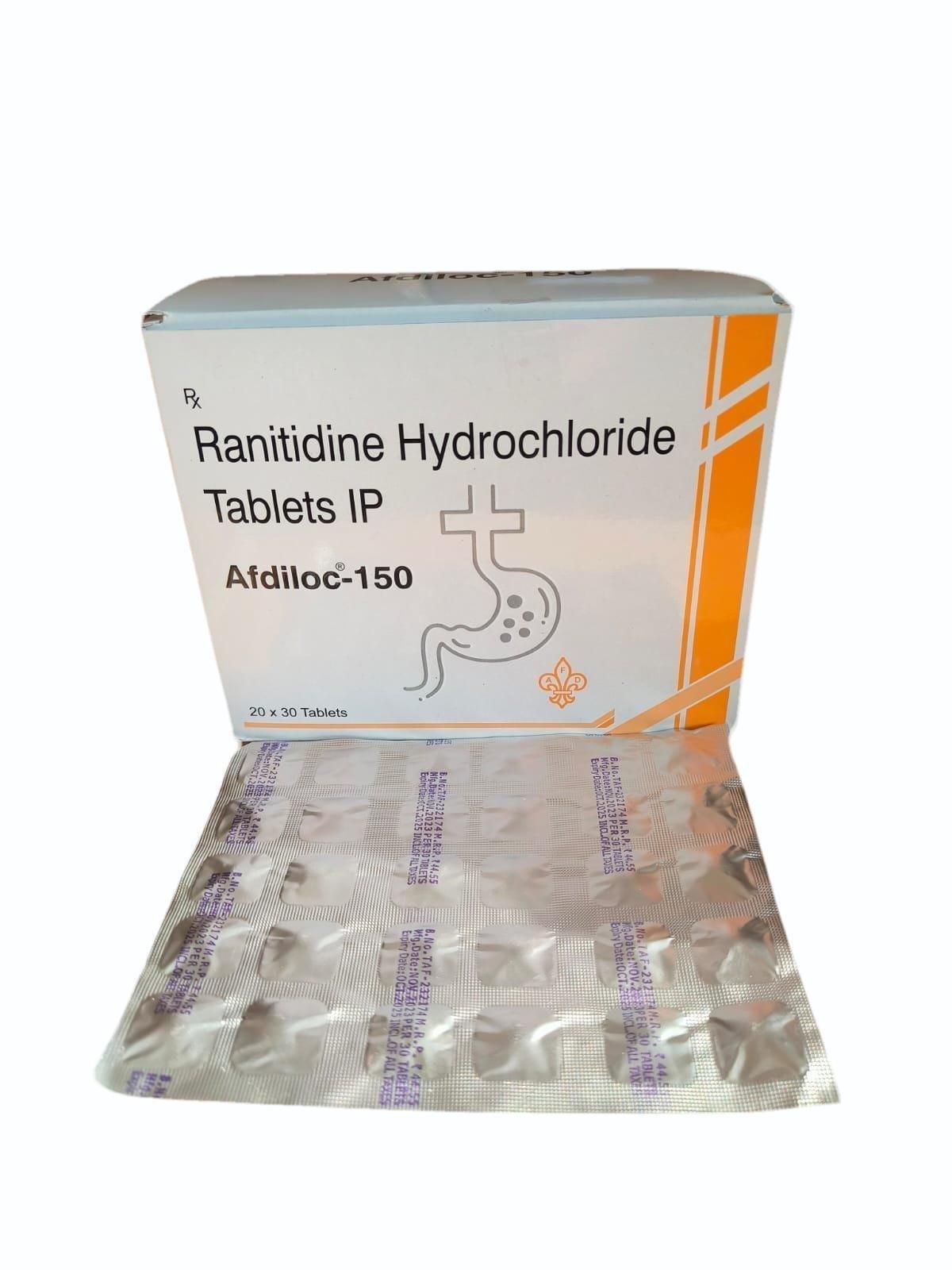
Afdiloc 150 Tablet 30
₹1.40
Quick fact
Afdiloc 150 Tablet 30 is a ranitidine tablet used for acidity and heartburn. It reduces stomach acid and is also used for acid-related ulcers.
Uses
What is Afdiloc 150 Tablet 30 & Important Details
Afdiloc 150 Tablet 30 contains ranitidine and comes as a tablet. The supplied information lists it for acidity, heartburn and conditions related to excess stomach acid.
- The pack contains 30 tablets.
- Uses listed include gastric and duodenal ulcers.
- Prescription status is not established in the available information.
How does Afdiloc 150 Tablet 30 work (mechanism of action)?
Ranitidine reduces stomach acid by blocking H₂ receptors in the stomach lining.
- It blocks histamine-2 receptors on stomach cells.
- This reduces the volume and acidity of stomach secretions.
- Lower acid levels can help relieve acid-related symptoms and support ulcer healing.
Specialized or Off-Label Uses of Afdiloc 150 Tablet 30
The supplied information does not establish any uses as off-label. It lists uses for acid-related symptoms and conditions.
Conditions That Afdiloc 150 Tablet 30 Will Not Treat
The supplied information does not identify conditions that Afdiloc treats beyond acid-related symptoms and conditions. Ask a healthcare professional whether it is suitable for your symptoms.
Benefits
What are the benefits of taking Afdiloc 150 Tablet 30
By reducing stomach acid, ranitidine may ease discomfort linked to excess acid and support healing of the stomach lining.
- It is used to manage acidity and heartburn.
- It may help manage symptoms of acid reflux.
- Lower acid levels can support healing of stomach and intestinal ulcers.
Side Effects
What are the most common side effects of Afdiloc 150 Tablet 30?
The listed side effects include headache and stomach or bowel symptoms. The supplied information does not state how often these effects occur.
- Headache or dizziness.
- Constipation or diarrhoea.
- Nausea or stomach discomfort.
What are the serious side effects of Afdiloc 150 Tablet 30?
Elevated liver enzymes are listed as a rare side effect. The supplied information does not identify other distinct serious side effects.
- Elevated liver enzymes.
Contact a doctor if you are concerned about a side effect or feel unwell. Seek urgent medical help for difficulty breathing or an abnormal heartbeat after taking too much medicine.
Severe Allergic Reactions of Afdiloc 150 Tablet 30?
An allergic reaction is not described in the available information for this product.
- Specific allergy symptoms are not established in the available information.
If you think you are having a severe allergic reaction, seek emergency medical care.
What side effects may I notice from receiving this medication?
Side effects listed for Afdiloc include:
- Headache, dizziness, constipation, diarrhoea, nausea or stomach discomfort.
- Skin rash or elevated liver enzymes are listed as rare.
- Vitamin B12 deficiency with prolonged use is listed as rare.
Speak to a doctor if a side effect concerns you or does not settle.
Afdiloc 150 Tablet 30 Dosage Guidelines
Overview
A usual adult ranitidine tablet regimen is 150 mg twice daily, with a maximum of 300 mg in a day. The doctor decides the final dose and duration.
Adults
The usual dose is taken one to two times daily, depending on the condition and severity of symptoms. The amount and maximum daily dose are not specified here. The doctor may change it.
Children
Use in children should be only on a doctor’s advice; do not use an adult dose for a child. A doctor must decide the final dose.
Older adults
The usual dose is taken one to two times daily, depending on the condition and severity of symptoms. Older adults may be at risk of confusion or dizziness, and kidney function may affect dosing. The doctor decides the final dose.
- The dose may depend on the condition, symptom severity, response, kidney function and overall health.
Dosage Adjustments for Kidney, Liver, or Other Health Problems
Dose changes depend on kidney function and overall health. A doctor should choose the regimen for your circumstances.
- Normal kidney function: A usual adult regimen may be used if appropriate; the prescriber decides.
- Reduced kidney function: A lower dose or longer interval may be needed. A doctor should adjust it.
- Severe kidney impairment: The exact adjustment is not established in the available information; ask a doctor to set the dose.
- Dialysis: A specific dose adjustment for dialysis is not established in the available information. Ask the prescriber or pharmacist.
- Liver disease: Use caution and discuss treatment with a doctor.
- Other important conditions: The supplied information advises caution in acute porphyria and notes a risk of confusion or dizziness in elderly patients.
Do not change the dose yourself or exceed the prescribed daily amount.
How Often and How Long to Take Afdiloc 150 Tablet 30?
The supplied product information says the usual dose is taken one to two times daily, depending on the condition and symptom severity. It does not specify a usual treatment duration.
- Take it as prescribed by your doctor.
- Do not use it for a prolonged period without medical advice.
How should I take Afdiloc 150 Tablet 30?
Taking Afdiloc 150 Tablet 30 With or Without Food
Afdiloc may be taken with or without food. If meals trigger acidity, the supplied information suggests taking it before meals, as directed by your doctor.
How to Take Specific Forms (Tablets, Chewables, Liquid Suspension)
Tablets: Swallow the tablet with water and take it exactly as prescribed. It may be taken with or without food.
Overdose/Missed Dose
What should I do if I accidentally use too much Afdiloc 150 Tablet 30?
Taking too much may cause fever, low blood pressure, an abnormal heartbeat, dizziness or difficulty breathing. Seek immediate medical attention.
What should I do if I miss a dose of Afdiloc 150 Tablet 30?
Take the missed dose when you remember unless it is nearly time for your next scheduled dose. If so, skip it and continue as usual. Do not take a double dose.
Interactions
Does Afdiloc 150 Tablet 30 interact with foods or drinks?
The tablet may be taken with or without food. Alcohol may worsen acidity; spicy foods, caffeine and heavy meals may also aggravate symptoms.
Does Afdiloc 150 Tablet 30 interact with other medicines (drug interactions)
Ranitidine can affect the absorption or effects of some medicines. Tell your doctor or pharmacist about all medicines you use.
- Antacids: avoid taking them within 1 hour of ranitidine unless advised otherwise.
- Ketoconazole: absorption may be reduced.
- Warfarin: its anticoagulant effect may change; monitoring is advised.
- Triazolam or midazolam: sedative effects may increase.
- Atazanavir may be less effective, and theophylline blood levels may be altered.
Afdiloc 150 Tablet 30 and Blood Thinners
Warfarin may have an altered anticoagulant effect with ranitidine. Monitoring is advised; tell your doctor if you take it.
Afdiloc 150 Tablet 30 and Birth Control (if applicable)
An interaction with birth-control medicines is not established in the available information. Ask a doctor or pharmacist about your medicines.
Interactions with Supplements, Vitamins, and Herbal Products
Interactions with supplements, vitamins or herbal products are not established in the available information. Tell your doctor or pharmacist about anything you take.
Warnings & Precautions
Who should not use Afdiloc 150 Tablet 30?
The supplied information does not list who must not take Afdiloc. Some health conditions may require caution or dose adjustment.
- Ask a doctor before use if you have kidney impairment, liver disease or acute porphyria.
- Older patients may be at risk of confusion or dizziness.
What should I know about Afdiloc 150 Tablet 30 before using it?
Take Afdiloc exactly as prescribed, and seek medical advice if symptoms persist or you are considering prolonged use.
- Do not take more than the recommended daily dose or stop abruptly without medical advice.
- Dizziness may occur; avoid driving until you know how the medicine affects you.
- Tell your doctor about kidney or liver problems and other medicines you use.
Precautions for Pre-existing Conditions (Heart, Kidney, Liver)
Kidney disease: Dose adjustment may be required. Ask a doctor to assess your kidney function and dose.
Liver disease: Use caution and discuss treatment with a doctor.
Heart disease: A specific precaution for heart disease is not established in the available information.
Alcohol: Can You Drink Alcohol While Taking Afdiloc 150 Tablet 30?
Limit or avoid alcohol while taking Afdiloc, as it may worsen acidity symptoms.
Pregnancy and Breastfeeding
Pregnancy: The supplied information says ranitidine may be used only if clearly needed. Consult a doctor before use.
Breastfeeding: Small amounts may pass into breast milk. Consult a doctor, especially if breastfeeding a newborn or premature infant.
Children: Use only on a doctor’s advice; a child-specific dose is not established here.
Older adults: Older patients may be at risk of confusion or dizziness; a doctor should review the dose.
Safe Usage & Best Practices
Why You Must Complete the Full Prescription
Follow the treatment duration prescribed by your doctor. Do not stop or extend treatment without medical advice.
Consequences of Skipping Doses or Sharing Medication
Follow the prescribed schedule and do not share your medicine with anyone else.
- If you miss a dose, follow the missed-dose instructions; never double the dose.
- Ask a doctor or pharmacist if you are unsure what to do.
Can Afdiloc 150 Tablet 30 cause headache?
Yes. Headache is listed as a possible side effect, but its frequency is not stated.
- Dizziness, nausea and stomach discomfort are also listed.
What should you do if you feel better before finishing the medication?
Do not stop Afdiloc abruptly without medical advice, even if you feel better.
- Ask your doctor whether to continue or stop treatment.
Storage Details
Store Afdiloc in a cool, dry place away from heat and moisture.
Frequently asked questions
-
1. What is Afdiloc used for?
Ans: It is used for acidity, heartburn and acid-related conditions such as gastric and duodenal ulcers.
-
2. Can I take it with food?
Ans: Yes. It may be taken with or without food.
-
3. What side effects are listed?
Ans: Headache, dizziness, constipation, diarrhoea, nausea and stomach discomfort are listed.
-
4. What if I miss a dose?
Ans: Take it when remembered unless it is nearly time for the next dose; do not double the dose.
-
5. Can I drink alcohol while taking it?
Ans: Limit or avoid alcohol because it may worsen acidity symptoms.

