
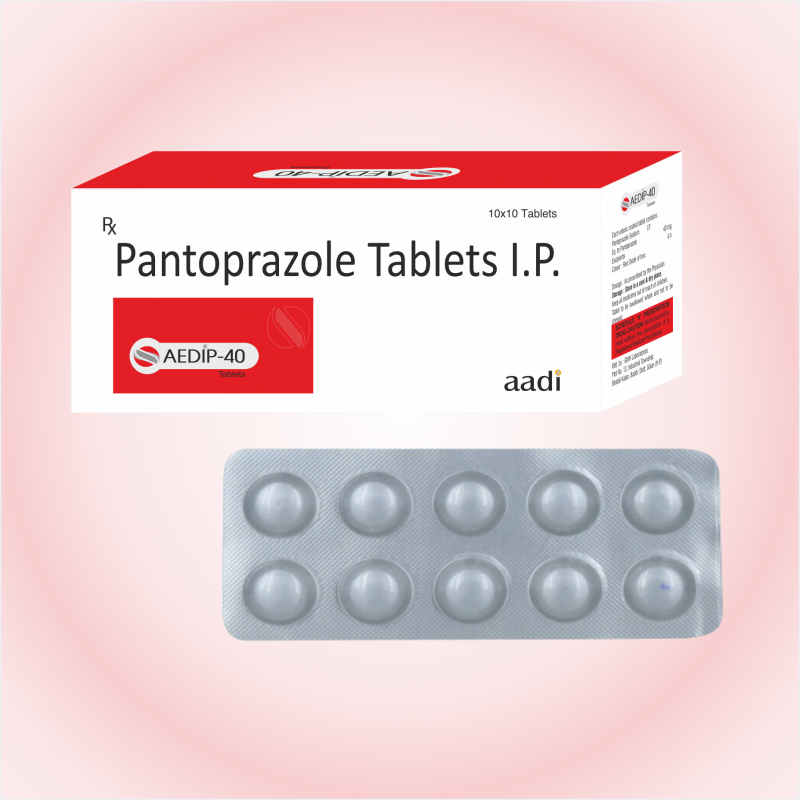
Aedip 40 MG Tablet 10
₹45.00
Quick fact
Aedip 40 MG Tablet 10 is a pantoprazole tablet used for acid-related stomach and intestinal conditions, including heartburn, acid reflux and peptic ulcer disease.
Uses
What is Aedip 40 MG Tablet 10 & Important Details
Aedip 40 MG Tablet 10 contains pantoprazole and reduces the amount of acid produced in the stomach.
- It is a tablet supplied in a pack of 10 tablets.
- It is used for acid-related conditions, including heartburn, acid reflux and peptic ulcer disease.
- It may also be used to prevent ulcers and acidity associated with prolonged painkiller use.
How does Aedip 40 MG Tablet 10 work (mechanism of action)?
Aedip 40 is a proton pump inhibitor. It reduces stomach acid, which can relieve acid-related indigestion and heartburn.
- It reduces the amount of acid produced in the stomach.
- Lower acid levels can relieve acid-related indigestion and heartburn.
Specialized or Off-Label Uses of Aedip 40 MG Tablet 10
No specialized or off-label use is established in the available information. Its supported uses are acid-related conditions and prevention of ulcers or acidity linked to prolonged painkiller use.
Conditions That Aedip 40 MG Tablet 10 Will Not Treat
The available information does not identify conditions that Aedip 40 does not treat. It is intended for acid-related conditions; ask a doctor whether it is suitable for your symptoms.
Benefits
What are the benefits of taking Aedip 40 MG Tablet 10
By lowering stomach acid, Aedip 40 may help relieve symptoms and support healing in acid-related conditions.
- For acid reflux, it can relieve heartburn and discomfort and support healing of the irritated food pipe.
- For duodenal ulcers, it can help the ulcer heal and reduce associated pain, burning and discomfort.
Side Effects
What are the most common side effects of Aedip 40 MG Tablet 10?
Common side effects listed for Aedip 40 include the following. Contact a doctor if a symptom is worrying or does not settle.
- Nausea, abdominal pain, flatulence and dizziness.
- Diarrhea, headache, vomiting and joint pain.
Watery diarrhea, fever or stomach pain that does not go away should be reported to a doctor.
What are the serious side effects of Aedip 40 MG Tablet 10?
Some symptoms may be signs of a kidney problem and need prompt medical attention.
- Decreased urination, swelling from fluid retention, lower back pain, nausea, fatigue, rash or fever.
Contact a doctor right away if these symptoms develop.
Severe Allergic Reactions of Aedip 40 MG Tablet 10?
Specific symptoms of a severe allergic reaction are not described in the available information. Tell your doctor if you have previously reacted to similar medicines.
- The symptoms that would identify an allergic emergency are not established here.
If you think you are having a severe reaction, seek emergency medical care.
What side effects may I notice from receiving this medication?
Side effects reported with Aedip 40 include:
- Nausea, abdominal pain, flatulence and dizziness.
- Diarrhea, headache, vomiting and joint pain.
Tell a doctor if watery diarrhea, fever or stomach pain persists.
Aedip 40 MG Tablet 10 Dosage Guidelines
Overview
A usual adult pattern for pantoprazole tablets is 40 mg once daily. The doctor decides the final dose and duration; the appropriate amount depends on the condition and response.
Adults
Aedip 40 is taken in the dose and for the duration advised by your doctor. The doctor may change it.
Children
Use in children should be only on a doctor’s advice. A doctor must decide.
Older adults
Older adults usually use the adult dose, with the lowest effective dose preferred. The doctor decides.
- The underlying condition and response to treatment affect the prescribed dose.
- Follow the dose and duration advised by your doctor.
Dosage Adjustments for Kidney, Liver, or Other Health Problems
Dose changes depend on health conditions and the doctor’s assessment.
- Normal kidney function: No dose adjustment is usually needed.
- Reduced kidney function: No dose adjustment is usually needed.
- Severe kidney impairment: No dose adjustment is usually needed.
- Dialysis: A supplemental dose after dialysis is not usually needed.
- Liver disease: With severe liver impairment, the usual maximum is 20 mg once daily; a doctor should guide treatment.
- Other important conditions: Discuss osteoporosis or a history of allergy to similar medicines with your doctor before use.
Do not change your dose without medical advice.
How Often and How Long to Take Aedip 40 MG Tablet 10?
Pantoprazole is usually taken once daily, but the duration depends on the condition and your doctor’s instructions.
- Take it at the time advised by your doctor.
- Continue as prescribed even if symptoms improve quickly; do not stop without consulting a doctor.
How should I take Aedip 40 MG Tablet 10?
Taking Aedip 40 MG Tablet 10 With or Without Food
Take Aedip 40 on an empty stomach, one hour before a meal, preferably in the morning.
How to Take Specific Forms (Tablets, Chewables, Liquid Suspension)
Tablets: Swallow the tablet whole. Do not chew, crush or break it.
Overdose/Missed Dose
What should I do if I accidentally use too much Aedip 40 MG Tablet 10?
Specific overdose instructions are not established in the available information. If you have taken more than prescribed, contact a doctor or pharmacist promptly for advice.
What should I do if I miss a dose of Aedip 40 MG Tablet 10?
Specific missed-dose instructions are not established in the available information. Ask your doctor or pharmacist what to do; do not take extra doses to make up for a missed one unless advised.
Interactions
Does Aedip 40 MG Tablet 10 interact with foods or drinks?
No specific food or drink interaction is established here. Smaller meals and avoiding caffeinated drinks, spicy foods and fatty foods may help treatment work better.
Does Aedip 40 MG Tablet 10 interact with other medicines (drug interactions)
The available information does not identify specific interacting medicines. Tell your doctor about all medicines you take, particularly HIV medicines, before starting Aedip 40.
- HIV medicines are specifically mentioned as something to discuss with your doctor.
Aedip 40 MG Tablet 10 and Blood Thinners
A specific interaction with blood thinners is not established in the available information. Ask your doctor or pharmacist about your medicines.
Aedip 40 MG Tablet 10 and Birth Control (if applicable)
An interaction with birth control is not established in the available information. Ask a doctor or pharmacist if you have concerns.
Interactions with Supplements, Vitamins, and Herbal Products
Long-term use may affect bone strength and magnesium levels. Discuss calcium or magnesium supplements with your doctor; use supplements only as prescribed.
Warnings & Precautions
Who should not use Aedip 40 MG Tablet 10?
The available information does not list a specific group who must never take Aedip 40, but some health concerns need discussion with a doctor first.
- Tell your doctor if you have severe liver problems, osteoporosis, or a previous allergic reaction to similar medicines.
- Tell your doctor if you take medicines for HIV.
What should I know about Aedip 40 MG Tablet 10 before using it?
Discuss your medical history and medicines with a doctor before using Aedip 40.
- Seek advice if you have severe liver problems, osteoporosis, or have reacted to similar medicines before.
- Long-term use may weaken bones or reduce minerals such as magnesium; discuss appropriate calcium and magnesium intake with your doctor.
Precautions for Pre-existing Conditions (Heart, Kidney, Liver)
Kidney disease: Decreased urination, swelling, lower back pain, nausea, fatigue, rash or fever could signal a kidney problem; contact a doctor right away if these occur.
Liver disease: Tell your doctor if you have severe liver problems before taking this medicine.
Heart disease: A specific precaution for heart disease is not established in the available information.
Alcohol: Can You Drink Alcohol While Taking Aedip 40 MG Tablet 10?
A specific alcohol interaction is not established in the available information. Ask your doctor or pharmacist if you are unsure.
Pregnancy and Breastfeeding
Pregnancy: Consult your doctor before taking Aedip 40 during pregnancy.
Breastfeeding: Consult your doctor before taking Aedip 40 while breastfeeding.
Children: Use only on a doctor’s advice.
Older adults: A specific product-specific instruction is not established; ask your doctor about the right dose.
Safe Usage & Best Practices
Why You Must Complete the Full Prescription
Keep taking Aedip 40 as prescribed even if your symptoms disappear quickly. Do not stop without talking to your doctor.
Consequences of Skipping Doses or Sharing Medication
Take Aedip 40 only as prescribed and do not share it with another person.
- Continue the prescribed course even if symptoms improve quickly.
- Speak to your doctor before stopping treatment.
Can Aedip 40 MG Tablet 10 cause nausea?
Yes. Nausea is listed among the common side effects of Aedip 40.
- Other listed effects include abdominal pain, flatulence, dizziness, diarrhea, headache, vomiting and joint pain.
What should you do if you feel better before finishing the medication?
Keep taking Aedip 40 as prescribed even if you feel better. Do not stop the medicine without talking to your doctor.
- Ask your doctor if you are unsure how long to continue.
Storage Details
Specific storage requirements for temperature, light or moisture are not established in the available information.
- Ask a pharmacist how to store this product safely.
Frequently asked questions
-
1. What is Aedip 40 used for?
Ans: It is used for acid-related conditions, including heartburn, acid reflux and peptic ulcer disease.
-
2. How should I take the tablet?
Ans: Take it on an empty stomach, one hour before a meal, preferably in the morning, and swallow it whole.
-
3. Can I stop when I feel better?
Ans: Continue as prescribed even if symptoms disappear quickly, and talk to your doctor before stopping.
-
4. What side effects may occur?
Ans: Listed common effects include nausea, abdominal pain, flatulence, dizziness, diarrhea, headache, vomiting and joint pain.
-
5. When should I contact a doctor?
Ans: Contact a doctor right away for possible kidney-problem symptoms such as decreased urination, swelling, lower back pain, fatigue, rash or fever.


