
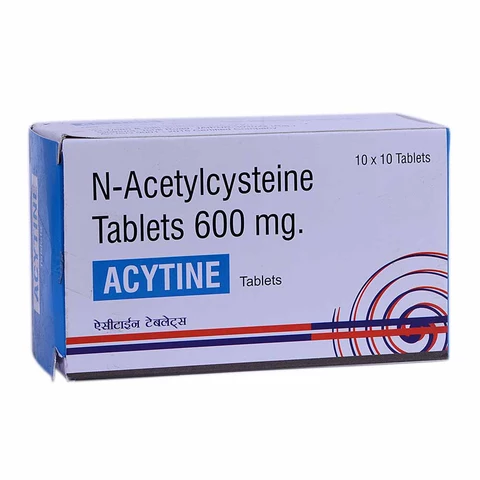
Acytine Tablet 10
₹242.80
Quick fact
Acytine Tablet 10 contains acetylcysteine and is used for respiratory conditions with excess mucus. It helps thin thick mucus so it is easier to cough out.
Uses
What is Acytine Tablet 10 & Important Details
Acytine Tablet 10 contains acetylcysteine and is used for respiratory disease involving excessive mucus.
- It is listed as a tablet.
- The pack contains 10 tablets.
- The listed active ingredient is acetylcysteine.
- A prescription is required.
How does Acytine Tablet 10 work (mechanism of action)?
Acytine acts as a mucolytic. It thins mucus, which can make it easier to cough up.
- It thins thick mucus in the airways.
- The less sticky mucus is easier to cough out, helping clear the air passages.
- The product information also describes antioxidant action.
Specialized or Off-Label Uses of Acytine Tablet 10
No off-label use is established in the available information. Use Acytine only for a condition and in a way advised by your doctor.
Conditions That Acytine Tablet 10 Will Not Treat
The available information does not establish conditions that Acytine treats beyond respiratory conditions involving excess mucus. It is not established as a treatment for other conditions.
Benefits
What are the benefits of taking Acytine Tablet 10
Acytine is intended to help clear thick mucus from the airways.
- It helps loosen and thin thick mucus.
- Thinner mucus can be easier to cough out.
Side Effects
What are the most common side effects of Acytine Tablet 10?
Nausea and vomiting are described as the most common side effects of Acytine.
- Nausea.
- Vomiting.
Other possible effects listed include an upset stomach and a runny nose. Contact your doctor if a side effect is troubling or seems serious.
What are the serious side effects of Acytine Tablet 10?
Some symptoms during treatment need prompt medical attention.
- Sudden difficulty breathing or a severe rash.
- Signs of shock, such as a severe drop in blood pressure, paleness, a weak pulse or decreased consciousness.
- Swelling of the lips, throat or tongue, especially with difficulty breathing or a rash.
Seek immediate medical help for sudden breathing difficulty, severe rash, swelling or signs of shock.
Severe Allergic Reactions of Acytine Tablet 10?
Do not take Acytine if you have a known allergy to it or any of its ingredients.
- Rash or itching.
- Swelling of the face, lips, throat or tongue.
- Difficulty breathing.
These may be signs of a serious allergic reaction. Get emergency medical help immediately.
What side effects may I notice from receiving this medication?
Side effects can differ between people.
- Nausea or vomiting.
- Upset stomach or runny nose.
Tell your doctor about side effects that worry you or do not settle.
Acytine Tablet 10 Dosage Guidelines
Overview
A usual adult mucolytic dose for oral acetylcysteine tablets of this strength is 600 mg once daily. The doctor decides the final dose and duration for your condition.
Adults
The dose and how often you take Acytine depend on the condition being treated. Your doctor decides the dose; the doctor may change it.
Children
Acytine is not recommended for children and adolescents below 18 years. A doctor must decide whether it is suitable.
Older adults
For older adults, a usual adult dose is 600 mg once daily; use with caution and consult a doctor. The doctor decides the final dose.
- The dose and how often it is taken depend on the condition being treated.
- Follow the dose and duration advised by your doctor.
Dosage Adjustments for Kidney, Liver, or Other Health Problems
A specific adjustment schedule for these conditions is not established in the available information. Ask your doctor to review your health and medicines before treatment.
- Normal kidney function: A specific dose adjustment is not established in the available information.
- Reduced kidney function: Tell your doctor if you have kidney disease; a specific dose adjustment is not established.
- Severe kidney impairment: A specific dose adjustment is not established in the available information. Consult your doctor.
- Dialysis: A dose recommendation for dialysis is not established in the available information.
- Liver disease: Tell your doctor if you have liver disease; a specific dose adjustment is not established here.
- Other important conditions: Tell your doctor about asthma or stomach ulcers before using Acytine.
Do not change your dose without medical advice. Your doctor should decide what is appropriate for you.
How Often and How Long to Take Acytine Tablet 10?
How often and how long to take Acytine depend on the condition being treated. Your doctor will set the schedule and duration.
- Take it at the same time each day if advised.
- Continue only for the duration prescribed.
How should I take Acytine Tablet 10?
Taking Acytine Tablet 10 With or Without Food
The product information says Acytine can be taken after meals. Follow the instructions given by your doctor or pharmacist.
How to Take Specific Forms (Tablets, Chewables, Liquid Suspension)
Tablets: Instructions conflict: one says dissolve the tablet in water and drink immediately; another says swallow it whole without chewing, crushing or breaking it. Check the pack and ask your pharmacist which direction applies to your tablet before taking it.
Overdose/Missed Dose
What should I do if I accidentally use too much Acytine Tablet 10?
Taking more than prescribed may cause severe nausea, vomiting or stomach pain. Seek immediate medical attention or contact a poison control centre.
What should I do if I miss a dose of Acytine Tablet 10?
Take the missed dose when remembered unless it is almost time for the next dose; then skip it and continue as usual. Do not take a double dose.
Interactions
Does Acytine Tablet 10 interact with foods or drinks?
No drug-food interaction was found in the available database, but some interactions may be unknown. Ask your doctor or pharmacist about food or drinks to avoid.
Does Acytine Tablet 10 interact with other medicines (drug interactions)
Tell your doctor about all medicines you take. Some may change how Acytine works, and cough suppressants may make it harder to clear loosened mucus.
- Cough suppressants, including medicines that stop the cough reflex.
- Nitroglycerin or activated charcoal; discuss these with your doctor.
Acytine Tablet 10 and Blood Thinners
A specific interaction between Acytine and blood thinners is not established in the available information. Ask your doctor or pharmacist.
Acytine Tablet 10 and Birth Control (if applicable)
An interaction with birth control is not established in the available information. Ask your doctor or pharmacist if you have questions.
Interactions with Supplements, Vitamins, and Herbal Products
Specific interactions with supplements, vitamins or herbal products are not established in the available information. Tell your doctor about products you take.
Warnings & Precautions
Who should not use Acytine Tablet 10?
Do not use Acytine if you have a known allergy to acetylcysteine or any ingredient. Discuss your health history with your doctor before treatment.
- People with a known allergy to the medicine or its ingredients should not take it.
- Acytine is not recommended for children and adolescents below 18 years.
- People with bronchial asthma should discuss use with a doctor; the available advice differs on whether it should be avoided or used with close monitoring.
What should I know about Acytine Tablet 10 before using it?
Before starting Acytine, tell your doctor about your health conditions and all medicines you take.
- Tell your doctor if you have asthma; monitoring may be needed.
- Discuss use if you have stomach ulcers, liver disease or chronic kidney disease.
- Do not combine it with multiple cough medicines unless your doctor advises you to.
- Seek immediate help for a rash, facial swelling or difficulty breathing.
Precautions for Pre-existing Conditions (Heart, Kidney, Liver)
Kidney disease: Tell your doctor if you have chronic kidney disease; a specific dose adjustment is not established here.
Liver disease: Tell your doctor if you have liver disease before using Acytine.
Heart disease: A specific precaution for heart disease is not established in the available information.
Alcohol: Can You Drink Alcohol While Taking Acytine Tablet 10?
The available information does not establish a specific interaction with alcohol. Ask your doctor if you are unsure.
Pregnancy and Breastfeeding
Pregnancy: Tell your doctor if you are pregnant or planning to become pregnant. Use only under medical advice.
Breastfeeding: Tell your doctor if you are breastfeeding. Use only under medical advice.
Children: Not recommended for children and adolescents below 18 years; consult a doctor.
Older adults: Use with caution and consult a doctor.
Safe Usage & Best Practices
Why You Must Complete the Full Prescription
Continue Acytine for the duration prescribed by your doctor. Do not change the dose or stop without asking your doctor.
Consequences of Skipping Doses or Sharing Medication
Take Acytine as prescribed. Do not take extra medicine to make up for a missed dose.
- If you miss a dose, follow the missed-dose instructions.
- Do not share your prescription medicine.
Can Acytine Tablet 10 cause nausea?
Yes. Nausea and vomiting are described as the most common side effects of Acytine.
- Nausea.
- Vomiting.
What should you do if you feel better before finishing the medication?
Feeling better does not mean you should change the prescribed course on your own.
- Continue for the duration your doctor prescribed.
- Ask your doctor before stopping or changing the dose.
Storage Details
Store Acytine at room temperature. Keep it out of reach of children as a general medicine-safety measure.
- Store at room temperature, ideally between 20°C and 25°C (68°F to 77°F).
- Specific light and moisture storage requirements are not established in the available information.
Frequently asked questions
-
1. What is Acytine used for?
Ans: It is used for respiratory conditions involving excess mucus.
-
2. How does Acytine help?
Ans: It thins thick mucus so it is easier to cough out.
-
3. What are its most common side effects?
Ans: Nausea and vomiting are described as the most common side effects.
-
4. How should I take the tablet?
Ans: The available instructions conflict about dissolving it or swallowing it whole. Check the pack and ask your pharmacist.
-
5. Can children take Acytine?
Ans: It is not recommended for children and adolescents below 18 years; consult a doctor.


