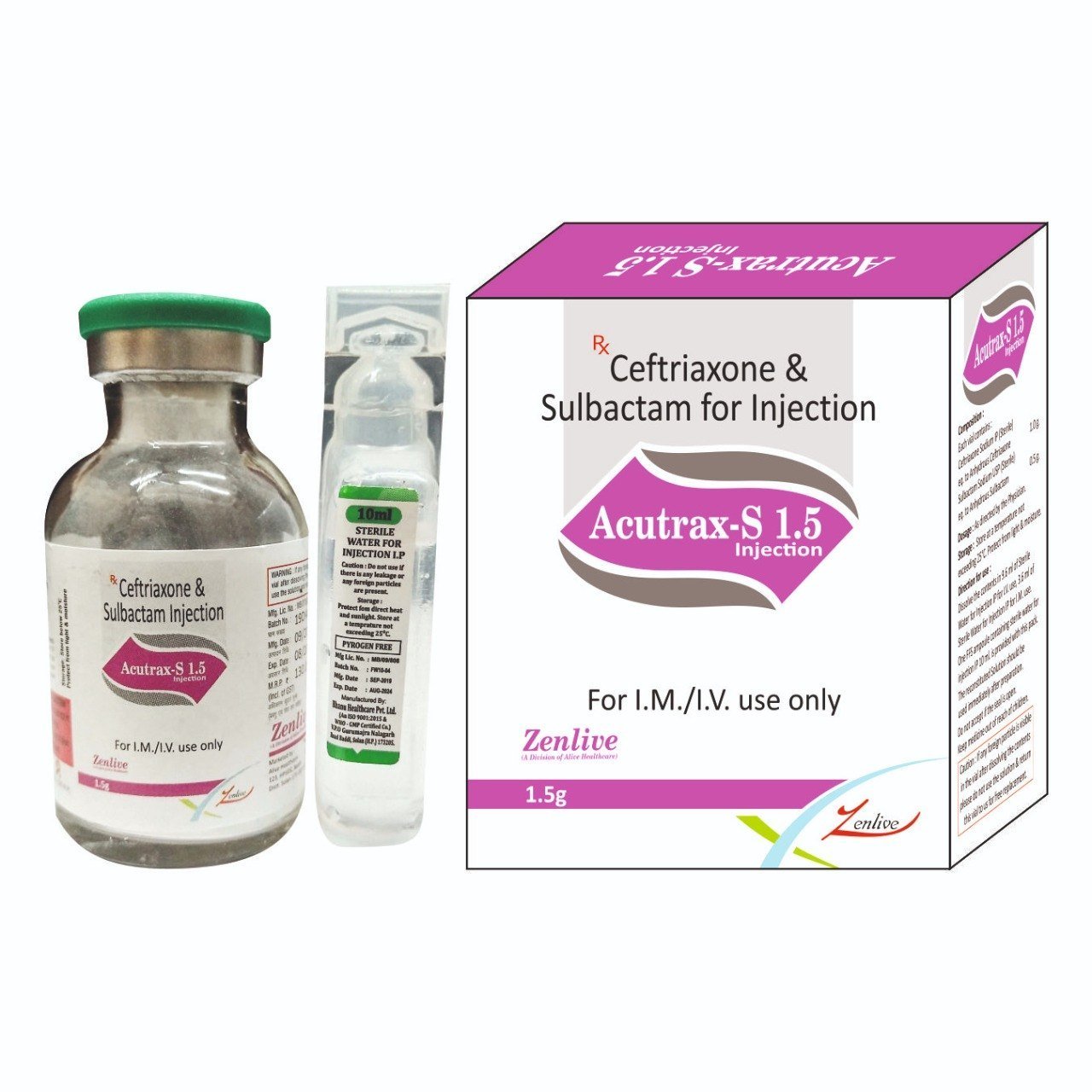
Acutrax S 1.5 Injection 1
₹103.13
Quick fact
Acutrax S 1.5 Injection 1 is an antibiotic injection used for serious bacterial infections, including infections of the chest, urinary tract, abdomen and skin.
Uses
What is Acutrax S 1.5 Injection 1 & Important Details
Acutrax S 1.5 Injection 1 combines two antibiotics and is used for serious bacterial infections, including some that resist other antibiotics.
- It is supplied as an injection.
- Its active ingredients are ceftriaxone and sulbactam.
- It is used for infections of the chest, urinary tract, abdomen and skin; listed ailments also include pneumonia and meningitis.
- A doctor or nurse gives the injection into a vein or muscle.
How does Acutrax S 1.5 Injection 1 work (mechanism of action)?
The ingredients work in different ways against susceptible bacteria.
- Ceftriaxone inhibits the formation of bacterial cell walls.
- Sulbactam blocks beta-lactamase enzymes that can destroy ceftriaxone.
Specialized or Off-Label Uses of Acutrax S 1.5 Injection 1
No off-label use is established in the available information. Use it only for an infection diagnosed by a doctor.
Conditions That Acutrax S 1.5 Injection 1 Will Not Treat
This antibiotic is used for bacterial infections. It should not be used to treat an illness unless a doctor has assessed it and prescribed this medicine.
Benefits
What are the benefits of taking Acutrax S 1.5 Injection 1
When prescribed for a suitable serious bacterial infection, the combination is intended to treat the infection.
- It is used for serious infections involving the chest, urinary tract, abdomen and skin.
- It may be used for serious bacterial infections that resist other antibiotics.
- Ceftriaxone acts on bacterial cell-wall formation, while sulbactam blocks certain enzymes that can break down ceftriaxone.
Side Effects
What are the most common side effects of Acutrax S 1.5 Injection 1?
Commonly listed side effects include digestive symptoms and rash.
- Diarrhoea
- Nausea or vomiting
- Rash
Tell your doctor if these effects persist, worsen or concern you.
What are the serious side effects of Acutrax S 1.5 Injection 1?
Serious effects reported with this medicine need prompt medical attention.
- Severe diarrhoea or colitis
- Jaundice
- Unexplained bleeding or bruising
- Seizures or a severe skin reaction
Contact a doctor promptly if any of these occur; seek urgent care for severe symptoms.
Severe Allergic Reactions of Acutrax S 1.5 Injection 1?
A severe allergic reaction can be an emergency.
- Difficulty breathing
- Swelling of the face, lips or throat
Get emergency medical care immediately if these symptoms appear.
What side effects may I notice from receiving this medication?
Possible effects include symptoms at the injection site and digestive or skin problems.
- Pain, swelling or redness where the injection is given
- Abdominal pain
- Nausea, vomiting, diarrhoea or rash
Tell your doctor if an effect becomes serious or does not improve.
Acutrax S 1.5 Injection 1 Dosage Guidelines
Overview
The doctor decides the dose according to the type and severity of infection. The exact usual amount and schedule are not established in the available information.
Adults
The dose is decided by the doctor based on the type and severity of infection. The doctor decides the final dose.
Children
Do not give this medicine to children unless a paediatrician or child-health specialist specifically directs it. A doctor must decide.
Older adults
The usual older-adult dose is not established here; older patients may be more susceptible to side effects. The doctor decides.
- The type and severity of infection affect the prescribed dose.
- A doctor or nurse administers the injection into a vein or muscle.
Dosage Adjustments for Kidney, Liver, or Other Health Problems
The prescriber should review health conditions before deciding the dose.
- Normal kidney function: A specific adjustment is not established in the available information.
- Reduced kidney function: A dose adjustment may be needed based on kidney function.
- Severe kidney impairment: A specific adjustment for severe impairment is not established; ask the treating doctor.
- Dialysis: A specific dialysis adjustment is not established in the available information.
- Liver disease: Use with caution; the doctor should guide treatment based on health status.
- Other important conditions: Tell the doctor about other health problems and medicines before treatment.
Do not change the dose yourself; the treating doctor must decide what is appropriate.
How Often and How Long to Take Acutrax S 1.5 Injection 1?
The frequency and treatment duration are not specified here; follow the schedule set by the doctor.
- A healthcare professional administers the injection.
- Complete the course as instructed, even if symptoms improve.
- Ask the doctor or pharmacist if you are unsure about the schedule.
How should I take Acutrax S 1.5 Injection 1?
Taking Acutrax S 1.5 Injection 1 With or Without Food
No specific food instruction is established for this injection. Ask your doctor or pharmacist if you have questions about meals during treatment.
How to Take Specific Forms (Tablets, Chewables, Liquid Suspension)
Injection: A doctor or nurse gives this medicine into a vein or muscle. Do not administer it yourself.
Overdose/Missed Dose
What should I do if I accidentally use too much Acutrax S 1.5 Injection 1?
If more than the prescribed dose is given, tell the doctor promptly. Overdose symptoms may include nausea, vomiting, diarrhoea and, rarely, seizures.
What should I do if I miss a dose of Acutrax S 1.5 Injection 1?
Contact the treating doctor or clinic about a missed injection. If the next dose is nearly due, skip the missed one and continue the regular schedule; never increase a dose yourself.
Interactions
Does Acutrax S 1.5 Injection 1 interact with foods or drinks?
No specific food interactions are listed. The available information advises avoiding alcohol during the antibiotic course.
Does Acutrax S 1.5 Injection 1 interact with other medicines (drug interactions)
Tell the doctor about all medicines you use. Some medicines may interact with this injection.
- Warfarin: its anticoagulant effect may be heightened.
- Chloramphenicol: avoid using it together with this injection.
- Hormonal contraceptives such as ethinylestradiol may be less effective.
Acutrax S 1.5 Injection 1 and Blood Thinners
Warfarin’s anticoagulant effect may be heightened with this injection. Tell the doctor if you take warfarin.
Acutrax S 1.5 Injection 1 and Birth Control (if applicable)
Hormonal contraceptives such as ethinylestradiol may be less effective with this injection. Ask your doctor about suitable contraception.
Interactions with Supplements, Vitamins, and Herbal Products
Interactions with supplements, vitamins and herbal products are not established in the available information. Tell your doctor about products you use.
Warnings & Precautions
Who should not use Acutrax S 1.5 Injection 1?
People with certain antibiotic allergies should not use Acutrax S 1.5 Injection 1.
- Do not use it if you are allergic to ceftriaxone, sulbactam, penicillins or other cephalosporins.
- Children should receive it only when specifically directed by a paediatrician or child-health specialist.
What should I know about Acutrax S 1.5 Injection 1 before using it?
Before treatment, tell the doctor about allergies, health conditions and medicines you take.
- Mention any allergy to penicillin or cephalosporins.
- Tell the doctor about liver or kidney problems; the dose may need review.
- Tell the doctor if you take warfarin, chloramphenicol or hormonal contraceptives.
Precautions for Pre-existing Conditions (Heart, Kidney, Liver)
Kidney disease: Tell your doctor; a dose adjustment may be needed based on kidney function.
Liver disease: Use with caution, with the doctor guiding treatment based on your health status.
Heart disease: Specific advice for heart disease is not established in the available information.
Alcohol: Can You Drink Alcohol While Taking Acutrax S 1.5 Injection 1?
The available information advises avoiding alcohol during the antibiotic course.
- Ask your doctor if you are unsure about alcohol while receiving treatment.
Pregnancy and Breastfeeding
Pregnancy: Consult a doctor before using this medicine during pregnancy.
Breastfeeding: Small amounts may enter breast milk; discuss use with a doctor before treatment.
Children: Use in children only when specifically directed by a paediatrician or child-health specialist.
Older adults: Older patients may be more susceptible to side effects, especially with liver or kidney conditions or other medicines.
Safe Usage & Best Practices
Why You Must Complete the Full Prescription
Complete the full course as instructed by your doctor, even if your symptoms improve.
Consequences of Skipping Doses or Sharing Medication
Follow the prescribed schedule and do not change the dose on your own.
- Contact the clinic if you miss an injection.
- Do not increase a dose to make up for a missed one.
- Do not share prescription medicines; ask a doctor or pharmacist for advice.
Can Acutrax S 1.5 Injection 1 cause diarrhoea?
Yes. Diarrhoea is listed as a common side effect of Acutrax S 1.5 Injection 1.
- Nausea and vomiting are also listed as common side effects.
- Contact your doctor if diarrhoea is severe or persistent.
What should you do if you feel better before finishing the medication?
Keep following the prescribed course even if you feel better; do not stop treatment without speaking to your doctor.
- Ask your doctor if you are unsure about continuing treatment.
Storage Details
Store Acutrax S 1.5 Injection 1 at room temperature.
- Keep it between 20°C and 25°C.
- Keep it away from direct sunlight and moisture.
- Keep it out of children’s reach.
Frequently asked questions
-
1. What is Acutrax S 1.5 Injection 1 used for?
Ans: It is used for serious bacterial infections, including infections of the chest, urinary tract, abdomen and skin.
-
2. Who gives this injection?
Ans: A doctor or nurse administers it into a vein or muscle.
-
3. Can children receive this medicine?
Ans: Only if specifically directed by a paediatrician or child-health specialist.
-
4. What are common side effects?
Ans: Commonly listed effects include diarrhoea, nausea, vomiting and rash.
-
5. What should I tell my doctor before treatment?
Ans: Mention antibiotic allergies, liver or kidney problems and other medicines you take.