Active D Tablet 30
₹334.69
Quick fact
Active D Tablet 30 contains calcitriol and is prescribed for conditions including osteoporosis, hypoparathyroidism and hypophosphataemic rickets. Its dose needs careful medical supervision.
Uses
What is Active D Tablet 30 & Important Details
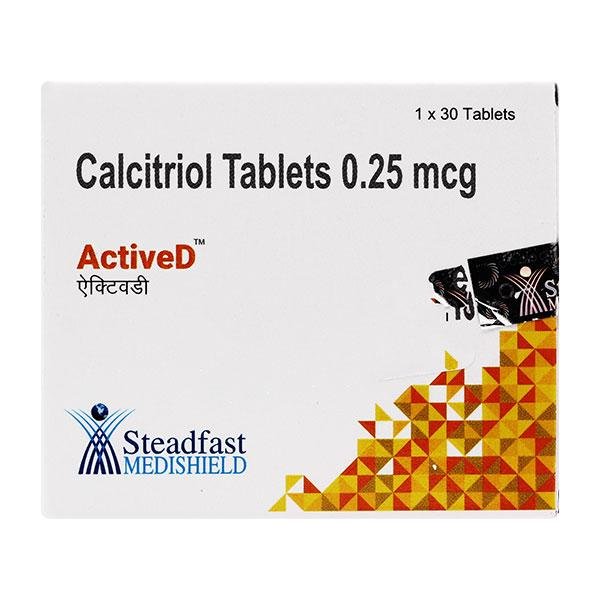
Active D Tablet 30 is a calcitriol medicine used for specific conditions affecting calcium balance and bones. Use it only as prescribed.
- It is supplied as a tablet in a pack of 30 tablets.
- The active ingredient is calcitriol.
- A prescription is required for this product.
- Indications include hypoparathyroidism, hypophosphataemic rickets, uraemic osteodystrophy and established osteoporosis.
- It is also indicated to prevent corticosteroid-induced osteoporosis in certain patients starting oral steroid therapy.
How does Active D Tablet 30 work (mechanism of action)?
Calcitriol regulates calcium absorption from the gastrointestinal tract and its use in the body.
- It binds to an intracellular receptor.
- The receptor complex interacts with specific DNA sequences that regulate transcription and protein synthesis.
Specialized or Off-Label Uses of Active D Tablet 30
No off-label uses are established in the supplied product information. Ask your doctor whether this medicine is appropriate for your condition.
Conditions That Active D Tablet 30 Will Not Treat
Active D is contraindicated in hypercalcaemia and vitamin D toxicity, and should not be used by people hypersensitive to calcitriol, related drugs or its excipients.
Benefits
What are the benefits of taking Active D Tablet 30
Calcitriol supports calcium balance and can help address certain bone and mineral disorders when prescribed for an established indication.
- In renal osteodystrophy, it normalises reduced intestinal calcium absorption and hypocalcaemia.
- In hypophosphataemic rickets and hypophosphataemia, it reduces tubular phosphate elimination.
- With concurrent phosphate treatment, it can correct some skeletal abnormalities in hypophosphataemic rickets.
- Treatment of established osteoporosis is associated with increased bone density and fewer new vertebral fractures.
- It reduces bone loss associated with corticosteroid therapy.
Side Effects
What are the most common side effects of Active D Tablet 30?
Hypercalcaemia is listed as a more common reaction. Drowsiness, weakness and nausea are also listed as more common reactions.
- Hypercalcaemia, meaning high calcium levels in the blood.
- Drowsiness or weakness.
- Nausea.
Your doctor may monitor your serum calcium while you take this medicine. Seek medical advice if you are concerned about a symptom.
What are the serious side effects of Active D Tablet 30?
Excess calcium can cause serious problems. Acute hypercalcaemia may lead to an abnormal heart rhythm or cardiac arrest.
- Severe dehydration is listed among serious or life-threatening reactions.
- Acute hypercalcaemia may cause cardiac arrhythmia or cardiac arrest.
Get urgent medical help for severe dehydration or symptoms that may indicate a serious heart problem. Contact a doctor promptly if you suspect high calcium levels.
Severe Allergic Reactions of Active D Tablet 30?
Hypersensitivity reactions can include skin symptoms and may rarely be severe.
- Itching, rash or hives (urticaria).
- Very rarely, severe erythematous skin disorders may occur in susceptible people.
Seek emergency medical care for a severe allergic reaction or rapidly worsening symptoms.
What side effects may I notice from receiving this medication?
Other listed reactions include:
- Itching associated with hypercalcaemia.
- Diarrhoea or constipation.
- Impaired kidney function or metastatic or ectopic calcification.
Tell your doctor about symptoms that are troubling or persistent.
Active D Tablet 30 Dosage Guidelines
Overview
The dose depends on the condition and response. Examples include an initial 0.25 mcg/day for uraemic osteodystrophy and 0.25 mcg/day in the morning for hypoparathyroidism and rickets. The doctor decides the final dose.
Adults
For uraemic osteodystrophy, the initial dose is 0.25 mcg/day. The doctor may increase it according to response; the doctor decides the final dose.
Children
For hypoparathyroidism, children aged one to five years have usually received 0.25 to 0.75 mcg daily. A doctor must decide the final dose.
Older adults
No dosage adjustment is necessary in elderly patients. The doctor decides the final dose for the individual and indication.
- The dose may be adjusted according to response, with regular serum calcium monitoring.
Dosage Adjustments for Kidney, Liver, or Other Health Problems
Calcitriol dosing is individualised. Monitoring and any adjustment depend on the condition and response.
- Normal kidney function: Avoid dehydration and maintain adequate fluid intake.
- Reduced kidney function: Use special care; more frequent monitoring is appropriate.
- Severe kidney impairment: A specific dose adjustment for severe kidney impairment is not established in the available information.
- Dialysis: Most patients undergoing haemodialysis respond to doses between 0.5 and 1 mcg daily.
- Liver disease: A specific dose adjustment for liver disease is not established in the available information.
- Other important conditions: During stabilisation for hypophosphataemic rickets, serum calcium should be checked at least twice weekly.
Do not change the dose yourself; follow your doctor’s monitoring and dosing instructions.
How Often and How Long to Take Active D Tablet 30?
How often you take Active D depends on your condition and prescribed dose. Take it for the duration advised by your doctor.
- Follow the dose and schedule prescribed for you.
- The doctor decides the duration and any dose changes.
How should I take Active D Tablet 30?
Taking Active D Tablet 30 With or Without Food
Active D may be taken with or without food. Follow your doctor’s instructions about the dose and duration.
How to Take Specific Forms (Tablets, Chewables, Liquid Suspension)
Tablets: Swallow the tablet whole. Do not chew, crush or break it.
Overdose/Missed Dose
What should I do if I accidentally use too much Active D Tablet 30?
Taking more than prescribed can cause hypercalcaemia, hypercalciuria and hyperphosphataemia. Acute vitamin D intoxication symptoms include loss of appetite, headache, vomiting and constipation. Seek urgent medical advice if too much is taken.
What should I do if I miss a dose of Active D Tablet 30?
Missed-dose instructions are not established in the available information. Ask your doctor or pharmacist what to do; do not take an extra dose without their advice.
Interactions
Does Active D Tablet 30 interact with foods or drinks?
A sudden increase in calcium from dietary changes, such as dairy products, may precipitate hypercalcaemia. Ask your doctor before changing your diet or taking calcium supplements.
Does Active D Tablet 30 interact with other medicines (drug interactions)
Some medicines or supplements may affect treatment or calcium levels. Tell your doctor and pharmacist about everything you take.
- Other vitamin D compounds and pharmacological doses of vitamin D or its derivatives should be withheld during calcitriol treatment to avoid additive effects and hypercalcaemia.
Active D Tablet 30 and Blood Thinners
The supplied information advises caution if you take blood thinners. Ask your doctor or pharmacist to review your medicines.
Active D Tablet 30 and Birth Control (if applicable)
A specific interaction with birth control is not established in the available information. Ask your doctor or pharmacist if you have concerns.
Interactions with Supplements, Vitamins, and Herbal Products
Other vitamin D products should be withheld during treatment. Calcium supplements may cause hypercalcaemia, and are not recommended in postmenopausal osteoporosis unless dietary intake is clearly inadequate. Ask your doctor before taking supplements.
Warnings & Precautions
Who should not use Active D Tablet 30?
Active D should not be used by people with certain conditions or allergies.
- Do not use it if you have hypercalcaemia or vitamin D toxicity.
- Do not use it if you are hypersensitive to calcitriol, drugs of the same class or any excipient in the product.
What should I know about Active D Tablet 30 before using it?
The dose needs to be determined for each patient and indication, with regular serum calcium monitoring.
- Other vitamin D compounds should be withheld during treatment.
- People with renal dysfunction need special care and more frequent monitoring.
- Avoid dehydration and maintain adequate fluids if you have normal kidney function.
Precautions for Pre-existing Conditions (Heart, Kidney, Liver)
Kidney disease: Special care and more frequent monitoring are appropriate in renal dysfunction.
Liver disease: A specific precaution for liver disease is not established in the available information.
Heart disease: A specific heart-disease precaution is not established in the available information.
Alcohol: Can You Drink Alcohol While Taking Active D Tablet 30?
A specific alcohol interaction is not established in the available information. Ask your doctor or pharmacist if you are unsure.
Pregnancy and Breastfeeding
Pregnancy: Use calcitriol during pregnancy only if the potential benefit justifies the potential risk to the fetus.
Breastfeeding: Calcitriol may pass into breast milk; mothers should not breastfeed while taking it because of possible adverse effects on the infant.
Children: Long-term calcitriol treatment in paediatric patients carries a risk of nephrocalcinosis.
Older adults: No dosage adjustment is necessary in elderly patients.
Safe Usage & Best Practices
Why You Must Complete the Full Prescription
Follow the dose and duration prescribed for your condition. Your doctor determines the appropriate treatment and monitoring.
Consequences of Skipping Doses or Sharing Medication
The effects of skipped doses or sharing this medicine are not established in the available information.
- Take it only as prescribed for you.
- Ask your doctor or pharmacist what to do after a missed dose.
Can Active D Tablet 30 cause hypercalcaemia?
Yes. Hypercalcaemia is listed as a more common reaction to Active D.
- Drowsiness, weakness and nausea are also listed as more common reactions.
What should you do if you feel better before finishing the medication?
Do not change or stop your treatment on your own if you feel better. Ask your doctor what to do.
- Continue to follow the prescribed dose and duration unless your doctor advises otherwise.
Storage Details
Store Active D in a cool, dry place, protected from light and moisture.
Frequently asked questions
-
1. What is Active D used for?
Ans: It is indicated for conditions including hypoparathyroidism, hypophosphataemic rickets, uraemic osteodystrophy and established osteoporosis.
-
2. Can I take it with food?
Ans: Yes. It may be taken with or without food.
-
3. What is a common side effect?
Ans: Hypercalcaemia is listed as a more common reaction.
-
4. What if I take too much?
Ans: Excess administration can cause hypercalcaemia, hypercalciuria and hyperphosphataemia. Seek medical advice.
-
5. Can I take other vitamin D products with it?
Ans: Other vitamin D compounds should be withheld during treatment with calcitriol.