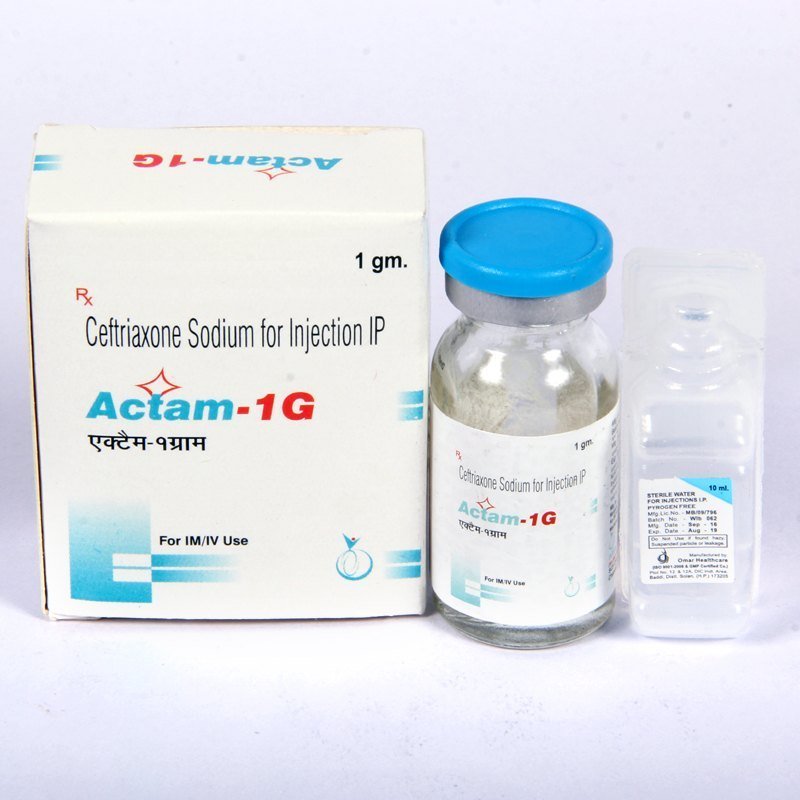
Actam 1 GM Injection 1
₹49.07
Quick fact
Actam is a ceftriaxone antibiotic injection used to treat bacterial infections, including infections of the lungs, urinary tract, bones and other parts of the body.
Uses
What is Actam 1 GM Injection 1 & Important Details
Actam is an antibiotic injection containing ceftriaxone. It is used for bacterial infections and requires a prescription.
- The listed pack contains one injection.
- Uses include pneumonia, urinary tract infections, bone and joint infections, skin infections, meningitis and bloodstream infections.
How does Actam 1 GM Injection 1 work (mechanism of action)?
Ceftriaxone acts against bacteria by preventing them from forming a protective cell wall needed for survival.
- It prevents bacteria from forming their protective cell wall.
- Without this wall, bacteria cannot survive, helping clear the infection.
Specialized or Off-Label Uses of Actam 1 GM Injection 1
No specific off-label use is established in the available information. Use Actam only for a condition your doctor has assessed.
Conditions That Actam 1 GM Injection 1 Will Not Treat
Actam treats bacterial infections, not viral illnesses.
- It does not treat colds or flu.
Benefits
What are the benefits of taking Actam 1 GM Injection 1
Actam is used to treat bacterial infections in different parts of the body. A doctor may also use it to help prevent infection after certain surgeries.
- Listed uses include infections of the lungs, urinary tract, skin, bones and joints, brain, blood and heart.
- It may be given before certain surgeries to prevent infection afterwards.
Side Effects
What are the most common side effects of Actam 1 GM Injection 1?
The listed common side effects include:
- Diarrhea, nausea or vomiting.
- Rash, hives, or pain, tenderness or hardness where the injection is given.
- Changes in liver function tests or blood cell counts, dizziness, stomatitis or glossitis.
Tell your doctor if a side effect persists, bothers you or becomes serious.
What are the serious side effects of Actam 1 GM Injection 1?
Some symptoms need prompt medical attention.
- A severe rash or swelling of the face.
- Severe, persistent diarrhea.
- Blood in the stools or diarrhea that does not stop.
Contact your doctor promptly if these symptoms occur. Seek emergency care for difficulty breathing or severe swelling.
Severe Allergic Reactions of Actam 1 GM Injection 1?
A serious allergic reaction may need urgent care. Watch for:
- Rash or itchy skin.
- Swelling of the face or mouth.
- Difficulty breathing.
Tell a doctor immediately if these symptoms occur; difficulty breathing or significant swelling requires emergency care.
What side effects may I notice from receiving this medication?
After receiving Actam, you may notice:
- Injection-site pain or tenderness.
- Digestive symptoms such as diarrhea, nausea or vomiting.
- Rash, hives or dizziness.
Speak to your doctor if a symptom persists or becomes serious.
Actam 1 GM Injection 1 Dosage Guidelines
Overview
The usual adult ceftriaxone dose is 1–2 g given once daily; the maximum is 4 g in a day. The doctor decides the dose and schedule for your infection. The final dose depends on your health and the infection being treated.
Adults
A usual adult dose is 1–2 g once daily, up to 4 g in a day. The doctor decides the final dose.
Children
This product is not recommended for children under 18 years of age. A doctor must decide whether it is appropriate.
Older adults
Older adults usually receive the adult dose, with medical supervision. The doctor decides the final dose.
- The doctor may consider kidney or liver problems and other medicines you use.
Dosage Adjustments for Kidney, Liver, or Other Health Problems
The doctor sets the dose based on your health and infection. General ceftriaxone dosing considerations are:
- Normal kidney function: Usual adult dosing is generally used; the doctor selects the dose for the infection.
- Reduced kidney function: Tell your doctor; adjustment may be needed depending on kidney function and other health problems.
- Severe kidney impairment: The dose needs individual medical review, especially if liver function is also impaired.
- Dialysis: A specific dialysis dose is not established in the available information; the treating doctor must decide.
- Liver disease: Tell your doctor before treatment; use requires caution.
- Other important conditions: Tell your doctor about gastrointestinal disease and all medicines you take.
Do not change the dose yourself; your doctor will choose the appropriate plan.
How Often and How Long to Take Actam 1 GM Injection 1?
Actam is given at evenly spaced intervals according to the schedule your doctor prescribes. The course length depends on your infection.
- Follow the schedule given by your doctor.
- Do not skip doses and complete the prescribed course.
How should I take Actam 1 GM Injection 1?
Taking Actam 1 GM Injection 1 With or Without Food
No specific food instruction for this injection is established in the available information. Ask your doctor or pharmacist if you have questions.
How to Take Specific Forms (Tablets, Chewables, Liquid Suspension)
Actam is an injection, not a tablet, chewable or liquid suspension. A doctor or healthcare professional gives it into a vein or muscle, or as an intravenous infusion.
Overdose/Missed Dose
What should I do if I accidentally use too much Actam 1 GM Injection 1?
Overdose is unlikely because a healthcare professional administers this injection. If you are concerned that too much was given, contact the treating doctor promptly.
What should I do if I miss a dose of Actam 1 GM Injection 1?
If you miss an appointment for a dose, contact your healthcare professional for advice. If it is nearly time for the next dose, skip the missed dose and resume the usual schedule; do not double a dose.
Interactions
Does Actam 1 GM Injection 1 interact with foods or drinks?
Information about alcohol is conflicting. Ask your doctor whether to avoid alcohol during treatment, and tell them about drinks you consume.
Does Actam 1 GM Injection 1 interact with other medicines (drug interactions)
Tell your doctor about all medicines you use. Some products may interact with Actam:
- Calcium-containing intravenous fluids or products may cause a precipitation reaction when used with this injection.
- Warfarin may interact and alter its blood-thinning effect.
- Chloramphenicol may reduce the medicine’s effectiveness.
- Live vaccines such as BCG may be less effective.
Actam 1 GM Injection 1 and Blood Thinners
- Warfarin may interact with Actam and alter its blood-thinning effect.
- Tell your doctor if you use warfarin or another blood thinner.
Actam 1 GM Injection 1 and Birth Control (if applicable)
A specific interaction with birth-control methods is not established in the available information. Ask your doctor or pharmacist if you are concerned.
Interactions with Supplements, Vitamins, and Herbal Products
Specific interactions with supplements, vitamins or herbal products are not established in the available information. Tell your doctor about anything you take.
Warnings & Precautions
Who should not use Actam 1 GM Injection 1?
Before treatment, tell your doctor about allergies and any health problems that could affect safe use.
- Tell the doctor if you have had an allergy to antibiotics, penicillins or cephalosporins.
- Tell the doctor if you have kidney or liver problems.
- Discuss use with your doctor if you are pregnant or breastfeeding.
What should I know about Actam 1 GM Injection 1 before using it?
Actam should be given under medical supervision. Do not administer it yourself unless you have been trained to do so.
- Tell your doctor about antibiotic allergies, kidney or liver problems, pregnancy or breastfeeding.
- Share a list of all medicines you use.
- Use antibiotics only when prescribed; unnecessary use can lead to antibiotic resistance.
Precautions for Pre-existing Conditions (Heart, Kidney, Liver)
Kidney disease: Tell your doctor; the dose may need adjustment if your kidneys are impaired.
Liver disease: Tell your doctor, as this medicine should be used cautiously with liver disease.
Heart disease: A specific precaution for heart disease is not established in the available information. Ask your doctor for advice.
Alcohol: Can You Drink Alcohol While Taking Actam 1 GM Injection 1?
The available alcohol advice is conflicting, so ask your doctor whether to avoid alcohol while receiving Actam.
Pregnancy and Breastfeeding
Pregnancy: Discuss Actam with your doctor before use during pregnancy.
Breastfeeding: Tell your doctor if you are breastfeeding and discuss the potential risks and benefits.
Children: This product is not recommended for children under 18 years of age; consult a doctor before giving it to a child.
Older adults: Use under medical supervision. Older patients may be more susceptible to side effects.
Safe Usage & Best Practices
Why You Must Complete the Full Prescription
Complete the prescribed course even if you feel better; stopping early may allow the infection to return.
Consequences of Skipping Doses or Sharing Medication
Skipping doses or stopping early may allow the infection to return or become harder to treat.
- Follow the schedule prescribed by your doctor.
- Do not share prescribed medicine with another person.
Can Actam 1 GM Injection 1 cause diarrhea?
Yes. Diarrhea is listed as a common side effect of Actam.
- Contact your doctor if diarrhea persists, is severe, or contains blood.
What should you do if you feel better before finishing the medication?
Keep to the prescribed course even if you feel better, because stopping early may allow the infection to return.
- Do not skip remaining doses.
- Ask your doctor before making any change to treatment.
Storage Details
Store Actam in a cool, dry place and protect it from light and moisture.
- Keep it between 15-30°C.
- Keep it out of reach of children and use it before its expiry date.
Frequently asked questions
-
1. What is Actam used for?
Ans: It is used to treat bacterial infections.
-
2. Who gives the injection?
Ans: A doctor or healthcare professional gives it under medical supervision.
-
3. Can it treat a cold or flu?
Ans: No. It treats bacterial infections, not viral illnesses such as colds and flu.
-
4. What should I do about a missed dose?
Ans: Contact your healthcare professional; if it is nearly time for the next dose, skip the missed one and resume the usual schedule.
-
5. Should I finish the prescribed course?
Ans: Yes. Stopping early may allow the infection to return.